
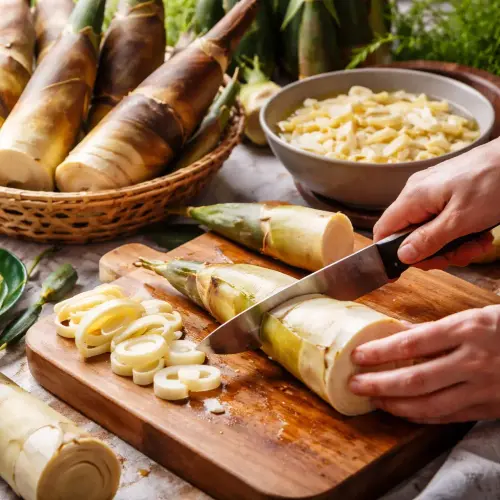
cut bamboo shoots Key Takeaways
Knowing how to properly cut bamboo shoots from harvest to wok can mean the difference between a tender, nutty ingredient and a bitter, fibrous mess.
- Select only the right shoots at the right time — size, firmness, and color matter more than you think.
- Master the proper cut bamboo shoots technique to remove bitterness and maximize edible flesh.
- Pre‑cook and store shoots correctly so they keep their delicate crunch and neutral taste.
Why Most Home Cooks Struggle to Cut Bamboo Shoots Without Bitterness
Fresh bamboo shoots are a seasonal delicacy in many Asian cuisines, prized for their crisp texture and subtle sweetness. But unlike canned shoots, which are already boiled and processed, fresh ones contain a compound called taxiphyllin — a cyanogenic glycoside that breaks down into bitter hydrogen cyanide if mishandled. This is why the way you cut bamboo shoots before and after boiling directly impacts both safety and flavor. For a related guide, see 5 Smart Ways to Boil, Sauté, and Stir‑fry Bamboo Shoots Without Sticking.
Beyond chemistry, proper cutting reduces waste. A shoot that looks small can yield surprising amounts of tender inner flesh, while careless slicing can leave behind tough, inedible sections. This guide walks you through each mistake to avoid, from garden selection to final wok toss.
Mistake #1: Harvesting Shoots That Are Too Tall or Too Old
Bamboo shoots grow fast — up to a foot per day. Once the tip emerges more than 6–8 inches above ground, the outer layers become fibrous and the interior starts turning bitter. Choose bamboo shoots that are still squat, firm, and no more than a foot tall. The skin should be tight, with no signs of wrinkling or browning.
Mistake #2: Waiting Too Long After Harvest to Prep
Freshness degrades rapidly. After you dig or buy shoots, they begin to lose sweetness and toughen. Ideally, cut bamboo shoots and boil them within 24 hours. If you cannot cook them immediately, wrap them unpeeled in damp paper towels and refrigerate — but no longer than two to three days.
How to Choose Bamboo Shoots Like a Chef
Selecting the right shoot is the foundation of a good dish. Here is a quick reference for what to look for at the market or in your garden.
| Characteristic | Ideal Quality | Avoid If . . . |
|---|---|---|
| Height above ground | 4–8 inches (10–20 cm) | Taller than 12 inches |
| Outer husk color | Pale tan or greenish with tight layers | Dark brown, dry, or peeling |
| Firmness | Rock‑hard when squeezed | Spongy or giving slightly |
| Cut base | White to cream, no dark rings | Yellowish or brown interior |
| Smell | Clean, earthy, almost nutty | Sour or ammonia-like |
Mistake #3: Skipping the Initial Peel and Score
Before boiling, you need to remove the tough outer husks. Make a deep lengthwise cut through all layers with a sharp knife, then pry them off like an artichoke. Once you reach the pale inner flesh, trim the base — if it is too woody to pierce with a fingernail, slice off another quarter inch.
The Right Way to Cut Bamboo Shoots for Boiling
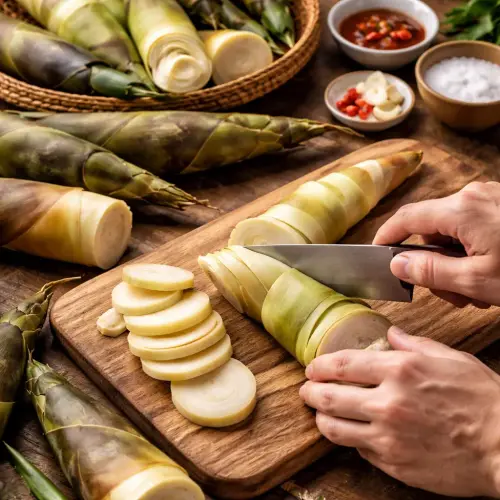
This step is where most people go wrong. Cut bamboo shoots into uniform pieces that are roughly 1/4‑inch thick — either crosswise into coins or lengthwise into batons. Even thickness ensures even cooking and bitterness removal. If slices vary wildly, some pieces will overcook while others remain toxic and bitter.
Mistake #4: Not Adding Rice Bran or a Dried Chili to the Boiling Water
In Japan, cooks add rice bran (nuka) to the boil; in southern China, a dried red chili or a pinch of salt. Both help draw out bitterness and soften fibers. Boil your sliced shoots for about 10 minutes uncovered, then drain and rinse with cold water. Taste a piece — there should be no sharp bitterness. If bitterness remains, repeat the boil with fresh water.
From Boiled to Wok: Final Prep and Stir‑Fry Tips
After boiling and rinsing, the shoots are ready for any dish. But a few final cutting choices can elevate your cooking.
Mistake #5: Cutting Shoots Too Thick for Quick Stir‑Fries
Stir‑frying requires high heat and short time. If you cut bamboo shoots into chunks thicker than 1/4‑inch, they will stay raw in the center while the outside burns. Slice them into thin matchsticks or 1/8‑inch coins so they cook in under two minutes.
Mistake #6: Forgetting to Parboil Bitter Varieties a Second Time
Monsoon shoots or older batches often retain bitterness even after one boil. Always taste a small piece before proceeding. If any astringency remains, slice the shoots again into thinner pieces and boil another 5 minutes. It is better to discard tannic water than to ruin your stir‑fry.
Mistake #7: Using Raw Shoots in Salads or Quick Pickles
Never eat fresh bamboo shoots raw. Even after boiling, some people experience throat irritation if shoots are undercooked. Cut bamboo shoots into thin strips, boil thoroughly, and then cool before tossing into salads or pickling brines. The extra minute of boiling guarantees safety and tenderness. For a related guide, see Stuck on Cooking Bamboo Shoots Without the Smell? 3 Best Canning Methods.
Useful Resources
For a deeper dive into bamboo shoot varieties and regional cooking methods, these two resources are excellent starting points.
- Serious Eats: How to Prepare Fresh Bamboo Shoots — A detailed guide with multiple boiling methods and flavor tips.
- The Spruce Eats: All About Bamboo Shoots — Covers selection, storage, and traditional Asian recipes.
Frequently Asked Questions About How to Cut Bamboo Shoots
Frequently Asked Questions About cut bamboo shoots
Can you eat raw bamboo shoots straight from the garden?
No. Raw bamboo shoots contain taxiphyllin, a cyanogenic glycoside that breaks down into hydrogen cyanide. Always boil them before eating.
How long should I boil fresh bamboo shoots?
Most shoots need 10–15 minutes of boiling after slicing. If bitterness lingers, drain, rinse, and boil again in fresh water for another 5 minutes.
What is the best knife to cut bamboo shoots?
A sharp chef’s knife or a nakiri (vegetable knife) works best. Dull blades crush the flesh and cause uneven slicing.
Do I need to remove the triangular tip of a bamboo shoot?
The very tip (the innermost point) is tender and edible. However, the outer husk layers covering it must be peeled away completely.
Can I freeze boiled bamboo shoots?
Yes. After boiling and draining, pack the shoots in an airtight container filled with fresh water. They keep for up to three months.
Why are my boiled bamboo shoots still bitter?
Either the shoots were too old when harvested, or they were not boiled long enough. Slice thinner and boil again with a dried chili.
What is the difference between spring and autumn bamboo shoots?
Spring shoots (taken when tips first emerge) are sweeter and more tender. Autumn shoots are larger, earthier, and often need longer boiling.
How do I know when a bamboo shoot is too old to eat?
If the outer husk is fully brown, the cut base is yellowish, or the shoot feels spongy, it is past its prime.
Can I use the same cutting board for bamboo shoots and other vegetables?
Yes, but wash it immediately after because raw shoot juices can stain and leave a slightly bitter residue.
Do I need to wear gloves when handling raw bamboo shoots?
Not necessary, but some people’s skin reacts to the sap. If you have sensitive skin, wear kitchen gloves.
Should I salt the boiling water for bamboo shoots?
A pinch of salt can help draw out bitterness, but it is not essential. Rice bran works better for traditional Japanese preparations.
What does the inside of a fresh bamboo shoot look like?
After peeling, the edible flesh is pale cream to white with distinct horizontal rings. The rings are natural and do not need to be removed.
Can I use a mandoline to cut bamboo shoots?
Yes, especially for thin, even slices for stir‑fries or salads. Use the hand guard — shoots are dense and can slip.
How do I store leftover cooked bamboo shoots?
Submerge them in fresh water in a sealed container and refrigerate. Change the water daily; they stay fresh for up to a week.
Are canned bamboo shoots a good substitute for fresh?
In terms of texture, yes — they are already boiled. But they lack the sweet, nutty flavor of fresh shoots and are often saltier.
What dishes work best with fresh bamboo shoots?
Stir‑fries with pork or chicken, miso soup, cold salads with sesame dressing, and braised dishes with soy and mirin.
Can I use the outer husks for anything?
They can be dried and used as a natural fire starter or composted. They are too tough to eat.
Do I need to remove the brown fuzz at the base of the inner shoot?
That fuzz is just tiny root hairs. Scrape them off with a knife — they are not harmful but have an unpleasant texture.
Is it okay to boil bamboo shoots in an aluminum pot?
Stainless steel or enameled pots are better. Aluminum can react with the compounds in the shoots and cause discoloration.
Can I reheat bamboo shoots in a microwave?
Yes, but they will soften further. For stir‑fries, it is better to reheat them quickly in a hot wok with a little oil.