
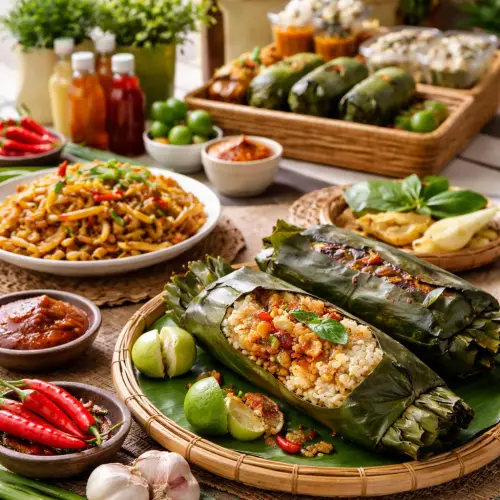
Grilled Stuffed Rice (Nasi Bakar) with Spicy Rebung Stir-fry Key Takeaways
Grilled Stuffed Rice ( Nasi Bakar ) with Spicy Rebung Stir-fry is an Indonesian dish that combines fragrant coconut rice, savory fillings, and a smoky grilled banana leaf wrapper.
- The dish pairs stuffed rice ( nasi bakar ) with a spicy bamboo shoot stir-fry, offering a unique texture and flavor that stands out in the crowded Indonesian food scene.
- Starting a home-based food business with this menu requires careful costing, smart packaging, and consistent quality — and the estimated profit margin can reach 50–60% per portion.
- Marketing tips including Instagram-worthy visuals, subscription bundles, and local delivery partnerships help you build a loyal customer base quickly.
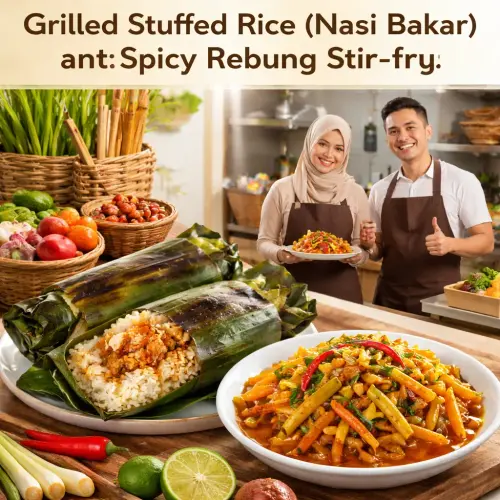
What Makes Grilled Stuffed Rice (Nasi Bakar) with Spicy Rebung Stir-fry a Winning Home-Business Dish
The appeal of Grilled Stuffed Rice (Nasi Bakar) with Spicy Rebung Stir-fry lies in its sensory richness. The banana leaf wrapping infuses a gentle smokiness into the rice, while the filling — often a savory mix of shredded chicken, anchovies, or spiced minced fish — provides a satisfying contrast. When you add the spicy, crunchy rebung (bamboo shoot) stir-fry on the side, the dish becomes a complete meal that customers crave. For a related guide, see Easy Sambal Goreng Rebung ala Mom: Essential Spicy Side for Sahur.
This combination is not only delicious but also photogenic. The vibrant green banana leaf, the golden grilled marks, and the colorful rebung stir-fry make for excellent social media content. For a home-based business, that visual appeal translates directly into free word-of-mouth marketing when customers share their meals online.
Additionally, the ingredients are affordable and widely available in wet markets across Indonesia and Southeast Asia. Sticky rice, coconut milk, fresh bamboo shoots, and banana leaves cost relatively little, yet the finished dish can command a premium price because it feels artisanal and authentic. For a related guide, see 7 Expert Tips for Rich and Creamy Padang-Style Gulai Rebung (Avoid Split Coconut Milk).
Key Components of the Dish
A successful Grilled Stuffed Rice (Nasi Bakar) with Spicy Rebung Stir-fry hinges on three components: the rice, the filling, and the stir-fry. The rice must be slightly dry and fluffy — typically cooked with coconut milk, pandan leaves, and a pinch of salt — so it holds its shape after grilling. The filling should be well-spiced and juicy, enough to moisten the rice without making it soggy. Meanwhile, the rebung stir-fry needs a balance of spicy heat from red chili peppers and a touch of sweetness from shallots and palm sugar.
7 Smart Home-Business Ideas to Market Your Grilled Stuffed Rice (Nasi Bakar) with Spicy Rebung Stir-fry
Turning this dish into a consistent revenue stream requires more than just good cooking. Here are seven actionable strategies that help you stand out and scale up.
1. Offer Customizable Filling Packages
Let customers choose from three filling varieties: anchovy (ikan teri), shredded chicken (ayam suwir), or vegetarian (tempeh and mushrooms). This small menu approach keeps your production manageable while appealing to different dietary preferences.
Bundle each variant with a portion of spicy rebung stir-fry and mention it clearly on your order form. Use phrases like “Classic Nasi Bakar + Rebung” or “Spicy Chicken Stuffed Rice Plate” to reinforce the brand identity.
2. Create a “Nasi Bakar Subscription Box”
Offer weekly or bi-weekly subscription boxes delivered fresh. A typical box could contain four portions of Grilled Stuffed Rice (Nasi Bakar) with Spicy Rebung Stir-fry plus a complementary side like fried tempeh or sambal. Subscriptions provide predictable income and reduce daily order fluctuations.
Price the subscription 10–15% lower than individual orders to encourage sign‑ups. Promote it as “Meal Prep Made Traditional” on your social channels.
3. Partner with Local Warungs and Coffee Shops
Approach small eateries or coffee shops that don’t offer a full food menu. Propose a consignment arrangement: you supply ready-to-grill nasi bakar packages, and they heat and serve them. This gives you a retail presence without the overhead of a physical outlet.
Share a short video on Instagram showing how quickly the staff can grill the rice — this demonstrates ease of use and builds trust with potential partners.
4. Host Live Instagram Cooking Demonstrations
Go live every Friday morning for 30 minutes showing your process: preparing the coconut rice, wrapping the banana leaves, and grilling Grilled Stuffed Rice (Nasi Bakar) with Spicy Rebung Stir-fry. Answer viewer questions in real time and offer a limited-time discount code for viewers who order within 24 hours.
This builds authenticity and personal connection — two things that matter enormously for home-based food brands.
5. Develop a Signature Packaging Aesthetic
Invest in kraft paper boxes or reusable bamboo containers that carry your logo and a simple illustration of the dish. Add a handwritten thank-you note inside every order. When customers unbox their meal and photograph it, you get free advertising.
Make sure the packaging keeps the banana leaf intact so the grilled aroma survives delivery. That sensory surprise is part of the magic.
6. Launch a “Build Your Own Spicy Rebung Stir-fry” Add-On
Let customers choose the spice level of their spicy rebung stir-fry — mild, medium, or super spicy. This personalization drives repeat orders because each diner can fine‑tune the heat to their preference.
Use a three-tier heat scale on your menu page and double-check the spice level before packing. A small sticker on the container can indicate the spice tier at a glance.
7. Run a Monthly Rotating Flavor Challenge
Each month, introduce a limited-edition version of the dish — for example, “Rendang Nasi Bakar with Spicy Rebung” or “Sambal Matah Stuffed Rice.” Ask customers to vote for their favorite on Instagram Stories. The winning flavor stays on the menu for the next quarter.
This keeps your offerings fresh, generates buzz, and gives you reliable feedback about what your customers truly enjoy.
Cost Breakdown and Profit Margin Comparison for Grilled Stuffed Rice (Nasi Bakar) with Spicy Rebung Stir-fry
Understanding your costs is crucial before you scale. Below is a typical cost analysis for one portion of Grilled Stuffed Rice (Nasi Bakar) with Spicy Rebung Stir-fry (assuming Indonesian market prices in 2025).
| Ingredient / Item | Cost per Portion | Notes |
|---|---|---|
| Sticky rice 150g | IDR 1.200 | Bulk purchase reduces cost |
| Coconut milk 50ml | IDR 1.500 | Fresh or UHT, local brand |
| Banana leaf and toothpicks | IDR 300 | Durable, local market |
| Shredded chicken filling 50g | IDR 3.000 | Boiled then shredded |
| Spicy rebung stir-fry 80g | IDR 2.000 | Fresh bamboo shoots |
| Spices and aromatics | IDR 1.000 | Shallots, garlic, chili |
| Packaging (box + label) | IDR 2.500 | Kraft box, sticker, note |
| Total Cost | IDR 11.500 | |
| Selling Price | IDR 25.000 – 30.000 | Market rate in Jabodetabek |
| Profit Margin | 54% – 62% | Moderate scale, low waste |
As the table shows, this dish offers a healthy profit margin that improves further when you buy ingredients in bulk or produce larger batches. The relatively low food cost means you can compete on price without sacrificing quality.
Common Pitfalls When Starting a Nasi Bakar Home-Based Business and How to Avoid Them
Even a well-loved dish like Grilled Stuffed Rice (Nasi Bakar) with Spicy Rebung Stir-fry has challenges. Here are the most common mistakes entrepreneurs make and how to sidestep them.
Inconsistent Rice Texture
If the rice is too dry, it won’t hold together after grilling. If too wet, it becomes mushy. Always measure your coconut milk-to-rice ratio precisely — a digital kitchen scale is worth the investment. For 200g of sticky rice, use 180ml of thin coconut milk (cair) and a pinch of salt.
Underwhelming Rebung Stir-fry Flavor
Fresh bamboo shoots can taste flat if not cooked properly. Always boil the sliced shoots for 10 minutes to remove bitterness, then stir-fry with enough chili, shallots, and belacan (shrimp paste) to create a bold, balanced taste. Taste-test the stir-fry before serving every batch.
Poor Delivery Logistics
Grilled nasi bakar stays fresh for about 4 hours at room temperature, but delivery delays can ruin the experience. Use insulated food bags and include a small ice pack if the travel time exceeds 30 minutes. Communicate delivery windows clearly to customers.
Useful Resources
For authentic recipes and ingredient sourcing tips, check out the following resources:
- Indonesian Nasi Bakar Recipe at Just One Cookbook — a reliable guide for preparing the rice and banana leaf wrapping technique.
- BBC Good Food’s Tumis Rebung — a classic stir-fry method that you can adapt for your spicy rebung component.
Grilled Stuffed Rice (Nasi Bakar) with Spicy Rebung Stir-fry offers a delicious entry point into the home-based food business world. Its affordable ingredients, high visual appeal, and loyal fan base make it a smart choice for anyone looking to earn extra income while sharing authentic Indonesian flavors. Start small, focus on quality, and let the dish speak for itself.
Frequently Asked Questions About Grilled Stuffed Rice ( Nasi Bakar ) with Spicy Rebung Stir-fry
What is Nasi Bakar ?
Nasi Bakar is an Indonesian dish of seasoned rice wrapped in banana leaves and grilled over charcoal or a flat pan. The grilling process infuses the rice with a smoky, herbal aroma from the leaves.
What does spicy rebung stir-fry taste like?
Spicy rebung stir-fry features tender bamboo shoot strips cooked with chili, shallots, garlic, and shrimp paste. It is savory, slightly sweet, and carries a clean, earthy crunch with moderate to high heat depending on the recipe.
Can I make Nasi Bakar without a grill?
Yes. You can pan-sear the banana leaf packet on a non-stick skillet over medium heat for 5–7 minutes per side. The flavor will be slightly different but still delicious.
How long does Grilled Stuffed Rice stay fresh?
At room temperature, it stays fresh for up to 4 hours. Refrigerated, it lasts 2 days. Reheat by steaming the wrapped packet for 5 minutes or pan-grilling it again.
Is this dish suitable for vegetarians?
Yes, if you replace the chicken or anchovy filling with spiced tempeh, tofu, or mushrooms. Keep the spicy rebung stir-fry as is — it is naturally plant-based.
What rice is best for Nasi Bakar ?
Glutinous rice (sticky rice) or regular jasmine rice works. Sticky rice holds its shape better after grilling, while jasmine rice produces a fluffier texture.
How much does it cost to start a home-based Nasi Bakar business?
Initial costs range from IDR 500,000 to IDR 2,000,000 (roughly $35–$140 USD) covering a grill, banana leaves, ingredients, and simple packaging.
Do I need a food handling permit?
In many Indonesian cities, a small home kitchen doesn’t require a formal permit if you sell less than 50 portions per day. Check with your local BPOM or Dinas Kesehatan for latest regulations.
Can I sell Nasi Bakar online?
Yes. You can list on GoFood, GrabFood, or your own Instagram/WhatsApp store. Many home-based sellers start with pre-order systems via social media.
What side dishes pair well with this meal?
Popular sides include fried tempeh, sambal terasi, lalapan (raw vegetables), or crispy fried chicken. The spicy rebung stir-fry acts as both side and flavor booster.
How do I make the filling vegetarian?
Sauté 100g of finely chopped mushrooms, 50g of crumbled tempeh, and a tablespoon of sweet soy sauce (kecap manis) until dry. Season with pepper and lime juice.
What is the difference between Nasi Bakar and Lemper?
Both use sticky rice, but Lemper is usually steamed with shredded chicken filling and rolled in banana leaves without grilling. Nasi Bakar is grilled after wrapping for a smoky taste.
Can I freeze Grilled Stuffed Rice ?
Yes, after grilling, let it cool completely, then wrap tightly in plastic wrap and freeze for up to 1 month. Thaw in the fridge before reheating.
How do I market this dish effectively?
Post high-quality photos and short cooking videos on Instagram and TikTok. Use local hashtags such as #Nasibakar, #Rebung, and #usahabumikuliner. Engage with food bloggers in your area.
What spice level should I aim for?
Start at a medium spice level that accommodates most customers. Offer a super spicy variant as an add-on for heat seekers.
Can I sell this dish outside Indonesia?
Yes, but you may need to substitute ingredients. For example, use canned bamboo shoots where fresh ones are unavailable, and use frozen banana leaves from Asian grocery stores.
How do I keep the banana leaf from burning?
Soak the banana leaves in warm water for 5 minutes before wrapping. Wipe them dry and grill over medium heat, turning frequently. The leaf should char slightly without catching fire.
What is the best way to reheat leftovers?
Steam the wrapped packet for 5–7 minutes, or pan-sear for 3 minutes per side without oil. Microwaving is fast but may make the rice a bit rubbery.
How many portions can a home kitchen produce per day?
With one person, you can realistically prepare 30–50 portions per day, including wrapping and grilling, if you pre-cook ingredients and use an efficient assembly line.
What are the best social media platforms for this business?
Instagram and TikTok are top choices because of their visual focus. Facebook Groups focused on local food communities and WhatsApp Broadcast for repeat customers also work well.