
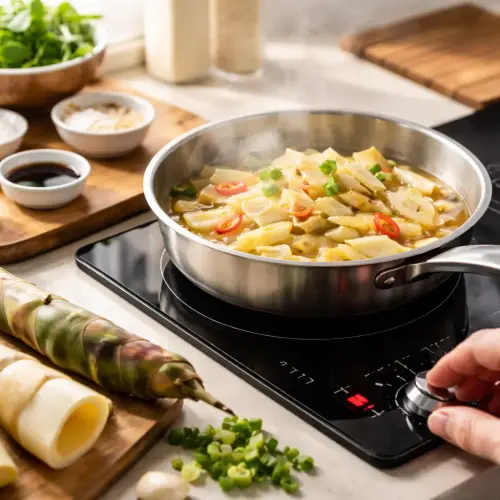
cooking bamboo shoots on an induction stove Key Takeaways
Bamboo shoots are a seasonal delicacy that require careful preparation to remove toxins and achieve a tender texture.
- Induction stoves provide direct, efficient heat that shortens the cooking time for cooking bamboo shoots on an induction stove compared to gas or electric coils.
- Using the right pot size and heat level minimizes energy waste and prevents scorching the shoots.
- Pre‑soaking and pre‑boiling bamboo shoots before the main cooking cycle maximizes tenderness without extra energy use.
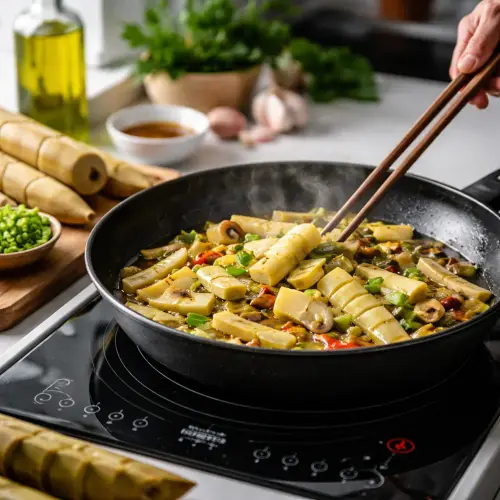
Understanding the Unique Challenge of cooking bamboo shoots on an induction stove
Bamboo shoots are prized in Asian cuisines for their crisp texture and mild, earthy flavor. However, raw shoots contain hydrocyanic acid—a natural toxin that must be neutralized through thorough boiling. Induction stoves work by creating a magnetic field that heats the pan directly, unlike gas which heats the air first. This means you get faster heat‑up times and almost instant temperature changes, which can be a game‑changer when processing bamboo shoots. For a related guide, see Induct Method Cooking: 5 Key Differences for Gulai Rebung.
Because induction stove bamboo shoots cooking requires steady, controlled boiling, the ability to adjust heat instantly prevents scorching and ensures even cooking. This precision also translates into energy savings: induction is roughly 84‑90% efficient compared to about 74% for gas and 70% for traditional electric coils.
5 Energy‑Saving Steps for Perfect cooking bamboo shoots on an induction stove
The key to reducing energy use while still achieving tender, safe bamboo shoots lies in preparation and technique. Here are five proven steps that combine efficiency with excellent results.
Step 1: Choose the Right Induction‑Compatible Cookware
Not all pots work on induction burners. Look for cookware labeled “induction‑ready” with a flat, magnetic base (stainless steel or cast iron work best). A heavy‑bottomed pot distributes heat evenly and prevents hot spots that can scorch bamboo shoots. Using a pot that matches the burner size (e.g., an 8‑inch pot on an 8‑inch burner) avoids wasted energy spilling around the sides.
Step 2: Pre‑Soak Fresh Bamboo Shoots to Reduce Initial Boil Time
Slice the shoots into ¼‑inch rounds or strips and soak them in cold water for 30 minutes. This softens the fibrous outer layers and leaches out some of the bitter compounds. You can even change the water once to speed up the detoxification process. Less soaking time later means you can shorten the initial boil by about 10 minutes, directly cutting electricity use.
Step 3: Use the Rapid Boil + Simmer Method
Induction stoves excel at rapid heating. Start by bringing a pot of water to a rolling boil on the highest setting (usually power boost mode)—the water will bubble vigorously in under 3 minutes. Add the soaked bamboo shoots and let them boil for 10 minutes. Then immediately reduce the heat to a gentle simmer (setting 3 or 4 on most induction cooktops) and cook for another 20‑30 minutes. The rapid boil destroys toxins quickly, while the simmer tenderizes without wasting energy on constant high heat. For a related guide, see 5 Smart Ways to Boil, Sauté, and Stir‑fry Bamboo Shoots Without Sticking.
Step 4: Cover the Pot to Retain Heat
A tight‑fitting lid is an energy‑saver’s best friend. Induction burners already transfer heat efficiently, but covering the pot traps steam and reduces the time needed to bring the water back to a boil after adding ingredients. For bamboo shoots recipe preparation, keep the lid on except when stirring—this can cut cooking time by up to 15%.
Step 5: Cook in Batches and Repurpose the Cooking Water
If you’re processing a large quantity of shoots, cook them in two or three batches rather than crowding the pot. Overcrowding lowers the water temperature, forcing the induction burner to work harder to maintain a boil. After cooking, the nutrient‑rich water (once cooled) can be used to water acid‑loving plants like azaleas, or saved as a light vegetable broth for soups—turning a byproduct into a resource.
Comparing cooking bamboo shoots on an induction stove with Gas Cooking
| Factor | Induction Stove | Gas Stove |
|---|---|---|
| Energy efficiency | 84‑90% | 40‑74% |
| Time to boil water (1 liter) | ~3 minutes | ~6‑7 minutes |
| Heat control precision | Instant (digital) | Gradual (flame adjustment) |
| Safety (no open flame) | Yes | No |
| Total cooking time for 500g shoots | 25‑30 minutes | 35‑45 minutes |
As the table shows, induction not only saves energy but also cuts active cooking time, making it an excellent choice for busy cooks.
Troubleshooting Common Issues When cooking bamboo shoots on an induction stove
Even with careful technique, you might encounter a few hiccups. Here’s how to address them while keeping energy use in check.
Problem: Bamboo Shoots Still Taste Bitter After Cooking
Bitterness indicates incomplete detoxification. Increase the initial boil time by 5 minutes and ensure you use a large enough pot so the water circulates freely. On an induction stove, a 6‑quart pot is ideal for 500‑700g of shoots. Also, check that your induction setting didn’t drop too low after the rapid boil—maintain a gentle but visible simmer (bubbles should break the surface every 2‑3 seconds).
Problem: The Induction Burner Keeps Cycling On and Off
This often happens when the pot is too small or the cookware has an uneven base. Induction burners detect magnetic pans; if the pot wobbles, the sensor may think the pan was removed. Use a flat‑bottomed pot that covers at least 70% of the burner ring. Even heating prevents unnecessary power cycling.
Problem: Water Evaporates Too Quickly
Induction heat can cause vigorous boiling that evaporates water fast. If you notice the water level dropping halfway through cooking, add a little hot water (not cold) to maintain the temperature without dragging down efficiency. Alternatively, lower the heat setting by one notch and extend the simmer time by 5 minutes.
Practical Tips for Maximizing Energy Savings
Beyond the five core steps, these small adjustments can further reduce electricity consumption when cooking bamboo shoots on an induction stove:
- Use the “power boost” feature sparingly: It’s great for rapid boiling, but running it longer than 5 minutes wastes energy. Switch to a lower setting as soon as the water boils.
- Match your burner to your pot: Using a small pot on a large burner or vice versa leads to heat loss. Most induction cooktops have designated zones—use the one that best fits the pot’s diameter.
- Plan your cooking sequence: Start with the bamboo shoots, then use the residual heat (the burner stays warm for 2‑3 minutes after turning off) to warm a side dish or melt butter.
- Keep the cooktop clean: Induction surfaces heat quickly, but food spills can absorb heat and reduce efficiency. Wipe up spills immediately.
Serving Suggestions and Safety Notes After cooking bamboo shoots on an induction stove
Once cooked, bamboo shoots are ready to be transformed into stir‑fries, salads, curries, or pickles. For a simple side, sauté them with garlic, soy sauce, and sesame oil for 2‑3 minutes—perfect over jasmine rice.
Safety notes: Always boil fresh bamboo shoots in a large volume of water (at least 4‑6 cups of water per 500g of shoots) to ensure complete toxin removal. Never taste raw bamboo shoots. Cooked shoots can be stored in the refrigerator in their cooking liquid for up to 5 days, or frozen for 3 months. Discard the cooking liquid if not reused—do not consume it as a broth unless you are certain the shoots were non‑bitter varieties (e.g., young winter shoots) that require minimal detoxification.
Useful Resources
For further reading on bamboo shoot preparation and induction cooking, these two resources provide reliable, in‑depth information:
- The Spruce Eats – How to Cook Bamboo Shoots – A step‑by‑step guide covering cleaning, boiling, and flavor pairings.
- U.S. Department of Energy – Induction Cooktops – Technical overview of induction efficiency and best practices for energy savings.
Frequently Asked Questions About cooking bamboo shoots on an induction stove
Do I need to soak bamboo shoots before cooking on an induction stove?
Yes, soaking fresh bamboo shoots in cold water for 30 minutes helps soften fibers and reduces bitterness, which can shorten the overall boiling time and save energy.
Can I cook canned bamboo shoots on an induction stove?
Yes. Canned bamboo shoots are already cooked, so you only need to heat them through—about 3‑5 minutes on a low induction setting. Drain and rinse them first to remove any metallic taste.
What is the ideal water‑to‑bamboo‑shoot ratio for induction cooking?
Use at least 4 cups of water for every 500g of fresh shoots. Enough water ensures even heat distribution and complete detoxification without the pan running dry.
How long should I boil bamboo shoots on an induction stove?
Boil fresh shoots for 10 minutes at high heat (rapid boil), then simmer for 20‑30 minutes until tender. Total time: 30‑40 minutes, depending on the thickness of the slices.
Is it safe to use a glass pot on an induction stove for bamboo shoots?
Only if the glass pot is specifically labeled “induction compatible.” Most glass cookware is not magnetic, so it won’t work on induction cooktops. Use stainless steel or cast iron instead.
Can I add salt to the cooking water when cooking bamboo shoots on an induction stove?
It’s best to salt after cooking. Salt in the boiling water can toughen the fibers and may also cause mineral deposits on induction surfaces over time.
Does induction cooking preserve more nutrients in bamboo shoots compared to gas?
Induction’s shorter cooking time and lower heat retention may help retain more water‑soluble vitamins like B and C, though the difference is modest.
What induction stove settings should I use for bamboo shoots?
Start on the highest setting (power boost) to bring water to a boil, then reduce to a medium‑low simmer (level 3‑4 on a 9‑level scale) for the remainder of cooking.
Why are my bamboo shoots still crunchy after the recommended cooking time?
Crunchiness usually means the shoots are undercooked. Extend the simmer time by 10‑15 minutes, and check that your induction burner is maintaining a steady simmer rather than cycling off.
Can I reuse the cooking water from bamboo shoots for other dishes?
Yes, if the shoots were properly detoxified, the cooking water can be used as a light broth for soups or stews. Strain it first. Do not reuse water that tastes bitter.
How do I know if my bamboo shoots are fully detoxified?
Fully detoxified shoots should be tender when pierced with a fork and have a mild, slightly sweet flavor. If they taste bitter or metallic, boil them for an additional 10 minutes.
Is it necessary to change the water during cooking on an induction stove?
For fresh shoots, you can change the water once after the first 10‑minute boil to further reduce bitterness. This adds a few minutes but improves flavor.
Can I cook frozen bamboo shoots directly on an induction stove?
Yes. Add frozen shoots directly to boiling water without thawing. Expect an extra 5‑7 minutes of cooking time because the cold shoots will reduce the water temperature.
What type of cookware gives the best energy savings for induction bamboo shoot cooking?
Flat‑bottomed stainless steel or cast iron pots with a thick core (clad or tri‑ply) offer the best heat retention and magnetic coupling, maximizing induction efficiency.
Does cooking bamboo shoots on an induction stove produce less kitchen heat?
Yes. Induction burners heat only the pan, not the surrounding air, so your kitchen stays cooler—especially beneficial in warm weather or small spaces.
Can I use a pressure cooker on an induction stove for bamboo shoots?
Absolutely, as long as the pressure cooker has a magnetic stainless steel base. Pressure cooking can reduce total cooking time to 15‑20 minutes and uses less energy than open boiling.
What should I do if my induction stove keeps shutting off during bamboo shoot cooking?
This may indicate the pan is too small for the burner zone, or the surface is overheating. Use a pot that covers at least 70% of the induction zone and ensure the ventilation slots are unobstructed.
Are there any bamboo shoot varieties that cook faster on an induction stove?
Young winter shoots (like ma bamboo) are more tender and require about 20 minutes total cooking, while mature spring shoots (like moso) can take up to 40 minutes.
How can I tell if my induction cooktop is powerful enough for boiling bamboo shoots?
Look for a cooktop with at least 1800‑2000 watts per burner. This power level can bring a large pot of water to a boil in under 4 minutes, ideal for energy‑efficient bamboo shoot cooking.
Do I need to peel bamboo shoots before cooking on an induction stove?
Yes. Always remove the tough outer leaves and trim the woody base. Slice the edible inner core into even pieces to ensure uniform cooking and consistent detoxification.