
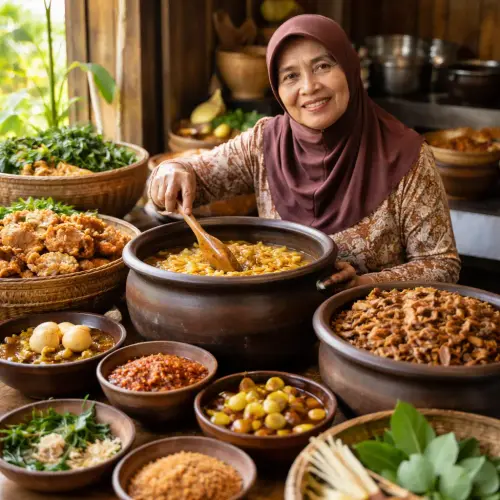
Semarang gudeg seller Key Takeaways
For generations, the Semarang gudeg seller has guarded the city and rsquo;s culinary soul, balancing sweet rebung flavor with tender jackfruit and coconut richness.
- Master the slow-cooking technique that defines authentic sweet rebung flavor .
- Discover why the choice of palm sugar and coconut milk determines the dish and rsquo;s soul.
- Learn the exact spice ratios that a Semarang gudeg seller uses to avoid bitterness.

What Makes a Semarang Gudeg Seller’s Sweet Rebung Flavor So Distinct
Walking through the narrow alleys of Semarang’s old town, the aroma of simmering jackfruit and coconut milk pulls you toward a weathered stall. The vendor, a third-generation gudeg seller, greets me with a knowing smile. “Our version is sweeter than Yogyakarta’s,” she says, lifting the lid of a massive clay pot. “The secret is the rebung—young bamboo shoots that soak up sweetness until they’re almost candied.” For a related guide, see Smart Freezing of Rebung Stock: 5 Steps to Keep Texture Crispy.
This unique sweet rebung flavor doesn’t come from a single ingredient. It emerges from a patient dance between heat, time, and the region’s particular palm sugar. Unlike the drier, more savory gudeg from the south, Semarang recipes emphasize a glossy, syrup-like sauce that clings to every fiber of bamboo shoot and jackfruit. For a related guide, see 3 Mistakes to Avoid When Making Gudeg with Sweet Rebung Flavor.
The best Semarang gudeg seller understands that rebung must be parboiled three times to remove its natural bitterness. Only then can it surrender to the sweet bath of gula jawa (Javanese palm sugar) and aromatic daun salam (Indonesian bay leaves). This attention to prep work is what separates a memorable bowl of gudeg from a forgettable one.
Secret #1: Select the Freshest Rebung for That Signature Sweet Rebung Flavor
Every gudeg seller I’ve met agrees: the quality of rebung determines the final flavor. My mentor in Semarang’s Pasar Johar wakes at 4 a.m. to pick bamboo shoots that were harvested just hours earlier. She looks for shoots that are pale yellow, tightly layered, and free from any musty smell.
How to Identify Perfect Rebung
If the shoot is too fibrous or too old, it will remain tough no matter how long you cook it. The ideal rebung is no longer than 15 centimeters and feels heavy for its size. Once you bring it home, peel away the outer layers until you reach the tender core. Slice it thinly against the grain to maximize surface area for absorbing the sweet rebung flavor.
Some modern Semarang recipes suggest using frozen rebung as a shortcut, but the traditional seller cautions against this. Freezing breaks down the cellular structure, making the shoots mushy and less receptive to the caramelization process that defines Semarang gudeg.
Secret #2: Master the Three-Boil Method for Preserving Traditional Flavor
Bitterness is the enemy of sweet rebung flavor. To neutralize it without losing the shoot’s natural crunch, a true Semarang gudeg seller uses a triple-boil technique.
- First boil: Submerge sliced rebung in boiling water for 10 minutes, then drain and rinse under cold water.
- Second boil: Add a pinch of salt and a teaspoon of rice washing water to the pot. Boil for another 10 minutes, then drain again.
- Third boil: Simmer with one bruised lemongrass stalk until fragrant. This final step infuses the shoots with a citrusy aroma that will later marry with the coconut sauce.
This method is the foundation of preserving traditional flavor in Semarang kitchens. Skipping even one step can leave a lingering bitterness that no amount of sugar can hide.
Secret #3: The Palm Sugar Caramel Is the Heart of Sweet Rebung Flavor
While many home cooks add sugar directly to the coconut milk, an experienced gudeg seller first makes a caramel. This is perhaps the most crucial of all Semarang recipes techniques.
Take 200 grams of dark palm sugar (gula jawa), chop it finely, and melt it in a heavy-bottomed pan with two tablespoons of water. Let it bubble until it turns dark amber—but not black, warns my vendor friend. “If it burns, the whole pot turns bitter. You have to watch it like a baby.”
Once the caramel reaches the right color, pour it over the parboiled rebung and young jackfruit. Stir until every piece is coated. Only then do you add the thin coconut milk (santan encer) and let everything simmer on the lowest heat for at least three hours.
Secret #4: Use Two Types of Coconut Milk for Richness and Balance
A common mistake in Semarang recipes is using only thick coconut milk throughout the entire cooking process. This results in a dish that splits or becomes greasy. The Semarang gudeg seller instead uses a two-stage method.
- Stage one: Thin coconut milk (from the second pressing) is added at the start. It slowly reduces as the dish cooks, allowing the sweet rebung flavor to concentrate.
- Stage two: Thick coconut milk (santan kental) is stirred in during the final 20 minutes of cooking. This addition gives the sauce its velvety texture without overwhelming the bamboo shoots.
This approach also prevents the sauce from curdling. Preserving traditional flavor means respecting how ingredients behave over a long simmer, not rushing the process.
Secret #5: Let the Gudeg Rest Overnight for Deeper Sweet Rebung Flavor
Every gudeg seller in Semarang follows an unwritten rule: gudeg tastes better the next day. After the initial cooking, turn off the heat and let the pot sit covered overnight. The residual steam continues to work, allowing the sweet rebung flavor to penetrate deeper into the jackfruit fibers.
In the morning, reheat the gudeg gently. You’ll notice the sauce has thickened further and the flavors have melded into a single, harmonious note. This resting period is a non-negotiable part of preserving traditional flavor in authentic Semarang stalls.
Secret #6: Pay Attention to the Companion Side Dishes
While the star is undoubtedly the gudeg itself, a Semarang gudeg seller knows that balance comes from the plate as a whole. Served alongside the sweet rebung goodness should be a hard-boiled egg steeped in the sauce (telur bacem), crispy fried chicken, and a ladle of robust sambal goreng krecek (spicy cow skin cracklings).
The contrast between sweet gudeg and fiery sambal is what makes Semarang recipes sing. Without this interplay, the richness can overwhelm the palate. My vendor friend always reminds customers: “Eat a bit of sambal between each spoonful of gudeg. It wakes up your tongue for the next bite.”
Secret #7: Cook in a Clay Pot for Authentic Aroma and Heat Distribution
Modern stainless steel pots conduct heat too efficiently for slow-cooking gudeg. A true Semarang gudeg seller will insist on using a kendil—a traditional clay pot that breathes and distributes heat gently.
The porous nature of clay allows moisture to evaporate slowly, concentrating the sauce without drying out the ingredients. If you don’t have a clay pot, a heavy enameled Dutch oven is the next best option. Avoid thin aluminum cookware, which creates hot spots and risks burning the precious sweet rebung flavor before it has a chance to develop.
Common Mistakes to Avoid When Making Gudeg at Home
Even with the best intentions, many home cooks stumble when trying to replicate Semarang recipes. Here are the most frequent pitfalls I’ve observed:
- Rushing the caramel: Using white sugar instead of palm sugar, or not taking the caramel to the right color, robs the dish of its characteristic depth.
- Adding all coconut milk at once: This dilutes the flavor and makes the sauce too thin to cling to the bamboo shoots.
- Overcooking the rebung: While patience is key, cooking for more than six hours on high heat will turn the shoots into mush. Low and slow is the rule.
- Skipping the overnight rest: The flavor fusion that happens during the rest is what makes restaurant-quality gudeg. Serving it immediately will always taste flat in comparison.
By avoiding these errors, you can approach the artistry of a seasoned Semarang gudeg seller from your own kitchen.
Useful Resources
For those who wish to dive deeper into the world of Semarang recipes and techniques for preserving traditional flavor, here are two excellent starting points:
- BBC Good Food: Classic Indonesian Gudeg Recipe — A well-researched adaptation that respects the original Javanese methods.
- The Spruce Eats: What Is Gudeg? — An informative guide that explores the cultural history and regional differences of this beloved dish.
As I take my leave from the stall, the Semarang gudeg seller wraps a small parcel of gudeg for my journey home. “Remember,” she says, “the best sweet rebung flavor comes not from a recipe alone, but from feeling the heat, smelling the spices, and giving the process the time it deserves.” Her words remind me that preserving traditional flavor is an act of patience and love. By following these seven secrets, you can carry a piece of Semarang’s culinary heritage into your own kitchen—one slow, sweet spoonful at a time.