
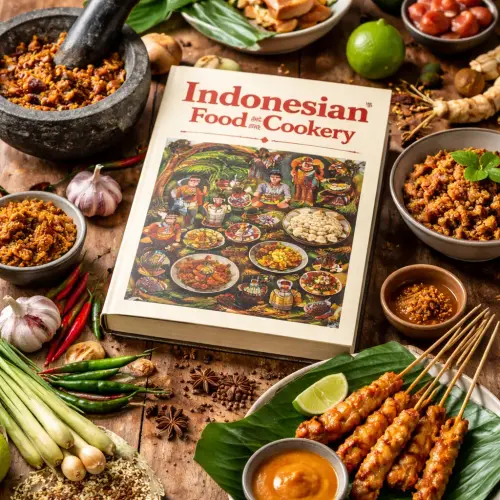
Indonesian Food and Cookery Key Takeaways
Rediscovering Indonesian Food and Cookery isn’t just about flipping through old recipes — it’s about unearthing a teaching philosophy that transformed how the world approaches Indonesian food book classics.
- The book’s structured lesson format turns complex dishes into step-by-step achievements, making it the ultimate teaching book Indonesian cuisine enthusiasts still rely on.
- Its focus on fundamental techniques (like sambal-making and bumbu base pastes) builds confidence before tackling regional specialties.
- Modern cooks appreciate the updated ingredient guides and substitute options, bridging traditional market finds with everyday grocery shopping.
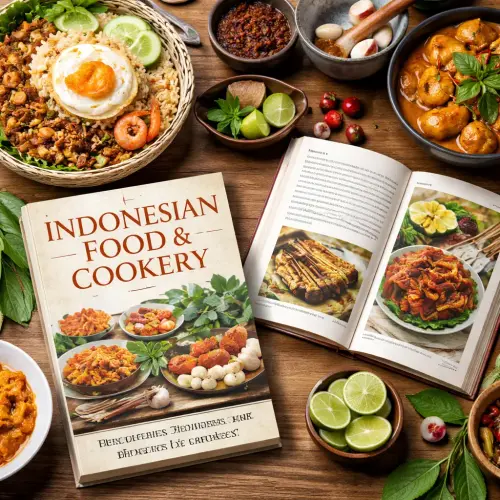
What Makes Indonesian Food and Cookery a Timeless Teaching Book?
I first stumbled upon a battered copy of Indonesian Food and Cookery at a secondhand book stall in Yogyakarta. Its pages were dog-eared and splattered with what looked like dried turmeric stains — proof, I thought, that someone had cooked their way through every lesson. That’s the charm of this Indonesian food book: it feels less like a reference and more like a patient tutor standing beside you at the stove.
Originally published decades ago, the book broke new ground by organizing recipes not by ingredient or region, but by skill level. Each chapter builds on the previous one, teaching you to first understand the core spice pastes that anchor most Indonesian kitchens. It’s a classic Indonesian cookery revisited approach that has inspired countless modern cookbooks, yet none replicate the clarity of its method. For a related guide, see Joyce Chen 2-Tier Bamboo Steamer (10-Inch): Essential for Perfect Indonesian Cakes.
How the Teaching Philosophy Differs from Standard Cookbooks
Most cookbooks assume you already know the basics. Indonesian Food and Cookery assumes you don’t — and that’s its superpower. It starts with a chapter entirely dedicated to preparing a single, perfect sambal. From there, it moves to soups, then stews, then fried dishes, always reinforcing techniques you learned earlier. This spiral learning design turns novices into confident cooks. For a related guide, see 5 Essential IKEA Multi-Purpose Tools Every Indonesian Kitchen Needs.
I remember my first attempt at beef rendang using this book. It wasn’t perfect, but the lesson on “breaking the coconut milk” — a technique explained in detail — changed how I approached slow-cooking forever.
5 Proven Teaching Secrets from Indonesian Food and Cookery
After revisiting this beloved teaching book Indonesian cuisine classic, I identified five core strategies that make it so effective, even for today’s distracted home cooks.
Secret #1: The Bumbu-First Method
The book insists you master three foundational spice pastes (bumbu dasar) before attempting any main dish. This is non-negotiable. By making basic, medium, and aromatic bumbu from scratch, you internalize the flavor ratios that define Indonesian cooking. Once you’ve done that, you can reverse-engineer almost any recipe in the book.
Secret #2: Progression by Confidence, Not Cuisine
Instead of grouping recipes by region (like “Sumatran dishes” or “Javanese favorites”), Indonesian Food and Cookery groups them by difficulty and cooking method. Chapter 1: raw preparations. Chapter 2: quick stir-fries. Chapter 3: simmering. This gentle gradient ensures you never feel overwhelmed.
Secret #3: Taste Milestones at Every Step
Every recipe includes three “taste checkpoints” — moments where you pause, taste, and adjust salt, acid, or heat. This built-in feedback loop transforms passive reading into active learning. It’s the closest thing to having a chef peer over your shoulder.
Secret #4: Ingredient Substitution Lessons, Not Just Tables
Rather than a dry substitution chart, the book weaves alternative ingredients into the narrative. For example, when teaching about kencur (aromatic ginger), it explains that fresh galangal plus a squeeze of lime can approximate the flavor. This contextual teaching sticks better than a list.
Secret #5: Repetition Through Variation
The same base sambal recipe appears in six different versions — each time with a slight twist (roasted tomatoes, candlenuts, dried shrimp). You learn not by memorizing, but by cooking the same technique with minor variations. By the third version, you no longer need the page.
Key Recipes That Define This Teaching Book
While every recipe in Indonesian Food and Cookery serves a pedagogical purpose, a few stand out as milestone lessons for any serious student of Indonesian cuisine.
| Recipe | Teaching Purpose | Skill Level |
|---|---|---|
| Sambal Terasi | Mastering secondary aromatics (shrimp paste, lime) | Beginner |
| Soto Ayam | Layered broth construction and garnishing | Intermediate |
| Beef Rendang | Slow-cooking with coconut milk, achieving “dark caramelization” | Advanced |
| Gado-Gado with Homemade Peanut Sauce | Emulsifying sauces, balancing sweet-savory-spicy | Beginner |
| Nasi Goreng Kampung | High-heat wok technique, leftover transformation | Intermediate |
Modern Relevance: Why This Indonesian Food Book Still Matters
In an age of recipe blogs and 30-second cooking videos, you might wonder why anyone would turn to a decades-old Indonesian food book for guidance. The answer lies in its depth. That’s not nostalgia — it’s pedagogy. The book forces you to understand the “why” behind each step, something short-form content rarely delivers.
Bridging Tradition and Today’s Kitchen
The revisited edition includes updated notes on sourcing ingredients, using food processors instead of mortar and pestle, and adjusting spice levels for Western palates without losing authenticity. These updates make classic Indonesian cookery revisited a genuine resource for modern cooks, not just a collector’s item.
One cookbook club I joined dedicated three months to cooking through this book. By the end, members could improvise a sambal from memory and debate the merits of different tamarind pastes with enthusiasm I’ve only seen for wine regions.
Risks and Common Pitfalls When Using This Book
No teaching book is perfect, and Indonesian Food and Cookery has its quirks. Some measurements use imperial and metric inconsistently — so keep a kitchen scale handy. Also, the book assumes access to a well-stocked Asian market; first-time cooks in rural areas may struggle to find ingredients like daun salam or lengkuas. My advice: read the chapter on substitutions before you start shopping.
How to Cook Through This Teaching Book: A Step-by-Step Plan
If you own a copy or plan to buy one, follow this roadmap to maximize your learning.
Step 1: Prep Your Pantry
Assemble the 12 core spices and aromatics the book lists in the opening chapter. Label everything. Trust me — you’ll reach for them constantly.
Step 2: Cook the First Three Sambals in a Single Weekend
Make sambal terasi, sambal matah, and sambal kecap. Taste them side by side. You’ll start recognizing how heat, acidity, and sweetness interact.
Step 3: Progress to Sauces and Pastes
Try the bumbu dasar recipes. Use them immediately in simple dishes like stir-fried greens or fried tempeh. Repetition is the point.
Step 4: Tackle One Stew and One Soup
Choose rendang and soto ayam. Both teach patience and layering. Don’t rush them — the book’s timing guides are accurate.
Step 5: Experiment with a Regional Feast
Pick a region chapter (Java, Sumatra, Bali). Cook three dishes from it for friends. The book’s entertaining tips are a hidden gem.
Useful Resources
To deepen your practice with Indonesian Food and Cookery, these resources complement the book well:
- Serious Eats: Essential Indonesian Ingredients Guide — A practical companion for ingredient sourcing and substitutions.
- BBC Good Food: Introduction to Indonesian Cooking — Offers beginner-friendly recipes that align with the book’s teaching progression.
Frequently Asked Questions About Indonesian Food and Cookery
Is Indonesian Food and Cookery suitable for beginners?
Yes, the book is specifically designed for beginners. Its skill-based progression starts with basic pastes and sambals before moving to more complex dishes.
What edition of Indonesian Food and Cookery is best?
The latest revised edition includes updated ingredient notes and metric measurements, making it the most accessible for modern cooks.
Does the book include vegetarian recipes?
Yes, there are several vegetarian and vegan recipes, including gado-gado, sayur lodeh, and tempeh-based dishes.
How is this different from other Indonesian cookbooks?
Unlike most collections of recipes, this book is structured as a teaching book Indonesian cuisine course, with each chapter building on the last.
Can I find hard-to-find ingredients mentioned in the book?
Many specialty ingredients are now available online or in Asian grocery stores. The book also includes a substitution chapter.
Does the book use pre-ground spices or whole spices?
The author prefers whole spices that you grind yourself for optimal flavor, but she provides time-saving alternatives using pre-ground versions.
Is the book written for a Western audience?
Yes, it was written with a global audience in mind, explaining Indonesian ingredients and techniques without assuming prior knowledge.
Are there step-by-step photos?
The book uses occasional illustrations and diagrams, but it relies primarily on clear written instructions rather than photographs.
How long does it take to cook through the entire book?
Dedicated home cooks often spend three to six months working through the lessons, though you can start making delicious dishes from the first week.
Does it cover street food?
Yes, there is a section on popular street food like satay, martabak, and siomay, adapted for home cooking.
Can I use this book for a cooking class?
Many cooking schools use Indonesian Food and Cookery as a textbook because of its pedagogical structure and clear lesson plans.
Does the book explain regional differences in Indonesian cuisine?
Yes, each regional chapter introduces the key flavor profiles, staples, and cooking methods of that area.
Is the book still in print?
Yes, the revisited edition is widely available through online retailers and specialty bookshops.
Does the book include dessert recipes?
Desserts are a small section, covering classics like kolak, bubur ketan hitam, and es teler.
Are the recipes halal?
Most recipes are naturally halal, with clear labeling for any dish that uses alcohol-based ingredients.
How does the book handle spice level?
The author provides a heat scale for each recipe and offers suggestions for reducing or increasing chili quantities.
Is there a digital version available?
Yes, an ebook edition is available for most major platforms, though the physical book is preferred for kitchen use.
Does the book teach knife skills?
Basic cutting techniques for aromatics are covered in the opening chapters, including the traditional Indonesian fine-chop method.
Can children use this book to learn cooking?
With adult supervision, older children can follow the beginner recipes, especially sambals and simple stir-fries.
What is the most popular recipe from this book?
Beef rendang and nasi goreng are consistently cited by readers as standout recipes that teach deep cooking principles.