
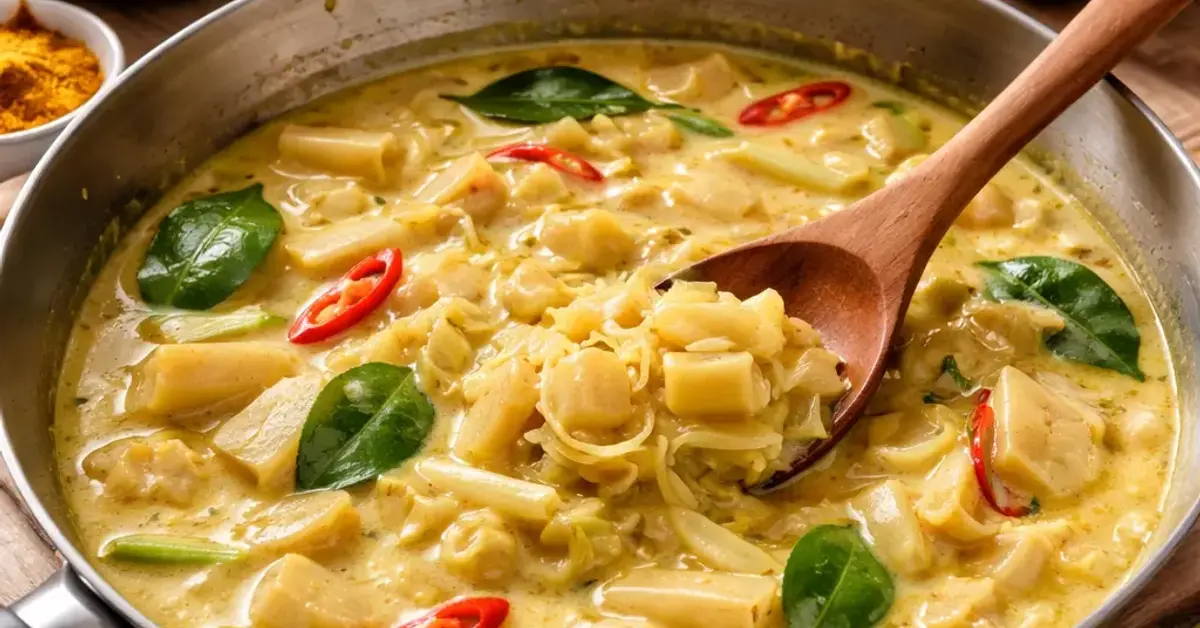
slow-simmering rebung in coconut milk Key Takeaways
Slow-simmering rebung in coconut milk is the heart of two beloved Indonesian dishes— gulai rebung (rich, creamy, and spiced) and lodeh rebung (lighter, brothier, and vegetable-packed).
- Slow-simmering rebung in coconut milk needs proper prep—raw bamboo shoots must be boiled or soaked to remove bitterness.
- Choosing between gulai and lodeh changes the spice paste, coconut milk richness, and cooking time.
- Avoiding curdled coconut milk, bland broth, and mushy shoots is possible with the right heat control and ingredient order.
Why Slow-Simmering Rebung in Coconut Milk Demands Careful Technique
Cooking bamboo shoots (rebung) in coconut milk is a tradition across Southeast Asia, especially in Indonesian gulai and lodeh. The shoots themselves have a mild, slightly sweet flavor and a pleasing crunch—but only if handled correctly. Raw rebung contains hydrocyanic acid, which gives a sharp bitterness and can be toxic if undercooked. That’s why proper preparation and a gentle, patient simmer are non-negotiable.

Whether you’re making gulai rebung (a thick, coconut-rich curry with turmeric, lemongrass, and chilies) or lodeh rebung (a savory vegetable stew with a thinner coconut broth), the foundation is the same: cook the shoots until tender, then marry them with aromatics and coconut milk without breaking the sauce.
Mistake #1: Skipping the Pre-Boil or Soak
The biggest error home cooks make is tossing raw bamboo shoots straight into the pot. Fresh rebung must be boiled for at least 15–20 minutes, then rinsed, to neutralize bitterness and soften the fibers. If using canned or vacuum-packed shoots, a quick blanch (5 minutes) still helps remove any metallic taste. For a related guide, see 5 Common Braising Rebung Mistakes to Avoid for Perfect Semur.
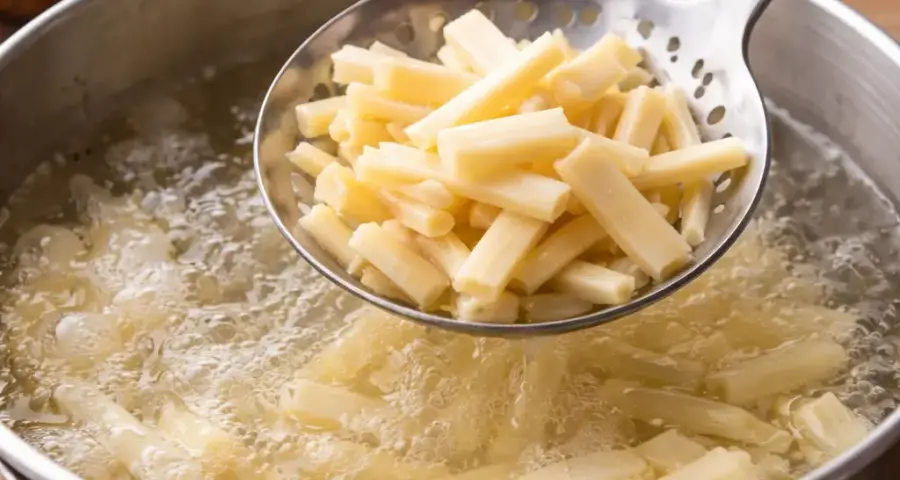
How to Prep Rebung the Right Way
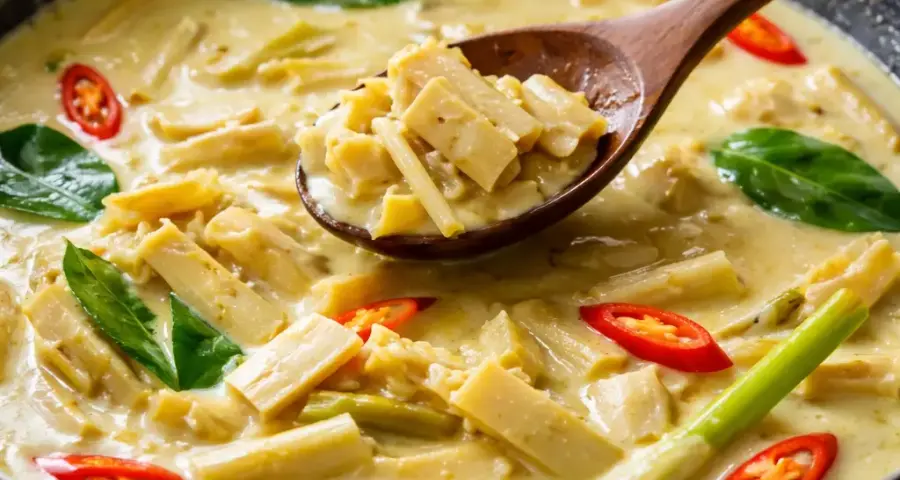
- Slice shoots into thin strips or small chunks—they cook faster and absorb flavors better.
- Boil in salted water with a pinch of turmeric (optional) for 15 minutes.
- Drain and rinse under cold water. Squeeze gently to remove excess liquid.
Mistake #2: Using Too Much Heat and Splitting the Coconut Milk
Slow-simmering rebung in coconut milk should be just that—slow. High heat will cause the coconut milk to separate, leaving you with greasy oil floating on a watery, curdled sauce. Always start with the gentlest simmer you can manage, stirring occasionally.
Tip: The “No-Boil” Rule
Once coconut milk is in the pot, never let it reach a rolling boil. The protein and fat separate above about 90°C (194°F). Keep the heat at medium-low and you’ll see tiny bubbles, not big, violent ones. This is especially crucial for gulai, where a thick, emulsified gravy is the goal.
Mistake #3: Overloading the Pot with Acidic Ingredients
Tamarin, lime juice, and tomatoes add brightness to lodeh and gulai, but too much acid can also cause coconut milk to curdle. Add these ingredients only after the shoots are tender and the gravy has thickened slightly. If you’re making a tamarind-based lodeh rebung, introduce the tamarind water in the last 5 minutes of cooking. For a related guide, see Rebung Chips: Easy 4-Step Guide to Crispy Keripik Rebung.
Mistake #4: Underseasoning the Base
How to cook bamboo shoots in coconut milk without ending up bland? Build flavor in layers. Start by sautéing a spice paste (bumbu) of shallots, garlic, chilies, turmeric, galangal, and candlenuts until fragrant. For gulai, add coconut milk early; for lodeh, add water or broth first and only pour in coconut milk near the end.
Aromatics Cheat Sheet
| Dish | Key Spice Paste | Coconut Milk Ratio | Additional Liquid |
|---|---|---|---|
| Gulai Rebung | Turmeric, ginger, galangal, chilies, candlenuts, lemongrass | Thick (1:1 with water) | None or minimal |
| Lodeh Rebung | Shallots, garlic, lesser galangal (kencur), turmeric leaf | Thin (1:3 with water) | Pumpkin, long beans, corn |
Mistake #5: Overcooking the Shoots Until They Turn Mushy
Bamboo shoots have a natural crunch that many people love. Simmering for more than 45 minutes (after pre-boiling) will turn them into soft, fibery mush. For slow-simmering rebung in coconut milk, aim for 25–35 minutes total once the shoots hit the sauce. Taste after 20 minutes; they should be tender but still offer a light bite.
Mistake #6: Ignoring the Coconut Milk’s Fat Content
Thin coconut milk (cair) is great for lodeh; thick coconut milk (kental) gives gulai its luxurious body. Using the wrong type can throw off both flavor and texture. For gulai, always use full-fat coconut milk from cans or fresh grated coconut squeezed with warm water. For lodeh, one can of full-fat mixed with two cans of water works perfectly.
Mistake #7: Not Letting the Dish Rest Before Serving
Like any slow-simmered stew, gulai and lodeh taste better after a short rest. Turn off the heat, cover the pot, and let it sit for 10–15 minutes. The flavors meld, the coconut milk stabilizes, and the shoots absorb the spices more deeply. This step also helps you adjust salt and chili heat without scrambling to fix a hot pot.
How to Choose Between Gulai and Lodeh Rebung
Not sure which version to make? Here’s the quick breakdown:
- Gulai rebung is a special-occasion dish—rich, spicy, and almost gravy-like. Great with steamed rice or ketupat.
- Lodeh rebung is everyday comfort food—lighter, more brothy, and packed with vegetables like chayote, carrots, and green beans.
Both are naturally gluten-free and can be made vegan by skipping shrimp paste (terasi) in the spice mix. For lodeh, some versions add chicken or tofu, but the vegetable-only version is most common in Java.
Troubleshooting Common Problems
Why is my gulai grainy?
You boiled the coconut milk or added acid too early. Gently reheat with a splash of cold water and whisk until smooth. It won’t be perfect, but it will be edible.
Why is my lodeh too watery?
Let it simmer uncovered for 10 extra minutes. The water will evaporate and the coconut flavor will concentrate.
Why are the shoots still bitter after cooking?
You didn’t boil them long enough before adding to the curry. Next time, boil 20 minutes, then taste a piece—if bitter, boil again for 10 more minutes.
Useful Resources
For a deeper dive into traditional Indonesian spice pastes, visit Bango’s official recipe for Gulai Rebung. For more on the science of coconut milk in cooking, Serious Eats has a thorough guide: The Food Lab: How to Cook with Coconut Milk.
Frequently Asked Questions About slow-simmering rebung in coconut milk
Can I use frozen bamboo shoots for gulai rebung ?
Yes, frozen rebung works well. Thaw them completely, then blanch for 5 minutes before adding to the curry. Their texture will be slightly softer than fresh, but the flavor remains fine.
How long should I slow-simmer rebung in coconut milk ?
After pre-boiling, 25–35 minutes on low heat is enough. The shoots should be tender but not mushy. If you want them very soft, extend to 45 minutes but check every 10 minutes.
What’s the difference between gulai rebung and lodeh rebung ?
Gulai uses a thick coconut gravy with strong spice paste, while lodeh has a thinner, water-based broth with coconut milk added later. Lodeh usually contains more vegetables; gulai focuses on the shoots and creamy sauce.
Do I need to peel bamboo shoots before cooking?
Yes. Remove the tough outer layers until you reach the pale, tender inner flesh. Slice crosswise or lengthwise depending on your recipe. Thin strips cook faster and absorb spices better.
Can I add coconut cream instead of coconut milk?
You can, but it will make the dish very thick and rich. Dilute the cream with water (2 parts cream to 1 part water) to approximate coconut milk. Adjust to your preferred consistency.
Why did my coconut milk separate?
Too high heat or acidic ingredients added too early. Keep the heat low and add tamarind, lime, or tomatoes only at the end. If it still splits, whisk in a teaspoon of cornstarch slurry.
How do I store leftover gulai or lodeh rebung ?
Cool to room temperature and refrigerate in an airtight container for up to 3 days. Reheat gently on the stove over low heat, adding a splash of water if the sauce thickens too much.
Can I freeze gulai rebung ?
Yes, but the texture of the shoots may soften further. Freeze in portions for up to 2 months. Thaw overnight in the fridge and reheat slowly. The coconut milk might separate slightly; whisk to re-emulsify.
What protein can I add to lodeh rebung ?
Diced firm tofu, tempeh, or shredded chicken work beautifully. Add tofu or tempeh early (they absorb flavor); add cooked chicken in the last 5 minutes to avoid overcooking.
Is gulai rebung spicy?
It can be, but you control the heat. Reduce or omit bird’s eye chilies and use only large red chilies for milder but colorful results. The spice paste should still have depth, not just heat.
Can I make lodeh rebung without coconut milk?
It won’t be lodeh—it will be a clear vegetable soup. For a similar creamy effect without coconut, try a cashew cream or unsweetened oat milk, though the flavor will differ significantly.
What vegetables pair best in lodeh rebung ?
Chayote (labu siam), long beans, carrots, green beans, corn, and young jackfruit are classic choices. All should be added in stages based on cooking time (hardest first).
How do I know when bamboo shoots are tender?
Insert a skewer or knife tip into a thick piece—it should go through with light resistance. Taste a piece; it should be tender but not falling apart.
Can I use canned coconut milk?
Absolutely. It’s consistent, widely available, and works perfectly. Shake the can before opening to incorporate the separated cream. Use full-fat for gulai and thin with water for lodeh.
What if I prefer a milder flavor?
Use less turmeric and fewer chilies. Add a small piece of coconut sugar or palm sugar to balance bitterness. The spice paste can be toasted longer to mellow the raw edge.
Do I need to stir constantly while simmering?
No, but stir every 5–7 minutes to prevent the bottom from scorching. Coconut milk is prone to sticking, especially in thick gulai. A heavy-bottomed pot helps distribute heat evenly.
Can I use dried bamboo shoots?
Dried shoots need overnight soaking plus a long simmer (1 hour or more) to rehydrate. Their texture will be chewier and the flavor more concentrated. Pre-boil as you would fresh shoots.
What is the best rice to serve with gulai rebung ?
Steamed jasmine rice or fragrant pandan rice works wonderfully. For a more festive pairing, try ketupat (compressed rice cakes) or lontong.
Can I make this dish in an Instant Pot or pressure cooker?
Yes, but only for the pre-boil stage. Pressure-cook shoots for 10 minutes with water, then release pressure. Finish the gulai or lodeh on the sauté setting, adding coconut milk only after the pressure is released.
Is rebung healthy?
Bamboo shoots are low in calories, high in fiber, and contain potassium and vitamin B6. The coconut milk adds healthy medium-chain triglycerides (MCTs), though it’s calorie-dense. Enjoy in moderation as part of a balanced diet.