
Grandma’s Recipes Key Takeaways
Bringing Grandma’s Recipes to life isn’t just about nostalgia — it’s a profound way to reconnect with whole foods, seasonal cycles, and the land that sustains us.
- Grandma’s Recipes gain new depth when you trace each ingredient back to its source — a farm, a garden, or a local field.
- Simple kitchen habits like soaking beans, fermenting vegetables, and roasting never go out of style — they are the original farm-to-table recipes.
- The Earth to Plate mindset transforms cooking into storytelling, where every bite carries the memory of the land and the hands that harvested it.
The Rustling Kitchen Window That Started Everything
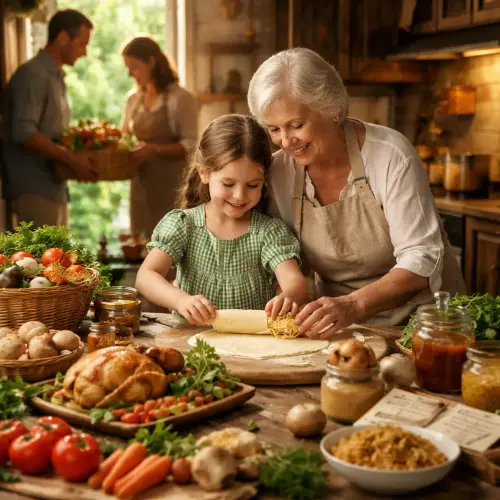
I remember standing on a small wooden stool in my grandmother’s kitchen, the air thick with the scent of simmering tomatoes and sun-warmed basil. She would pull a single gnarly carrot from her apron pocket, still dusted with soil, and say, “This is where dinner begins.” That moment planted the seed for everything we believe in at From Earth to Plate. Her Grandma’s Recipes weren’t written down — they were passed through touch, taste, and a quiet reverence for what the earth gave her.
How “From Earth to Plate” Restores Real Flavor to Grandma’s Recipes
Our motto is simple: honor the ingredient before you honor the technique. When you start with a tomato that tastes like sunshine, you don’t need to hide it beneath spice blends. The same logic applies to Grandma’s Recipes. She never used canned soup as a shortcut because her pantry was the garden.
The True Cost of Convenience
Modern shortcuts have robbed many farm-to-table recipes of their soul. The green beans my grandmother slow-cooked with a ham hock for two hours turned soft and sweet — not from a factory, but from the patience of letting the earth do the work. Reclaiming that patience is the first step to reviving any family recipe.
Discovering the Origin Stories in Every Dish
Every recipe my grandmother made had a secret — a neighbor’s apple tree, a farmer’s leftover rye flour, a wild patch of mint by the creek. Tracing her Grandma’s Recipes back to those sources taught me that the best farm-to-table recipes are local, seasonal, and deeply personal. Try mapping one of your own dishes: Where did the onion grow? Who milled the flour? That map becomes your recipe’s true story.
7 Steps to Bring Your Own Grandma’s Recipes to Life
Here are the practices we use to transform yellowed index cards into vibrant, earth-connected meals worthy of the From Earth to Plate motto.
Step 1: Dig Into the Ingredient Memory
Pull out your Grandma’s Recipes and underline every ingredient. Then ask yourself: Where did that ingredient come from in her time? If she used chicken, she likely raised it or knew the farmer. Your first task is to find local, pasture-raised chicken that mirrors her source. The flavor difference is immediate.
Step 2: Slow Down the Cooking Time
So many old recipes call for long simmering, braising, or overnight soaking. This isn’t a mistake — it’s the original farm-to-table method. By slowing down, you allow the grain, bean, or meat to fully hydrate and release its deep, complex flavors. You can’t rush the earth, and you can’t rush Grandma’s Recipes.
Step 3: Reverse-Engineer the Seasonality
Look at the month your grandmother made this dish. If it’s a summer cobbler, the fruit was at its peak. If it’s a winter stew, the root vegetables were in storage. Recreate that seasonality when you shop. Out-of-season produce is the number one killer of authentic Grandma’s Recipes.
Step 4: Master One Heritage Technique at a Time
Pick just one skill from her repertoire — canning, sourdough, braising, or fermenting. Practice it until it becomes instinct. This is how the Earth to Plate philosophy builds muscle memory. You don’t just cook; you become a steward of the craft.
Step 5: Swap Ultra-Processed for Whole Ingredients
If her recipe calls for “1 can of cream of mushroom soup,” replace it with a simple béchamel made from fresh mushrooms, butter, and whole milk. This single swap transforms a processed dish into an honest farm-to-table recipe that honors her intention, not the 1950s food industry’s shortcut.
Step 6: Record the Scent, Sound, and Story
The missing ingredient in most Grandma’s Recipes is context. Write down the memory that comes with it: the sound of her knife on the wooden board, the radio station playing, the way she hummed while stirring. When you share that with your family, the recipe becomes a living heirloom. This is the heart of our motto.
Step 7: Cook It Once a Season — With Intention
Make one Grandma’s Recipes dish at the peak of each season. Treat it like a ritual. Prepare the ingredients from scratch, set the table with care, and share the origin stories with everyone at the table. Over the year, you’ll have cooked your way through four profound seasonal meals that connect you deeply to the earth.
Why Farm to Table Recipes Are the Natural Home for Grandma’s Cooking
There is a reason the farm-to-table movement borrows so heavily from old family cooking. The two philosophies are essentially the same: respect the ingredient, eat with the season, and waste nothing. When you bring Grandma’s Recipes into this framework, they stop being relics and start being guides for how to eat well today. The food tastes more vibrant, the cooking feels more meaningful, and every meal tells a story. You can also browse more posts in guides.
Reflection: The Earth Between the Lines
My grandmother never used the word “sustainable.” She just saved bacon fat, kept a compost bin by the back door, and planted beans next to corn so they’d help each other grow. Her Grandma’s Recipes were sustainable by design. The From Earth to Plate motto is simply a modern echo of her wisdom. When we cook her food with whole ingredients, we are literally continuing the cycle of care she started. For a related guide, see 5 Proven Reasons Bamboo Shoots Deserve a Spot in Your Modern Kitchen.
Useful Resources
Want to go deeper into reviving Grandma’s Recipes with a farm-to-table mindset? These resources offer practical guidance:
- USDA National Agricultural Library – Heritage Cooking Resources — Historical cookbooks and guides for traditional whole-food preparation methods.
- Slow Food Foundation for Biodiversity – Ark of Taste — A catalog of heritage ingredients and recipes at risk of being lost, perfect for rediscovering authentic farm-to-table recipes.
Frequently Asked Questions About Grandma’s Recipes
How do I start reviving my grandmother’s old recipes?
Begin by reading through the recipe with fresh eyes. Identify each ingredient and consider its original whole-food form. Then source the freshest, most local equivalent and follow the technique exactly, without modern shortcuts.
Can I apply the “ From Earth to Plate ” motto to any recipe?
Absolutely. The motto works with any dish that has a whole-food ingredient at its core. The focus is on tracing each component back to its natural origin and respecting that journey during preparation.
What if my grandmother’s recipe uses canned or processed ingredients?
That’s a sign of her era, not her intention. Swap those items with homemade or artisanal whole-food versions. For example, replace canned broth with slow-simmered bone broth, and processed cheese with real aged cheese.
How do I find farm-to-table ingredients for heritage recipes?
Shop at local farmers’ markets, join a CSA (community-supported agriculture) program, or grow a small kitchen garden. Ask farmers about their growing methods and seasonal availability to match your recipe.
Why does the cooking technique matter so much for Grandma’s Recipes ?
Technique is where the flavor depth lives. Slow braising, fermenting, and roasting break down fibers and develop complex taste compounds that quick cooking cannot achieve. The earth’s ingredients are designed for time.
Is it expensive to cook this way?
It can be if you buy everything pre-cut and pre-packaged at a specialty store. But buying whole ingredients in season — like a whole chicken, dry beans, and root vegetables — is often cheaper and yields far more meals. For a related guide, see Rebung Chef: 7 Proven Ways to Redefine Culinary Talent Beyond Vegetables.
How do I preserve Grandma’s Recipes for the next generation?
Write down not just the ingredients and steps, but also the stories, smells, and sounds that accompany the dish. Record a video of yourself cooking it while talking about where each element comes from.
What is the most important tool for reviving heritage recipes?
A heavy-bottomed pot or Dutch oven. It distributes heat evenly and holds temperature for long simmering — the hallmark of traditional cooking that connects earth to plate.
Can I use frozen or dried ingredients in farm-to-table recipes?
Yes, if they were preserved at their peak. Frozen berries, dried heirloom beans, and fermented vegetables are all excellent options that retain the integrity of the original harvest.
What if I can’t find the exact heirloom ingredient my grandmother used?
Choose the closest regional or seasonal substitute with a similar texture and flavor profile. The goal is to honor the spirit of the recipe, not photocopy an irreplaceable ingredient.
How do I teach my children the Earth to Plate philosophy?
Invite them into the kitchen early. Let them wash the vegetables, smell the herbs, and stir the pot. Explain where each ingredient came from. Kids are naturally curious about where food begins.
Does the motto apply to baking as well as savory dishes?
Yes. Sourdough starters, whole-milled flours, and seasonal fruits are the foundation of earth-to-plate baking. Your grandmother’s pie crust was likely made with lard from a local farm — that’s a great place to start.
What is the biggest mistake people make when reviving old recipes?
Speeding through the process. They use shortcuts like pressure cookers, pre-minced garlic, or bouillon cubes. The magic of Grandma’s Recipes lies in the slow, deliberate pace that lets flavors meld naturally.
How do I adapt a recipe for modern dietary needs?
Swap ingredients thoughtfully: use pasture-raised butter instead of margarine, substitute gluten-free heirloom grains for wheat, or replace refined sugar with honey from a local apiary. Keep the technique intact.
Can I use the Earth to Plate approach with international cuisines?
Absolutely. Every culture has heritage recipes rooted in local, seasonal ingredients. The same principles — whole food, slow technique, origin storytelling — apply beautifully to Italian, Mexican, Indian, or any cuisine.
What role does fermentation play in Grandma’s Recipes ?
Fermentation is a cornerstone. Your grandmother likely made her own pickles, sauerkraut, yogurt, or sourdough. These living foods connect directly to the earth and are some of the most nutrient-dense farm-to-table recipes.
How do I know if an ingredient is truly “from the earth”?
Look for minimal processing: whole grains instead of flour, raw nuts instead of roasted, fresh herbs instead of dried. The closer the ingredient is to its harvested form, the closer you are to the earth.
What if my family doesn’t like the taste of whole foods?
Start with a familiar recipe they already enjoy and gradually replace processed components. The deep, real flavors of whole ingredients usually win people over once they taste the difference.
Can I write a blog about my experience with Grandma’s Recipes ?
Yes, and it’s a wonderful way to keep the tradition alive. Share the original recipe, the story behind it, photos of your ingredient sourcing, and the finished dish. Use the focus keyword Grandma’s Recipes naturally in your posts to help others find you.
How does the Earth to Plate philosophy help the environment?
By sourcing locally, eating seasonally, and wasting less, you reduce food miles, support regenerative farming, and cut down on packaging. It’s a return to the low-impact, high-flavor way your grandmother cooked.