
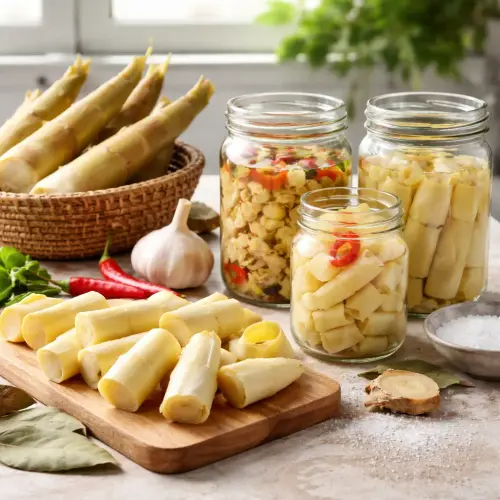
cooking bamboo shoots without the smell Key Takeaways
If you’ve ever blanched fresh bamboo shoots only to have your kitchen smell like a barnyard, you’re not alone.
- Traditional boiling alone won’t fully remove bamboo shoot smell ; fermentation and canning break down the compounds responsible.
- Lacto-fermentation at home is simple and delivers tangy shoots perfect for stir-fries.
- Pressure canning gives you shelf-stable shoots ready to use anytime with zero lingering odor.
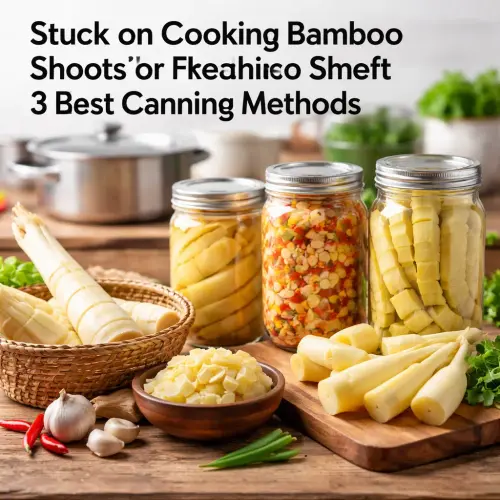
Why cooking bamboo shoots without the smell Feels Impossible (Until Now)
Fresh bamboo shoots contain a natural compound called taxiphyllin, a cyanogenic glycoside that releases a strong, grassy odor when cut or heated. Most home cooks reach for a simple boil, but that only disperses the smell through your home. The real fix is a two-step approach: break down the compound with heat and time, then seal in the freshness with fermentation bamboo shoots or proper canning. These methods don’t just mask the odor—they eliminate the source. For a related guide, see Rebung Chef: 5 Powerful Traditions Behind Kitchen and Shoots.
Method 1: Pressure Canning for Odor-Free Canned Bamboo Shoots
Pressure canning is the gold standard for canning bamboo shoots because it reaches temperatures high enough to destroy the enzymes that create the smell. The result is a clean, neutral shoot that tastes like the dish you add it to, not like the can.
What You’ll Need
- Fresh bamboo shoots (about 2 lbs per quart jar)
- Pressure canner (dial or weighted gauge)
- Canning jars (pint or quart) with new lids
- Salt (optional, for brine)
Step-by-Step Instructions
- Prep the shoots: Remove the tough outer leaves and trim the base. Slice the tender inner flesh into 1-inch chunks or strips.
- Blanch twice: Boil the pieces in water for 10 minutes, drain, then boil again in fresh water for another 10 minutes. This first boil is where most of the volatile compounds escape into steam—so run your vent hood.
- Fill the jars: Pack the blanched shoots into hot jars, leaving 1 inch of headspace. Add ½ teaspoon of salt per pint (optional, for flavor). Cover with boiling water.
- Process in pressure canner: Process pints for 30 minutes, quarts for 35 minutes, at 10 lbs pressure (adjust for your altitude). Let the pressure drop naturally.
Pro Tip
Add a tablespoon of vinegar to the blanching water. It helps neutralize the taxiphyllin even faster and leaves no vinegar taste after rinsing.
Method 2: Lacto-Fermentation for Tangy Fermentation Bamboo Shoots
Lacto-fermentation uses beneficial bacteria to transform the shoots, breaking down the smelly compounds into pleasant, sour notes. This method is perfect if you love a little tang in your bamboo shoots cooking.
What You’ll Need
- Fresh bamboo shoots, blanched and sliced
- Non-iodized salt (2% of the weight of the shoots plus water)
- Filtered water
- A clean quart jar with airlock lid (or a regular jar with a loosely screwed lid)
- A weight to keep shoots submerged (a glass fermentation weight or a small ziplock bag filled with brine)
Step-by-Step Instructions
- Prepare the brine: Dissolve salt in water at a ratio of 20g salt per 1 liter of water. This 2% brine is ideal for vegetables.
- Pack the jar: Stuff the blanched shoots into the jar, leaving 2 inches of headroom. Pour the brine over them until fully submerged. Place the weight on top.
- Ferment: Set the jar at room temperature (65–75°F / 18–24°C) away from direct sunlight. After 3 days, you’ll see bubbles—that’s good. Let it go for 7 to 14 days. Taste after day 7; the longer it goes, the more sour and less smelly it gets.
- Store: Once you’re happy with the tang, move the jar to the fridge. The cold halts fermentation. The shoots will keep for months.
Pro Tip
Add a clove of garlic or a chili pepper to the jar for extra flavor. The fermentation will soften the spice and make the cooking bamboo shoots without the smell effort even more rewarding.
Method 3: Quick Pickle Canning (Water Bath) — A Shorter Path to Canned Bamboo Shoots
If you don’t own a pressure canner, a vinegar-based pickle using a boiling water bath is a reliable alternative. The acidity does double duty: it helps remove bamboo shoot smell and preserves the shoots with a bright, sharp flavor.
What You’ll Need
- 2 lbs fresh bamboo shoots, blanched and sliced
- 2 cups white vinegar (5% acidity)
- 2 cups water
- 1 tablespoon salt
- 1 tablespoon sugar (optional, to balance acidity)
- Spices: mustard seeds, peppercorns, bay leaf
- Canning jars with lids
Step-by-Step Instructions
- Blanch the shoots: Same double-blanch as Method 1. This pre-step is non-negotiable for odor control.
- Make the brine: Combine vinegar, water, salt, sugar, and spices in a pot. Bring to a boil and stir until the salt dissolves.
- Pack the jars: Place the blanched shoots into hot jars. Pour the hot brine over them, leaving ½ inch of headspace. Remove air bubbles with a chopstick.
- Process in water bath: Process pint jars for 15 minutes (start the timer after the water returns to a full boil). Let cool undisturbed for 12 hours.
Pro Tip
These pickled shoots are fantastic in rice bowls or tacos. The vinegar tang completely overpowers any remaining earthy notes.
Comparison: Which Method Is Best for Bamboo Shoots Cooking?
| Method | Odor Elimination | Texture | Flavor | Storage Life | Equipment Needed |
|---|---|---|---|---|---|
| Pressure Canning | Excellent | Firm, meaty | Neutral | 1–2 years (pantry) | Pressure canner |
| Lacto-Fermentation | Good (develops over time) | Crunchy | Tart, tangy | 3–6 months (fridge) | Airlock jar |
| Quick Pickle (Water Bath) | Very good | Slightly softer | Sharp, vinegary | 1 year (pantry) | Large pot |
Useful Resources
For more details on safe canning practices, check out the National Center for Home Food Preservation’s guide to canning bamboo shoots. If you’re curious about the science behind bamboo shoot odors, this ScienceDirect overview of bamboo shoot biochemistry explains taxiphyllin breakdown in depth.
Frequently Asked Questions About Cooking Bamboo Shoots Without the Smell
cooking bamboo shoots without the smell doesn’t require fancy equipment or a chemistry degree. Pick the method that fits your kitchen and schedule—pressure canning for neutral, shelf-stable shoots; fermentation for tangy, probiotic-rich ones; or quick pickling for a fast fix. Once you’ve tried one of these three techniques, you’ll never dread prepping bamboo shoots again. For a related guide, see Rebung Chef: 7 Proven Ways to Redefine Culinary Talent Beyond Vegetables.
Frequently Asked Questions About cooking bamboo shoots without the smell
How do you remove bamboo shoot smell before cooking?
The most effective method is double blanching: boil the shoots for 10 minutes, drain, then boil again in fresh water for another 10 minutes. This releases the volatile compounds into the steam.
Does fermentation bamboo shoots really get rid of the smell?
Yes. Lacto-fermentation uses beneficial bacteria to break down the cyanogenic glycosides over 7–14 days, leaving behind a clean, sour aroma instead of the typical barnyard smell.
Can I can bamboo shoots without a pressure canner?
You can use a water bath canner with a vinegar brine (quick pickle method). However, plain bamboo shoots are low-acid and require pressure canning for safe preservation without added acid.
Why do my canned bamboo shoots still smell?
If you skipped the double-blanch step or didn’t process at a high enough temperature, the compounds may remain active. Always blanch thoroughly and process according to your canner’s instructions.
How long should I ferment bamboo shoots?
Typically 7–14 days at room temperature. Taste after day 7—the longer you let it go, the more pronounced the sour flavor and the less smell remains.
Is it safe to eat raw fermented bamboo shoots?
It’s safe if the lacto-fermentation was successful (brine stayed submerged, no mold). However, most people prefer them cooked briefly in a stir-fry or soup to enhance flavor.
Can I use frozen bamboo shoots for canning?
Yes, but the texture will be softer. Thaw them first and skip the initial blanching step if they were blanched before freezing.
What’s the best type of bamboo shoots to can?
Young, tender shoots from species like Bambusa vulgaris or Phyllostachys edulis (Moso) work best. Older shoots are tougher and have a stronger odor.
Do I need to add salt when pressure canning bamboo shoots ?
Salt is optional for preservation; it’s mainly for flavor. The high heat of pressure canning ensures safety even without salt.
How does the smell compare between pressure canning and fermentation?
Pressure canning eliminates the smell almost immediately during processing, while fermentation takes days to neutralize it fully. Both yield odor-free shoots.
Can I reuse the brine from fermented bamboo shoots?
Yes, the leftover brine is a flavorful base for soups or marinades. It’s also a good starter for future ferments if it smells clean and sour.
What should I do if mold appears on my fermented bamboo shoots?
If the shoots were submerged under brine, any white surface yeast is often harmless—skim it off. If the shoots smell putrid or have black/green mold, discard them.
Is bamboo shoot canning safe for beginners?
Absolutely. Start with the quick pickle method (water bath) if you’re new, then progress to pressure canning once you’re comfortable with the equipment.
Can I add other vegetables to my canned bamboo shoots?
You can add aromatics like garlic or chili, but avoid mixing with other low-acid vegetables unless you adjust the processing time for the densest item.
How do I know when my canned bamboo shoots are spoiled?
Signs include a bulging lid, leaking liquid, off odors (sour or rotten), or visible mold. If in doubt, throw it out.
Does the smell affect the taste of the final dish?
If you properly can or ferment the shoots, the smell and taste become neutral or pleasantly tangy. Poorly processed shoots can impart a bitter, earthy flavor.
Can I boil bamboo shoots after they’ve been canned?
Yes, you can heat them in soups, stir-fries, or straight from the jar. Pressure-canned shoots are already fully cooked; just warm them through.
Is there a way to reduce the smell during the initial blanch?
Run your stovetop vent fan, open a window, and boil in a large pot with lots of water. Adding a tablespoon of vinegar to the water also helps.
What’s the shelf life of canned bamboo shoots?
Pressure-canned and water-bath pickled shoots last 1–2 years in a cool, dark pantry. Fermented shoots keep 3–6 months in the refrigerator.
Do I have to use white vinegar for pickling?
White vinegar with 5% acidity is standard, but you can use apple cider vinegar for a fruitier note. Avoid vinegar with lower acidity.