
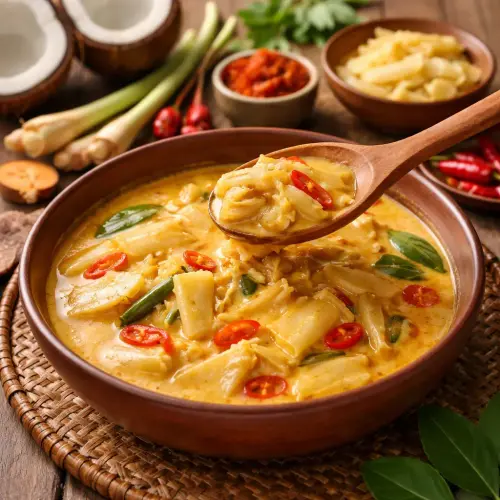
Padang-style gulai rebung Key Takeaways
In West Sumatra, gulai rebung is a festive dish that appears during family gatherings, ceremonial feasts, and daily meals at nasi padang eateries.
- Use fresh, young bamboo shoots for the tenderest texture in your Padang-style gulai rebung .
- Stir in a steady, gentle motion — never abruptly — to prevent the coconut milk from breaking.
- Add the coconut milk in two stages: first a thinner batch, then a thicker one toward the end.
What Makes This Padang-style gulai rebung So Special?
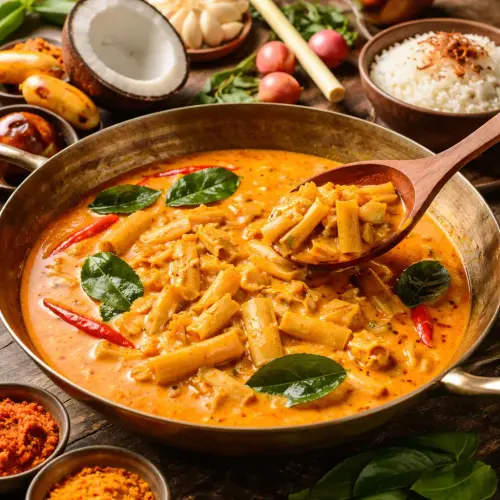
In West Sumatra, gulai rebung is a festive dish that appears during family gatherings, ceremonial feasts, and daily meals at nasi padang eateries. The magic lies in the balance of tender bamboo shoots, a complex spice paste, and the velvety richness of coconut milk. Unlike many curries that rely solely on heat, this version builds layers of flavor from turmeric, galangal, lemongrass, and candlenuts, all bound together by the creamy santan. When you master the technique, you can bring the authentic taste of a Padang-style gulai rebung into your own kitchen. For a related guide, see Induct Cooking vs Wood-Fire: 5 Key Differences for Gulai Rebung.
The Challenge: Keeping Coconut Milk From Splitting
Even experienced home cooks can end up with a grainy, curdled sauce. The protein in coconut milk separates when exposed to high heat for too long, or when stirred too vigorously. The result is a split, oily mess that lacks the luscious consistency of a well-made gulai. Understanding why this happens is the first step to preventing it. Temperature control and gentle handling are the two pillars of success.
Essential Ingredients for the Perfect Padang-style gulai rebung
Before you fire up the stove, gather these components. Quality ingredients directly affect the final texture and aroma of your curry.
- Bamboo shoots (rebung): Use fresh young shoots if available. If using canned shoots, rinse them well and blanch for 3 minutes to remove any metallic taste.
- Coconut milk: Use two types — one thin (from the first press of grated coconut) and one thick (from the second press). Homemade or high-quality canned brands work.
- Spice paste base: Shallots, garlic, red chilies, turmeric, galangal, ginger, candlenuts, and a pinch of coriander powder.
- Aromatics: Lemongrass, kaffir lime leaves, and a cinnamon stick.
- Seasoning: Salt, sugar, and a squeeze of lime juice at the end.
7 Expert Tips to Prevent Coconut Milk From Splitting
These actionable tips are directly tied to the behavior of coconut milk during cooking. Apply them every time you make this dish, and your Padang-style gulai rebung will stay silky smooth. For a related guide, see Easy Sambal Goreng Rebung ala Mom: Essential Spicy Side for Sahur.
1. Start With Gentle Heat on a Thick-Bottomed Pan
Place a heavy pot or wok over medium-low heat. A thin pan creates hot spots that can scorch the coconut milk. The gentle, even heat from a thick base ensures the sauce warms gradually without shocking the fat molecules.
2. Bloom the Spice Paste Before Adding Any Liquid
Sauté your ground spice paste in a little oil until it becomes fragrant and the raw smell disappears. This step deepens the flavor and reduces the time the coconut milk needs to cook later. The less time the coconut milk sits over heat, the less likely it is to split.
3. Add Thin Coconut Milk First, Then Thicken With the Last Batch
Pour in the thin coconut milk after the aromatic paste is ready. Let it simmer with the bamboo shoots for 10–15 minutes. Only toward the end, when the shoots are tender, do you add the thick coconut milk. This staged approach prevents the cream from overexposure to heat.
4. Stir Continuously but Gently in One Direction
Use a wooden spoon to stir in a slow, circular motion. Avoid mixing in different directions because that creates turbulence, which can break the emulsion. A consistent, rhythmic stir keeps the fat molecules evenly dispersed.
5. Never Let the Curry Come to a Rolling Boil After Adding Thick Coconut Milk
Once you add the thick coconut milk, lower the heat to a bare simmer — small bubbles rising slowly to the surface. A vigorous boil is the number one cause of splitting. If you see the surface breaking vigorously, immediately reduce the heat and give a gentle stir.
6. Add a Tiny Amount of Tapioca Starch Slurry as an Insurance
Mix 1 teaspoon of tapioca starch with 2 teaspoons of water and stir it into the curry about 3 minutes before removing it from the heat. This natural stabilizer reinforces the coconut milk’s emulsion without altering the taste. Use this only if you are cooking with canned coconut milk of unknown quality.
7. Finish With a Splash of Acid to Brighten the Flavor
Squeeze a lime wedge or add a dash of tamarind juice once the curry is off the heat. Acid helps stabilize the coconut milk slightly, plus it lifts the richness and balances the spices. Do not add acid before the thick coconut milk or it may cause immediate curdling.
Step-by-Step Recipe: Authentic Padang-style gulai rebung
Follow this process to create a restaurant-quality curry that stays creamy from the pot to the plate.
Step 1: Prepare the Bamboo Shoots
If using fresh shoots, peel off the tough outer layers and slice the tender inner part into thin strips. Boil them in salted water for 20 minutes, then drain. If using canned shoots, rinse and blanch briefly. This step removes bitterness and ensures the shoots will cook quickly in the curry.
Step 2: Make the Spice Paste
Blend 6 shallots, 4 garlic cloves, 3 red chilies (seeded for less heat), a 1-inch piece of turmeric, a 1-inch piece of galangal, a 1-inch piece of ginger, 3 candlenuts, and 1 teaspoon of ground coriander with just enough water to form a thick paste. A food processor works best.
Step 3: Sauté the Paste and Aromatics
Heat 2 tablespoons of neutral oil in a heavy pot over medium-low heat. Fry the spice paste until the oil starts to separate and the paste turns darker. Add 2 bruised lemongrass stalks, 4 kaffir lime leaves, and a 3-inch cinnamon stick. Cook for another minute.
Step 4: Add the Thin Coconut Milk and Bamboo Shoots
Pour in 400 ml of thin coconut milk. Add the prepared bamboo shoots. Stir gently, season with 1 teaspoon of salt and 1 teaspoon of sugar. Simmer on low heat for 12–15 minutes, stirring occasionally, until the shoots are tender and the sauce has reduced by about a third.
Step 5: Add the Thick Coconut Milk
Reduce the heat to the lowest setting. Pour in 200 ml of thick coconut milk. Stir continuously in one direction for about 4 minutes. Do not allow the liquid to bubble vigorously. A few small bubbles are fine.
Step 6: Finish and Serve
Once the thick coconut milk is fully incorporated and the sauce is velvety, remove the pot from the heat. Stir in a squeeze of fresh lime juice. Taste and adjust seasoning. Remove the lemongrass stalks and lime leaves before serving. Enjoy your Padang-style gulai rebung with steamed rice or ketupat.
Troubleshooting Common Issues
Even with the best intentions, problems can arise. Here’s how to fix them if your curry starts to go wrong.
If the Coconut Milk Already Looks Grainy
Remove the pot from heat immediately. Fill a bowl with cold water and dip the bottom of the pot for a few seconds to cool it down. Then whisk in 1–2 teaspoons of cold thin coconut milk or a splash of cold water. This often rescues the emulsion by lowering the temperature quickly.
If the Curry Is Too Thin
Mix 1 tablespoon of rice flour or tapioca starch with 3 tablespoons of cold water. Stir the slurry into the simmering curry, then keep stirring for 2 minutes. The starch will thicken the sauce without changing the flavor.
If the Bamboo Shoots Are Still Tough
Simmer the curry covered with a lid for an additional 10 minutes after adding the thin coconut milk. The steam trapped inside helps soften the fibers. If the liquid reduces too much, add a splash of water.
Optimization Tips for Meal Prep and Freezing
This gulai reheats beautifully if you follow a few rules. First, always undercook the thick coconut milk stage by 2 minutes if you plan to freeze the curry. When you reheat, do so very slowly over low heat, stirring gently. Add a splash of water to restore the consistency. Avoid microwaving at high power because it can cause the coconut milk to separate. For best results, thaw overnight in the refrigerator and reheat in a pan on the stove.
Useful Resources
For a deeper understanding of Minangkabau cooking techniques, explore these trusted sources.
- The science behind coconut milk splitting — SBS Food
- Tips for cooking with coconut milk — Martha Stewart
Frequently Asked Questions About Padang-style gulai rebung
Can I use frozen bamboo shoots for Padang-style gulai rebung ?
Yes, frozen shoots work well. Thaw them completely, drain excess water, and proceed with the recipe as written. They may cook slightly faster than fresh shoots.
What if I don’t have candlenuts for the spice paste?
Substitute with macadamia nuts or raw cashews. They provide a similar creaminess and mild sweetness when blended.
How do I know if the coconut milk is about to split?
Look for tiny white specks forming on the surface, or a watery separation around the edges. If you see these signs, lower the heat and stir gently immediately.
Is Padang-style gulai rebung spicy?
It has a moderate heat level. You can control the spice by removing the seeds from the red chilies or reducing the number of chilies in the paste.
Can I make this gulai vegan?
Yes, the recipe is naturally vegan if you use oil instead of animal fat. The coconut milk provides all the richness needed.
What can I serve with Padang-style gulai rebung ?
Steamed white rice, ketupat, or lemang pair perfectly. You can also serve it alongside rendang or fried chicken.
Why did my curry turn bitter?
Bitterness usually comes from burnt spices or scorched coconut milk. Ensure your heat is low when sautéing the spice paste and when simmering the thick coconut milk.
Can I substitute coconut milk with coconut cream?
You can, but dilute it with water to achieve the right consistency. Pure coconut cream is too thick and may cause the sauce to be overly fatty.
How long does this curry keep in the fridge?
Store in an airtight container for up to 4 days. The flavor often deepens on the second day.
Do I have to peel the young bamboo shoots?
Yes, even young shoots have tough outer layers. Peel them until you reach the tender, pale yellow core.
What is the best pan to use?
A heavy-bottomed stainless steel or enameled cast iron pot distributes heat evenly and prevents hot spots that cause splitting.
Can I add other proteins to this gulai?
Absolutely. Diced chicken, firm tofu, or boiled eggs are common additions. Add them during the thin coconut milk stage so they cook through.
How do I fix a curry that is too salty?
Add a squeeze of lime juice or a bit of sugar to balance the saltiness. You can also add more thin coconut milk to dilute the overall salt concentration.
Is this recipe gluten-free?
Yes, all the ingredients are naturally gluten-free. There is no wheat, soy sauce, or flour involved.
Can I prepare the spice paste in advance?
Yes, the paste will keep in the fridge for up to 5 days or in the freezer for 2 months. Freeze in small portions for convenience.
Why is my curry watery despite using thick coconut milk?
You may have added too much water in the early stage, or the bamboo shoots released a lot of liquid. Let it simmer uncovered for a few minutes to reduce the sauce.
Do I need to use fresh turmeric?
Fresh turmeric gives the best color and aroma. If you only have dried powder, use 1 teaspoon and add it toward the end of sautéing to avoid bitterness.
Can I make Padang-style gulai rebung without lemongrass?
Lemongrass contributes a citrusy note that is characteristic of Padang cuisine. If unavailable, substitute with lemon zest and a pinch of lime leaf.
What is the ideal thickness of the final gravy?
It should coat the back of a spoon, similar to a heavy cream consistency. It should flow easily but not be watery.
Can I use a pressure cooker for this recipe?
Yes, for the first stage. Pressure cook the bamboo shoots with thin coconut milk for 5 minutes, then open the lid and add the thick coconut milk on low heat.