
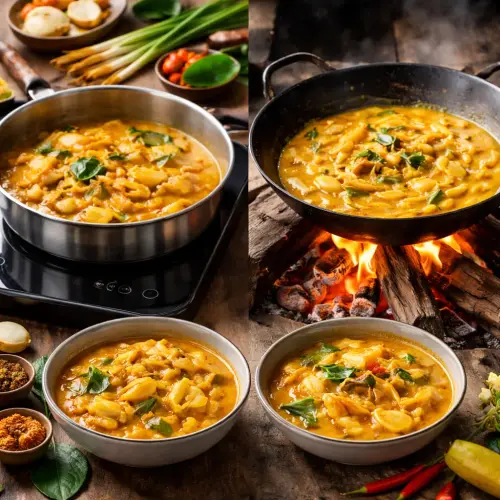
induct cooking vs wood-fire cooking Key Takeaways
Gulai rebung—tender bamboo shoots simmered in rich coconut milk and spices—has been passed down for generations in Sumatra and beyond.
- induct cooking vs wood-fire cooking reveals that induction offers precision and speed, while wood-fire delivers smoky complexity.
- Wood-fire cooking requires patience and constant attention, but rewards you with layers of char and aroma.
- Your choice ultimately depends on the occasion, your kitchen setup, and how much time you can dedicate to the stove.
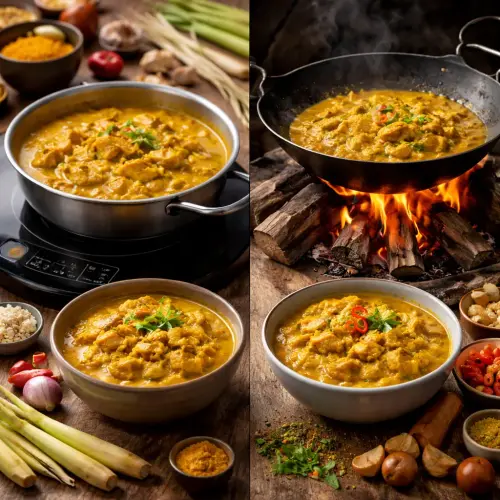
What Makes induct cooking vs wood-fire cooking Different for Gulai Rebung?
To truly appreciate the differences, it helps to understand the unique demands of gulai rebung. Fresh bamboo shoots have a natural bitterness and a crisp-tender bite that must be tamed through slow simmering. The gulai rebung recipe typically calls for a medley of shallots, garlic, turmeric, ginger, galangal, chilies, and lemongrass pounded into a paste. Coconut milk binds everything into a luscious, aromatic gravy. For a related guide, see Rebung Chef: 5 Powerful Traditions Behind Kitchen and Shoots.
When you place a heavy pot over wood embers, the heat radiates unevenly, creating hot spots that can scorch the coconut milk if you are not vigilant. Induction, by contrast, delivers consistent, controllable heat right to the base of the pot. Yet that very convenience can rob the curry of the subtle smokiness that only live fire provides.
Cultural Roots of Wood-Fire Gulai Rebung
In many Indonesian villages, gulai rebung is still made over an open hearth or a simple brick stove fed with coconut shells or hardwood. The cook fans the flames, adjusts the pot’s position, and stirs with a wooden spatula. This dance between cook and fire is part of the dish’s heritage. The resulting curry carries a faint, almost imperceptible kiss of smoke—a flavor memory that speaks of family gatherings and long afternoons.
Modern Convenience of Induction
Induction stoves use electromagnetic fields to heat the pan directly, which means no wasted heat and near-instant temperature changes. For a busy home cook, this is a game changer. You can bring the gulai to a gentle simmer, then dial it down to the lowest setting without worrying about the flame going out. The gravy stays creamy, and the bamboo shoots soften evenly. For a related guide, see Stuck on Cooking Bamboo Shoots Without the Smell? 3 Best Canning Methods.
Comparing Heat Control: The Biggest Factor in induct cooking vs wood-fire cooking
Heat control is where these two methods diverge most dramatically. Wood fire is notoriously fickle. A gust of wind can stoke the flames, or a log can crumble and reduce the heat. Induction responds to your touch instantly. For gulai rebung, which requires a slow, steady simmer for at least 45 minutes, this difference matters.
Why Induction Wins for Precision
With induction, you set the temperature and walk away. You can simmer the curry for an hour without stirring constantly (though you should still stir occasionally to prevent the coconut milk from splitting). This is ideal for weeknight dinners when you need to multitask.
Wood Fire Adds Complexity to Timing
Over wood, the cook must constantly monitor and adjust. The reward is a deeper, more layered flavor because the coconut milk caramelizes slightly where it meets the hot spots, and the spices toast unevenly, releasing different aromatic compounds. Some chefs argue that this controlled chaos produces a more complex gulai.
Flavor Profile: Smoky Depth vs. Pure Spice Purity
The most passionate debate around induct cooking vs wood-fire cooking centers on taste. Wood fire imparts a delicate smokiness that infuses the coconut milk and bamboo shoots. This is particularly noticeable if you use hardwood like bay leaves or coconut shells as fuel. The smoke adds a savory, almost meaty quality that complements the earthy bamboo.
Induction, on the other hand, delivers a cleaner flavor. Every spice stands out on its own. The turmeric is brighter, the lemongrass more pronounced. This purity is ideal when you want the natural sweetness of young bamboo shoots to shine.
Texture Differences: Tender Bamboo and Creamy Gravy
Texture is another battleground. Wood-fire cooking tends to break down bamboo shoots more gently, leaving them silky but still with a slight bite—provided you control the heat. If the fire gets too hot too quickly, the shoots can become mushy on the outside while remaining crunchy inside.
Induction’s even heat ensures the shoots cook uniformly. You can achieve a consistent tenderness throughout the pot. The gravy also remains stable; there is less risk of the oil separating from the coconut milk.
| Factor | Wood-Fire Cooking | Induction Cooking |
|---|---|---|
| Heat control | Unpredictable, requires constant attention | Precise, instant adjustments |
| Cooking time | Longer (60–90 minutes) | Shorter (40–50 minutes) |
| Flavor profile | Smoky, complex, slightly charred | Clean, pure spice expression |
| Texture of bamboo shoots | Uneven, can be silky with bite if managed | Uniformly tender |
| Practicality | Outdoor only, weather-dependent | Indoor, any time of year |
Which Method Should You Choose? A Chef’s Tip
Chef Ayu Dewi, a specialist in traditional Indonesian cooking methods from Padang, recommends matching the method to the moment. If you are hosting a weekend gathering in the backyard with friends, build a fire and enjoy the ritual. The induction cooking vs wood fire trade-off is worth it when the occasion calls for lingering aromas and unhurried conversation.
For a quick weeknight dinner or when you are cooking indoors, induction is your best friend. Use good-quality coconut milk and toast your spice paste in a dry pan before adding the liquid to compensate for the missing smokiness. You can even add a pinch of smoked paprika or a drop of liquid smoke to mimic the wood-fire character.
Troubleshooting Common Gulai Rebung Problems
Curry Splitting (Oil Separation)
This happens when the heat is too high. On induction, keep the setting at medium-low after the initial boil. Over wood fire, lift the pot occasionally to allow the temperature to drop.
Bitter Bamboo Shoots
Always boil fresh shoots for 15 minutes, then discard the water before adding to the curry. With canned shoots, rinse them thoroughly. Both methods benefit from this pre-treatment.
Lack of Depth
If your induction-made gulai tastes flat, finish it with a squeeze of calamansi lime juice and a sprinkle of crispy fried shallots. The acidity and umami lift the entire dish.
Useful Resources
For more on traditional Minang cooking, visit Heritage Minang’s guide to authentic gulai rebung. To understand the science behind induction cooking, check Cooking Light’s primer on induction stoves.
Frequently Asked Questions About induct cooking vs wood-fire cooking
Can I use an induction stove for traditional Indonesian cooking?
Yes, absolutely. Induction works well for gulai, rendang, and sambal. You may need to adjust the heat level and add a touch of smoked flavor if desired.
Does wood-fire cooking really make a difference for gulai rebung?
Yes, especially if the fire is well managed. The low, uneven heat adds a subtle smokiness and complexity that many traditional cooks swear by.
How long does gulai rebung take on induction vs wood fire?
On induction, 40 to 50 minutes of simmering is typical. Over wood fire, expect 60 to 90 minutes because the heat is less consistent.
Which method is more forgiving for beginners?
Induction is much more forgiving. You can set the temperature and focus on other tasks. Wood fire requires you to constantly manage the heat level.
Can I combine both methods?
Yes. Some cooks toast the spice paste over wood fire for aroma, then finish the curry on induction. This hybrid approach gives you the best of both worlds.
Is induction cooking healthier than wood fire?
Both can be healthy. Induction produces no smoke or soot, which may be beneficial for indoor air quality. The nutritional content of the gulai itself remains similar.
What type of pot works best on induction for gulai rebung?
A heavy-bottomed stainless steel or enameled cast iron pot distributes heat evenly and prevents scorching. The pot must be magnetic to work with induction.
Do I need to adjust the spice paste for each method?
Not necessarily. The same paste works for both. However, you may want to toast the paste longer over induction to compensate for the lack of smoky flavor.
Why does my gulai rebung taste bitter?
Bitterness usually comes from undercooked or unrinsed bamboo shoots. Always parboil fresh shoots for 15 minutes and rinse canned shoots well.
Can I make gulai rebung without coconut milk?
Traditional gulai relies on coconut milk for richness. For a lighter version, you can substitute with low-fat coconut milk or a blend of almond milk and coconut cream.
What is the best wood for wood-fire cooking of gulai?
Hardwoods like coconut shells, bay leaves, or fruit tree wood (mango, jackfruit) provide a mild, pleasant smoke without overpowering the curry.
How do I prevent coconut milk from curdling on induction?
Use full-fat coconut milk and keep the heat low. Stir frequently. Adding a teaspoon of cornstarch slurry also helps stabilize the milk.
Is wood-fire cooking more authentic for gulai rebung?
Historically, yes. But modern cooks in Indonesia frequently use gas or induction. Authenticity is more about the ingredients and technique than the heat source.
Can I freeze gulai rebung made with either method?
Yes. Both freeze well for up to three months. The texture of the bamboo shoots may soften slightly upon reheating.
What side dishes pair well with gulai rebung?
Steamed rice, fried tempeh, sambal terasi, and fresh cucumber slices complement the curry beautifully. A side of kerupuk (crackers) adds crunch.
How do I know when the bamboo shoots are done?
Taste one. It should be tender but still have a slight snap. Overcooking makes them mushy. Start checking after 40 minutes of simmering.
Can I use canned bamboo shoots for gulai rebung?
Yes, but rinse them thoroughly and squeeze out excess water. Fresh shoots give a better texture, but canned are convenient.
Does induction use less energy than wood fire?
Induction is very energy-efficient because it heats the pot directly. Wood fire loses a lot of heat to the surrounding air.
What is the ideal simmering temperature for gulai?
Around 180°F to 190°F (82°C to 88°C)—just below a boil. On induction, use setting 3 or 4 (out of 9). Over wood, keep the fire low and steady.
Can I add vegetables to gulai rebung?
Certainly. Long beans, carrots, and eggplant are common additions. Add them halfway through cooking so they retain some texture.