
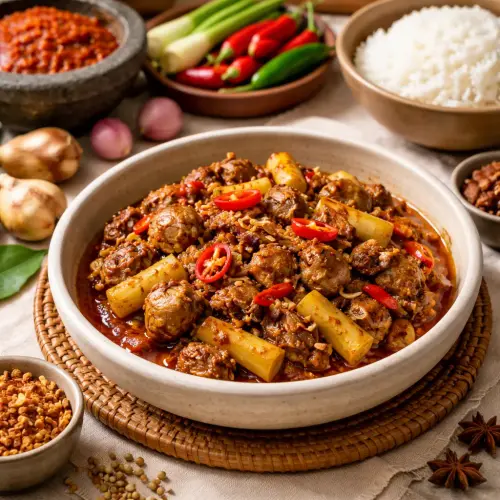
Sambal Goreng Ati Ampela with Rebung Key Takeaways
Making authentic Sambal Goreng Ati Ampela with Rebung for a Hajj or Umrah gathering is about balancing rich, spicy flavors with tender offal and crunchy bamboo shoots.
- Treat Sambal Goreng Ati Ampela with Rebung as a one-pan dish — proper pre-boiling and separate frying of each component is essential.
- Never skip the "pre-spice" sauté; it builds the deep, caramelized flavor that defines this Hajj/Umrah recipe.
- Always use fresh rebung (bamboo shoots) or properly prepared canned shoots to avoid a metallic aftertaste.
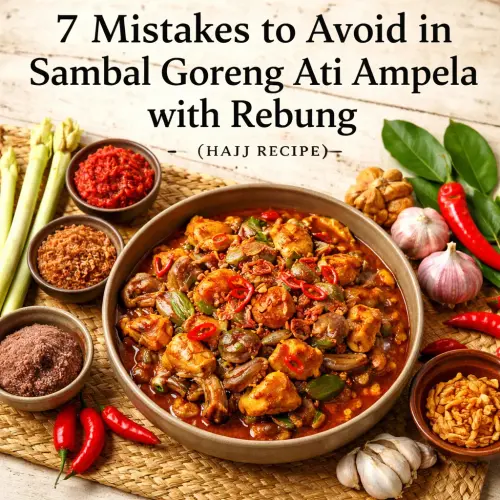
Why Sambal Goreng Ati Ampela with Rebung Is a Hajj and Umrah Staple
In Indonesian households, the return from a pilgrimage is celebrated with special dishes. Sambal Goreng Ati Ampela with Rebung is one of them — a fragrant, spicy stir-fry of chicken liver, gizzard, and bamboo shoots in a rich coconut-milk-based sambal. Its bold flavor and long shelf life make it perfect for serving many guests. Yet even experienced cooks can fall into traps that ruin its authentic taste. Let us walk through the seven critical mistakes and how to fix them. For a related guide, see Easy Javanese Sayur Lodeh Rebung with Shrimp and Tofu (Classic Recipe).
Mistake #1: Using Low-Quality or Old Sambal Goreng Ati Ampela with Rebung Ingredients
The foundation of any great dish is fresh, high-quality components. For this Hajj/Umrah recipe, that means selecting chicken livers and gizzards that are plump and odor-free, and bamboo shoots that are crisp and not overly fibrous. Old or frozen livers often taste metallic and release excess water during cooking, diluting the sambal.
How to Choose the Best Offal
Look for livers with a deep reddish-brown color and a clean, slightly sweet smell. Gizzards should be firm and pale yellow. If using frozen, thaw them in the refrigerator overnight and pat them very dry before cooking. For the rebung, fresh shoots are ideal — soak them in salted water for 15 minutes, then boil until tender. If using canned shoots, rinse them thoroughly in cold water to remove the brine taste.
Mistake #2: Skipping the Pre-Boiling Step
Many cooks toss raw livers and gizzards directly into the wok. This is a grave error. Pre-boiling not only cleans the offal but also removes any lingering bitterness and ensures the gizzards become tender. For this sambal goreng ati ampela rebung, boil the livers and gizzards separately — livers for only 3 minutes, gizzards for 10–12 minutes. Drain and slice them once cooled.
Why Separating Matters
Liver overcooks quickly and turns rubbery, while gizzards need more time to soften. Boiling them together leads to either tough livers or undercooked gizzards. Follow this simple step and your dish will have the right texture every time.
Mistake #3: Not Frying Spices Long Enough
The heart of any Indonesian chicken liver gizzards recipe is the spice paste — shallots, garlic, red chilies, candlenuts, turmeric, and shrimp paste. Frying this paste over low heat until it darkens slightly and releases its aroma is non-negotiable. Rushing this step results in a raw, pungent sambal that lacks depth.
The 10-Minute Rule
Cook the spice paste in oil for at least 10 minutes, stirring constantly, until it thickens and turns a shade darker. You will see the oil separate from the paste — that is the sign that the flavors have concentrated. Then add the coconut milk and continue stirring until it bubbles gently before adding the offal and rebung.
Mistake #4: Overcrowding the Pan
When you add all the pre-boiled livers, gizzards, and bamboo shoots at once, the pan temperature drops immediately. The ingredients steam instead of fry, leading to a watery, bland dish. For an authentic Hajj/Umrah recipe, you want a dry-ish sambal where each piece is coated in the thick, spicy paste. For a related guide, see 7 Expert Tips for Crispy and Spicy Dendeng Batokok Padang with Green Chili Rebung.
Fry in Batches
After sautéing the spice paste, add the gizzards first and cook for 2 minutes, then add the livers and rebung. Keep the heat medium-high and stir-fry until all the liquid has evaporated and the sambal clings to every piece. If the pan looks dry, add a splash of oil, not water.
Mistake #5: Forgetting the Sweet-Savory Balance
Sambal Goreng Ati Ampela with Rebung should not be just fiery hot. The classic version uses a touch of palm sugar (gula jawa) to balance the heat and saltiness of the shrimp paste. Without it, the dish tastes one-dimensional and harsh.
How to Balance Flavors
Add 1–2 tablespoons of grated palm sugar (or dark brown sugar as a substitute) along with the coconut milk. Taste and adjust — the sambal should be spicy first, then savory, with a gentle sweetness at the end. A squeeze of lime juice just before serving also brightens the flavors.
Mistake #6: Using Too Much Coconut Milk
A common misstep is pouring in too much santan (coconut milk) in an attempt to make the dish richer. In reality, excess coconut milk turns the sambal into a thin, curdled soup. The traditional texture is thick — almost like a dry curry — where the oil glistens on the surface but the sauce clings to the solids.
The Right Ratio
For every 500 grams of offal and 200 grams of rebung, use no more than 200 ml of thick coconut milk. Simmer it uncovered until the sauce reduces by half. If you prefer a wetter version for rice, add a little water instead of more coconut milk and simmer until the water evaporates, leaving the coconut flavor behind.
Mistake #7: Storing or Reheating Improperly
This sambal goreng ati ampela rebung is often made in large batches for gatherings. Storing it warm in a closed container traps steam and makes the sambal watery. Worse, reheating in a microwave turns the livers into rubber pellets.
Best Storage and Reheating Practices
Let the dish cool completely at room temperature before refrigerating in an airtight container. It keeps for up to 4 days. Reheat only the portion you need in a wok or non-stick pan over medium heat, adding a teaspoon of oil if needed. Never microwave. The sambal will thicken again as it warms, and the livers will stay tender.
Useful Resources
For more on Indonesian spice pastes, check out The Spruce Eats — Bumbu Basics. To understand how different bamboo shoot varieties affect texture, read this guide on Serious Eats — Cooking Bamboo Shoots.
Frequently Asked Questions About Sambal Goreng Ati Ampela with Rebung
Can I use chicken hearts in this dish?
Yes, chicken hearts are a common addition in some regions. Add them to the gizzard pre-boil since they need similar cooking time.
What is a good substitute for candlenuts?
Macadamia nuts or raw cashews work well. Use the same quantity — 4 to 5 nuts for this recipe.
Can I make this dish vegetarian?
For a vegetarian version, replace offal with firm tofu and tempeh, and use mushroom broth instead of any meat-based stock.
How spicy is sambal goreng ati ampela rebung?
Traditionally it is moderately hot, but you can control the heat by adjusting the number of red chilies or removing the seeds.
Can I freeze this dish?
Yes, it freezes well for up to one month. Cool completely, transfer to a freezer-safe container, and thaw in the refrigerator overnight before reheating.
What does rebung taste like?
Bamboo shoots have a mild, slightly sweet flavor and a crunchy texture. They absorb the sambal spices beautifully.
Do I need to peel fresh bamboo shoots?
Yes, remove the tough outer layers, then slice the tender inner part. Boil the slices in salted water for 15–20 minutes to remove bitterness.
Is shrimp paste essential?
Shrimp paste (terasi) gives the dish its characteristic umami depth. You can skip it if unavailable, but the flavor profile will change.
Can I use dried chilies instead of fresh?
Yes, soak 8–10 dried red chilies in hot water until softened, then blend into the spice paste. This yields a deeper, smokier heat.
What type of coconut milk is best?
Use thick, full-fat coconut milk from a carton or can. Avoid light coconut milk — it makes the sambal watery.
How do I prevent the livers from falling apart?
Handle them gently after pre-boiling. Fry them briefly and do not stir too vigorously. Add them last so they warm through without breaking.
Can I add potatoes to this recipe?
While not traditional, small diced potatoes that are pre-fried until golden make a hearty addition. Add them at the same time as the rebung.
What is the best oil for frying the spice paste?
Use neutral oil like sunflower or canola. Avoid olive oil — its flavor clashes with the sambal spices.
How long does sambal goreng ati ampela rebung keep at room temperature?
Do not leave it out for more than 2 hours, especially in warm weather. Refrigerate leftovers promptly.
Can I use store-bought spice paste?
Yes, look for “bumbu sambal goreng ati” in Indonesian grocery stores. However, homemade paste gives a much fresher and authentic flavor.
What is the purpose of adding lime juice?
A squeeze of lime juice just before serving brightens all the flavors and cuts through the richness of the coconut milk.
Why does my sambal taste bitter?
Bitterness usually comes from overcooked livers or burnt spice paste. Fry the paste on low heat and never rush the process.
Can I use beef liver instead of chicken liver?
Beef liver has a stronger taste and firmer texture. If using, slice it thinly and reduce cooking time to avoid toughness.
Is this dish gluten-free?
Yes, as long as you use gluten-free soy sauce (kecap manis) and check that your shrimp paste contains no wheat additives.
How do I serve sambal goreng ati ampela rebung at a Hajj feast?
Serve it as a side dish alongside steamed rice, fried shallots, and other classics like opor ayam or rendang. It pairs perfectly with warm ketupat or lontong.