
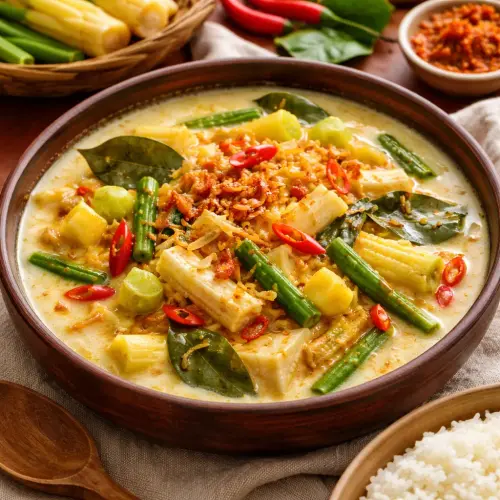
Lumajang-style lodeh rebung Key Takeaways
Lumajang-style lodeh rebung is a creamy, spicy vegetable stew from East Java, Indonesia, that highlights tender bamboo shoots and seasonal vegetables in a rich coconut milk broth.
- Use young bamboo shoots and seasonal greens like chayote, long beans, and young jackfruit for the best Lumajang-style lodeh rebung texture.
- Double the spice paste and temper it with salam leaves and galangal to build deep, layered heat without overpowering the coconut milk.
- Add a final swirl of thick coconut cream (santan kental) just before serving to create that signature velvety finish.
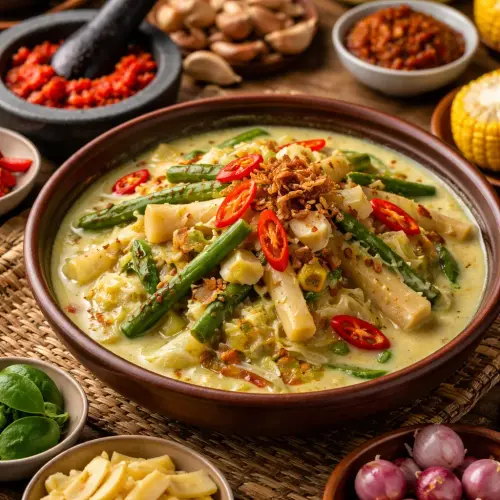
What Makes Lumajang-Style Lodeh Rebung Special
Lodeh is a beloved vegetable stew across Java, but every region adds its own fingerprint. In Lumajang-style lodeh rebung, the star ingredient is rebung (bamboo shoots), which brings a tender crunch and subtle earthy sweetness. The broth is creamy from coconut milk but not heavy — thanks to the balancing act of spicy bird’s eye chilies and the aromatic punch of kencur and salam leaves. For a related guide, see Special Javanese Sayur Lodeh Rebung with Shrimp and Tofu: Easy Classic Recipe.
Locals in Lumajang, a town at the foot of Mount Semeru, often cook this dish in large clay pots over a wood fire, letting the flavors meld slowly. The result is a stew that tastes both rustic and refined: spicy on the tongue, creamy in the mouth, and deeply satisfying with a plate of warm rice.
7 Easy Tips for a Creamier, Spicier Lodeh Rebung
If you want to replicate that authentic Lumajang-style lodeh rebung at home, these 7 tips will transform a good stew into a memorable one. They focus on ingredient selection, paste preparation, and finishing touches.
1. Choose the Right Bamboo Shoots
Fresh bamboo shoots are ideal, but if they’re not available, use high-quality vacuum-packed shoots. Soak them in salted water for 30 minutes to remove any bitter edge before slicing thinly. The younger the shoot, the more tender and sweet — and that’s what you want for a creamy texture.
2. Build a Bold Spice Paste
Grind together shallots, garlic, kencur, turmeric, and a generous number of bird’s eye chilies (cabe rawit). For extra heat, include the seeds. Fry this paste in coconut oil until fragrant — this step is non-negotiable for a spicy, aromatic base.
3. Use Two Types of Coconut Milk
Start cooking with thin coconut milk (santan encer) to allow vegetables to cook through without curdling. Reserve thick coconut cream (santan kental) to stir in at the very end. This technique gives the broth a rich, velvety creamy spicy lodeh recipe texture without greasiness.
4. Layer the Vegetables by Cooking Time
Not all seasonal vegetables cook at the same pace. Add dense vegetables like young jackfruit and chayote first, then long beans and bamboo shoots, and finally leafy greens like spinach or melinjo leaves. This ensures everything is perfectly tender, not mushy.
5. Season Gradually and Taste Often
Salt, sugar, and a splash of tamarind juice balance the rich coconut milk and fiery chilies. Add them in small increments and taste after each addition. A seasonal vegetable lodeh should have a clear sweet-savory-spicy balance — not just heat.
6. Let It Rest Before Serving
Like many stews, lodeh tastes better after resting for 15–20 minutes off the heat. This allows the spices to meld and the coconut milk to thicken naturally. Reheat gently and never let it boil after adding the thick cream.
7. Finish with a Flavor Boost
Just before serving, stir in a squeeze of lime juice and a handful of crispy fried shallots. These small touches brighten the dish and add a textural contrast that makes every spoonful exciting.
Seasonal Vegetables for Lodeh Rebung
The beauty of Lumajang-style lodeh rebung is its flexibility with what’s available at the market. Here’s a quick guide to seasonal choices:
| Season | Vegetables to Use | Why It Works |
|---|---|---|
| Rainy (Nov–Mar) | Chayote, young jackfruit, spinach, melinjo | Plentiful, absorb flavors well, add body |
| Dry (Apr–Oct) | Long beans, bamboo shoots, papaya flowers, cassava leaves | Lighter texture, pair perfectly with spicy broth |
| Year-round | Tofu, tempeh, carrots, green beans | Add protein and color, always available |
Feel free to swap based on what’s fresh — lodeh was born from the Javanese tradition of using whatever the land offers generously.
How to Serve Lumajang-Style Lodeh Rebung
Serve this creamy spicy lodeh recipe with steamed white rice, crispy fried tempeh sambal, and a side of fresh cucumber slices. The cool crunch of cucumber is a perfect counterpoint to the heat. For a traditional Lumajang touch, sprinkle crispy fried shallots over the bowl and offer extra sambal terasi for those who want more fire.
It also pairs beautifully with a simple sambal of raw bird’s eye chilies and salt — just crush them together and dip as you eat. This is how many locals enjoy their lodeh on a rainy afternoon.
For more authentic Indonesian cooking inspiration, you can explore Indonesian Eats’ guide to classic lodeh variations or check out SBS Food’s deep dive into regional lodeh styles.
Useful Resources
If you want to learn more about Indonesian spice pastes and coconut milk techniques, these two resources are excellent starting points:
- Indonesian Eats: Classic Indonesian Vegetable Lodeh — a reliable base recipe with variations.
- SBS Food: Lodeh, the Indonesian Vegetable Stew — a thorough article on the cultural context and cooking methods.
Frequently Asked Questions About Lumajang-style lodeh rebung
What is Lumajang-style lodeh rebung?
It is a creamy, spicy vegetable stew from Lumajang, East Java, made with bamboo shoots (rebung), coconut milk, and seasonal vegetables. It is known for its bold spice blend and velvety broth. For a related guide, see 7 Expert Tips for Rich and Creamy Padang-Style Gulai Rebung (Avoid Split Coconut Milk).
Can I use canned bamboo shoots?
Yes, but rinse them well and soak in salted water for 20–30 minutes to remove any metallic or bitter taste. Fresh shoots are always best for Lumajang-style lodeh rebung.
How spicy is traditional Lumajang-style lodeh rebung?
It is considered medium to hot by Indonesian standards. The heat comes from bird’s eye chilies — usually 5–10 per serving pot, depending on preference.
What makes the broth creamy?
The creaminess comes from coconut milk, specifically thick coconut cream (santan kental) added at the end. Cooking at a low simmer prevents curdling.
Can I make it vegan?
Yes. Use coconut oil instead of animal fat, and skip shrimp paste (terasi) or replace it with a pinch of miso for umami. Tofu and tempeh add protein.
Which vegetables are in season for lodeh?
Rainy months bring chayote, young jackfruit, and spinach. Dry months feature long beans, bamboo shoots, and papaya flowers. Year-round options include carrots and green beans.
How do I store leftover lodeh?
Cool completely and refrigerate in a sealed container for up to 3 days. Reheat gently over low heat — do not boil to preserve the creamy texture.
Can I freeze lodeh?
Freezing is not recommended because the coconut milk may separate and the vegetables become mushy upon thawing. Fresh is best.
What is kencur?
Kencur is aromatic ginger (Kaempferia galanga), a small spice with a camphor-like, floral flavor. It is essential for authentic Lumajang-style lodeh rebung.
Where can I buy kencur?
Kencur is available at Asian grocery stores, Indonesian markets, or online spice shops. You can substitute with a mix of ginger and galangal if needed.
Can I skip salam leaves?
Salam leaves add a distinct aromatic note. If you skip them, the dish will lose some depth. Bay leaves are a poor substitute but better than nothing.
How do I reduce the spiciness?
Use fewer bird’s eye chilies and remove the seeds. You can also add more coconut milk or a teaspoon of sugar to balance the heat.
What rice goes best with this dish?
Steamed white jasmine rice is ideal. The fragrant, fluffy rice soaks up the creamy spicy broth beautifully.
Can I add meat or seafood?
Traditional Lumajang-style lodeh rebung is vegetarian, but you can add shredded chicken or prawns for extra protein if desired.
What is the best coconut milk brand?
Look for brands like Kara or Chaokoh that contain no stabilizers. Check the label — you want coconut milk with at least 20% fat content.
How long does it take to cook?
About 45 minutes to 1 hour, including prep. The actual simmering takes around 30 minutes after the vegetables are added.
Can I use dried bamboo shoots?
Yes, but they need to be soaked and boiled until tender. Fresh or vacuum-packed is more convenient for a quick Lumajang-style lodeh rebung.
Is this dish gluten-free?
Yes, as long as you use gluten-free soy sauce and no wheat-based thickeners. All traditional lodeh ingredients are naturally gluten-free.
What sambal pairs well?
Sambal terasi (with shrimp paste) or a simple raw sambal of bird’s eye chilies and salt are classic accompaniments.
Why is my lodeh bitter?
Bitterness usually comes from bamboo shoots not soaked enough, or from overcooked melinjo leaves. Soak shoots longer and add melinjo near the end.