
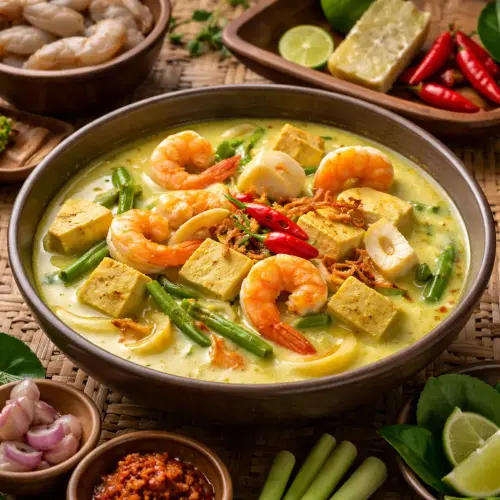
Javanese Sayur Lodeh Rebung Key Takeaways
This hearty Javanese Sayur Lodeh Rebung with shrimp and tofu is the kind of dish that tastes like home — rich coconut broth, tender bamboo shoots, and a gentle warmth from turmeric and galangal.
- The secret to authentic Javanese Sayur Lodeh Rebung lies in slowly sautéing the spice paste until fragrant
- Using fresh rebung (bamboo shoots) adds a unique crunch and earthy sweetness; frozen or canned are good alternatives when out of season
- Shrimp and tofu make this version protein-packed while keeping it light enough for everyday meals

Why This Javanese Sayur Lodeh Rebung Recipe Brings Back Memories
I still remember the first time I tasted Javanese Sayur Lodeh Rebung at my grandmother’s house in Yogyakarta. The kitchen smelled of coconut milk simmering with lemongrass and kencur. She would always say, “Lodeh is like life — you need balance.” Sweet rebung, savory shrimp, soft tofu, and just a hint of chili heat.
This isn’t just another sayur lodeh rebung recipe. It’s the version that Javanese home cooks have perfected over decades — humble ingredients transformed into something deeply satisfying. I love making it on rainy afternoons when all I want is a bowl of warmth and a memory of Java. For a related guide, see Rebung Chef: 5 Powerful Traditions Behind Kitchen and Shoots.
Key Ingredients for Authentic Javanese Sayur Lodeh Rebung
Every ingredient in this Nusantara classic comfort food pulls its weight. Here’s what you need and how to choose them at their best.
Fresh vs. Prepared Rebung (Bamboo Shoots)
Fresh rebung is ideal between November and March when bamboo shoots are young and tender. Look for pale yellow tips and a firm texture. If you can’t find fresh, vacuum-packed rebung from Asian markets works perfectly — just rinse them thoroughly to remove any brine. For a related guide, see 7 Expert Tips for Rich and Creamy Padang-Style Gulai Rebung (Avoid Split Coconut Milk).
Canned rebung is the most accessible option. Drain and boil them for five minutes to get rid of the metallic taste. Frozen rebung is another good shortcut; thaw and pat dry before cooking.
Shrimp and Tofu: Protein That Absorbs Flavor
Medium-sized shrimp (peeled and deveined) are traditional in Javanese lodeh. They cook quickly and add a natural sweetness that balances the spice. For tofu, use firm or extra-firm — pan-fry until golden before adding to the broth so it stays intact.
Seasonal tip: Shrimp are most plentiful from June to August. Outside that window, frozen wild-caught shrimp are perfectly fine.
The Spice Paste (Bumbu Halus)
This is the heart of any Javanese sayur lodeh recipe. You’ll need:
- Shallots and garlic (base)
- Fresh turmeric for golden color and earthy warmth
- Galangal (laos) — use fresh if possible; frozen slices work too
- Candlenuts (kemiri) for creaminess — substitute macadamia nuts if needed
- A pinch of shrimp paste (terasi) for umami depth
Toast the shrimp paste in a dry pan first. It softens the sharp aroma and makes the paste more approachable.
How to Cook Javanese Sayur Lodeh Rebung Step-by-Step
Follow these steps and you’ll have a fragrant pot of lodeh in about 45 minutes.
Step 1: Prepare the Spice Paste
Grind shallots, garlic, turmeric, galangal, candlenuts, and toasted shrimp paste in a mortar or food processor until smooth. A little water helps the blades grab everything.
Step 2: Sauté Until Fragrant
Heat 2 tablespoons of coconut oil in a heavy pot over medium heat. Fry the spice paste for 3–4 minutes until it darkens slightly and releases a heady aroma. Add two bruised lemongrass stalks and 3–4 kaffir lime leaves — tear them slightly to release oils.
Step 3: Build the Broth
Pour in 600 ml of thin coconut milk (cair). Let it come to a gentle simmer. Add your rebung — if using fresh, give it a 10-minute head start because it takes longer to soften. Canned or frozen rebung only needs about 5 minutes.
Step 4: Add Shrimp and Tofu
Toss in the fried tofu and let it absorb the broth for 5 minutes. Then add the shrimp in the last 3 minutes of cooking — they turn pink and rubbery if overcooked.
Step 5: Finish with Thick Coconut Milk and Seasoning
Pour in 200 ml of thick coconut milk (santan kental). Stir gently to avoid curdling. Season with salt, a little palm sugar (or brown sugar), and a dash of white pepper. Taste and adjust. The broth should be creamy, slightly sweet, and with a gentle warmth.
Common Mistakes When Cooking Sayur Lodeh Rebung
Even experienced cooks sometimes hit these pitfalls:
- Overcooking the shrimp — they become tough and lose sweetness. Add them last.
- Curdled coconut milk — always simmer on low heat and stir occasionally. High heat makes it split.
- Under-seasoning the rebung — bamboo shoots are porous and need enough salt and sugar to absorb flavor. Let them cook in the seasoned broth for at least 10 minutes.
Serving Suggestions and Variations for This Nusantara Classic
Lodeh is best served the same day, but leftovers taste even better the next morning when the flavors have melded.
Classic Javanese Pairings
Scoop Javanese Sayur Lodeh Rebung over steamed white rice. Add a side of sambal terasi (chili with shrimp paste) and a handful of fresh basil leaves or kemangi (lemon basil). For crunch, top with fried shallots.
Variations to Try
- Vegetarian version — skip the shrimp, double the tofu, and add 200g of cubed pumpkin or chayote for body.
- Extra protein — add boiled eggs or fried tempeh slices.
- Spicier lodeh — include 2–3 red bird’s eye chilies in the spice paste.
- Seafood twist — replace shrimp with firm white fish (like barramundi) added in the last 5 minutes.
Useful Resources
For more background on Indonesian spice pastes and cooking techniques, visit BBC Good Food’s guide to Indonesian cooking. For ingredient sourcing tips, The Spruce Eats’ Indonesian coconut milk guide is a great reference.
Javanese Sayur Lodeh Rebung is more than a recipe — it’s a taste of home for millions across the archipelago. Whether you’re cooking for your family or simply craving Nusantara classic comfort food, this version with shrimp and tofu delivers every time. Give it a try and let the aromas transport you to a Javanese kitchen.
Frequently Asked Questions About Javanese Sayur Lodeh Rebung
What is Javanese Sayur Lodeh Rebung?
It’s a traditional Javanese vegetable stew made with bamboo shoots (rebung), coconut milk, and spices. This version adds shrimp and tofu for extra protein.
Can I make this sayur lodeh rebung recipe vegan?
Yes. Omit the shrimp and shrimp paste. Use extra tofu and tempeh, and add a splash of soy sauce for umami depth.
Is rebung the same as bamboo shoots?
Yes, rebung is the Indonesian word for bamboo shoots. They are young, tender shoots harvested before they harden.
Where can I buy fresh rebung?
Look in Asian grocery stores, especially those specializing in Southeast Asian produce. Farmers’ markets in tropical regions also carry them seasonally.
How long does fresh rebung need to cook?
Fresh rebung should be boiled for 10–15 minutes before adding to the stew. Canned or frozen only needs 5 minutes.
Can I use canned coconut milk?
Absolutely. Use one can of full-fat coconut milk and thin it with water for the base. Reserve the thicker part for the final addition.
What is a good substitute for candlenuts?
Macadamia nuts or raw cashews work well. They add the same creaminess without altering the flavor.
Do I need to peel the bamboo shoots?
Yes. Remove the tough outer layers until you reach the pale, tender core. Slice thinly crosswise.
Can I freeze leftover sayur lodeh?
Yes, but the texture of tofu and coconut milk may change slightly upon thawing. Reheat gently and stir well.
What type of tofu is best?
Firm or extra-firm tofu holds its shape. Silken tofu is too delicate for this stew.
How spicy is Javanese sayur lodeh ?
Traditionally it’s mildly spiced — warming rather than fiery. Adjust chili content to your preference.
Can I add other vegetables?
Yes. Chayote, carrots, long beans, and young jackfruit are common additions. Add longer-cooking vegetables first.
What is the difference between sayur lodeh and sayur asem?
Sayur lodeh uses coconut milk as a base; sayur asem is tamarind-based and sour. Both are Javanese classics but taste entirely different.
Can I skip the shrimp paste?
You can, but the flavor will be less complex. Add half a teaspoon of fish sauce or miso as a substitute.
How do I store leftovers?
Keep in an airtight container in the refrigerator for up to 3 days. Reheat on the stovetop, not the microwave, to prevent curdling.
What is the best rice to serve with lodeh?
Steamed jasmine rice or plain white rice works best. The mild rice absorbs the rich coconut broth perfectly.
Is this sayur lodeh rebung recipe gluten-free?
Yes, as long as you use certified gluten-free shrimp paste and check your tofu brand (most firm tofu is gluten-free).
Can I use dried shrimp instead of fresh?
Dried shrimp (ebi) are more intense. Soak them in warm water for 15 minutes, then use both the shrimp and soaking liquid for extra flavor.
What makes this Nusantara classic comfort food so comforting?
The creamy coconut broth, tender bamboo shoots, and aromatic spices create a soothing, deeply satisfying bowl that feels like a warm hug.
How do I make the broth thicker?
Use more thick coconut milk at the end, or mash a few pieces of cooked tofu into the broth to emulsify naturally.