
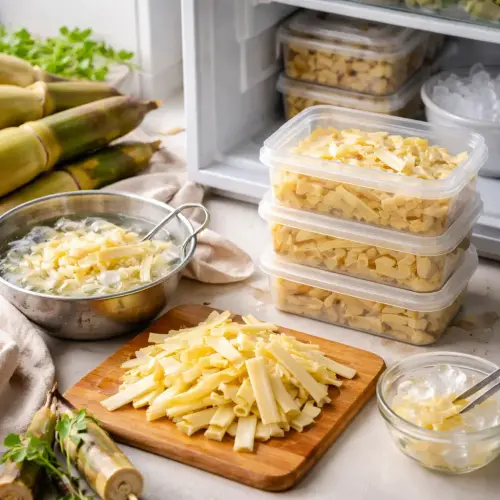
Smart Freezing of Rebung Stock Key Takeaways
Smart Freezing of Rebung Stock ensures your harvested bamboo shoots retain their signature crispness for months — not mush.
- Smart freezing rebung starts with selecting young, tender shoots and ends with airtight packaging.
- Blanching times and ice baths are critical to keep bamboo shoots crispy after thawing.
- Portioning and labeling extend usability and reduce waste during busy cooking days.
What You Need to Know About Smart Freezing of Rebung Stock
Smart Freezing of Rebung Stock isn’t just about tossing peeled shoots into the freezer. Bamboo shoots have high moisture and enzyme content. If you skip preparation, they turn limp, rubbery, or develop an off-flavor. Proper technique locks in the texture and taste. For a related guide, see Rebung Substitute: 5 Smart Ways to Replace Mushrooms or Asparagus in Western Menus.
The method works for all common varieties: runjung (Madura), betung (Sumatra), and ampel (Java). Whether you grow your own or buy fresh at the market, the same principles apply.
Why Texture Matters in Frozen Bamboo Shoots
The crisp snap of bamboo shoots is prized in dishes like sayur lodeh, tumis rebung, and curries. If they lose that crunch, the dish feels flat. Smart freezing rebung preserves the cell-wall structure by deactivating enzymes before ice crystals form. For a related guide, see Rebana vs Rebung: 5 Surprising Cultural Links You Must Know.
A 2019 study from the Indonesian Institute for Agricultural Research found that blanched bamboo shoots retained up to 70% more crispness than raw-frozen ones after 4 weeks. Temperature consistency matters equally: a stable -18°C prevents recrystallization that punctures cell walls.
Step-by-Step Guide to Smart Freezing of Rebung Stock
Follow these five steps for optimal results. Prepare a large pot, a bowl of ice water, and clean kitchen towels before you start.
Step 1: Select and Prepare Fresh Shoots
Choose young shoots that are firm, pale yellow or cream-colored, with tightly wrapped layers. Avoid shoots with dark spots or a sour smell — those are past their prime.
- Remove the tough outer leaves until you reach the tender inner core.
- Slice the shoot lengthwise to check for hollow cavities or insect damage.
- Cut the shoot into your desired shape: strips for stir-fries, chunks for soups, or thin rounds for salads.
Rinse thoroughly under cold running water to remove any dirt or sap.
Step 2: Blanch to Deactivate Enzymes
Blanching is the most critical step to keep bamboo shoots crispy during extended storage. Bring a large pot of water to a rolling boil. Add the prepared shoots in batches — do not overcrowd.
- Blanch strips or thin rounds for 2 minutes exactly.
- Blanch thicker chunks for 3 minutes.
- Start timing as soon as the water returns to a boil after adding the shoots.
Over-blanching makes them mushy. Under-blanching leaves enzymes active, which leads to discoloration and loss of crunch within two weeks.
Step 3: Ice Bath and Draining
Immediately transfer the blanched shoots into a bowl of ice water (equal parts ice and cold water). This halts the cooking process instantly. Leave them for at least 3 minutes, then drain well.
Spread the cooled shoots on a clean kitchen towel or paper towels. Pat dry gently. Moisture on the surface leads to ice crystals that damage texture.
Step 4: Flash-Freeze on a Tray
Arrange the dry shoots in a single layer on a baking sheet lined with parchment paper. Do not let pieces touch each other. Place the tray in the freezer for 2 to 4 hours, or until the pieces are solidly frozen.
Flash-freezing prevents the pieces from clumping together, so you can later grab exactly the amount you need without thawing the entire bag.
Step 5: Vacuum-Seal or Use Airtight Containers
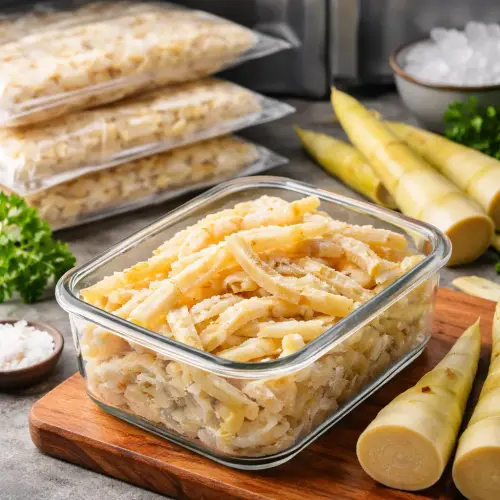
Once flash-frozen, transfer the shoots into vacuum-seal bags or high-quality freezer-safe containers. Remove as much air as possible. For vacuum-sealing, follow your machine’s guidelines for dry produce.
Label each package with the date and cut type. A well-sealed bag of smart freezing rebung will keep for 8 to 12 months without noticeable texture loss.
Smart Freezing Rebung: Common Mistakes and Solutions
Even experienced cooks can slip up. Here are the most frequent issues and how to avoid them.
Skipping the Blanch Step
Raw-frozen bamboo shoots often turn brown and lose their crunch within two weeks. The enzymes remain active and break down cell walls slowly even at freezer temperatures. Always blanch.
Using Non-Airtight Packaging
Freezer burn is the enemy of texture. Air exposure causes moisture to sublimate from the shoot’s surface, leaving dry, tough spots. Vacuum-sealing is best; if unavailable, press all air out of zipper bags and double-bag for extra protection.
Thawing Incorrectly
Do not thaw bamboo shoots at room temperature. The rapid temperature change causes water inside the cells to expand rapidly, breaking cell walls. Instead:
- Transfer the needed portion from the freezer to the refrigerator the night before.
- Or add the frozen shoots directly to hot soups and stir-fries — they will thaw and cook in the dish.
Storage Timeline: How Long Can You Keep Bamboo Shoots Crispy?
The timeline depends on preparation quality and packaging. Use this guide to plan your stock rotation.
| Storage Method | Optimal Texture (Weeks) | Max Freezer Life (Months) |
|---|---|---|
| Raw, unpeeled (refrigerator) | 3–5 days | N/A |
| Raw frozen (no blanching) | 2 weeks | 3 months |
| Blanched + freezer bag (air removed) | 8 weeks | 6 months |
| Blanched + vacuum-sealed | 12 weeks | 12 months |
Note: “Optimal texture” means the shoots still snap when bitten. After that period, they remain safe to eat but will be softer — ideal for blended soups or fillings.
How to Use Frozen Rebung Stock in Daily Cooking
Once you have a stash of smart freezing rebung, incorporating it into meals becomes effortless. Here are a few ideas:
- Sayur lodeh: Add frozen chunks directly to the simmering coconut milk broth — no thawing needed.
- Tumis rebung: Thaw in the fridge overnight, then stir-fry with garlic, chili, and shrimp paste.
- Lumpia filling: Shred the frozen shoots while still semi-frozen, then sauté with seasonings.
- Spring rolls: Boil the frozen shoots for 1 minute, drain well, and mix with ground meat or tofu.
The blanched shoots retain enough crunch that they work as a fresh substitute in almost any recipe that calls for raw or boiled bamboo shoots.
Useful Resources
To dive deeper into bamboo shoot preparation and food science, check these trusted sources:
- USDA Guide to Freezing Vegetables — official freezing guidelines that apply to bamboo shoots.
- ScienceDirect: Effect of blanching on texture and enzyme activity in vegetables — peer-reviewed research on how blanching preserves crispness.
Frequently Asked Questions About Smart Freezing of Rebung Stock
Can you freeze bamboo shoots without blanching?
You can, but the texture will degrade quickly. Without blanching, enzymes remain active and break down cell structure, turning the shoots soft within 2–3 weeks. For long-term smart freezing rebung, always blanch first.
How long can you keep frozen bamboo shoots in the freezer?
Properly blanched and vacuum-sealed bamboo shoots maintain good texture for up to 12 months. In standard freezer bags with air removed, aim to use them within 6 months for best quality.
Do you need to thaw frozen bamboo shoots before cooking?
No, you can add them directly to soups, curries, and stir-fries. For dishes where you want them separate (like salads), thaw overnight in the refrigerator. Never thaw at room temperature.
What is the best way to keep bamboo shoots crispy after freezing?
Blanching for exactly 2–3 minutes, followed by an ice bath, is the most reliable method. Flash-freezing on a tray and vacuum-sealing adds extra protection against texture loss.
Can you freeze bamboo shoots in water?
It is not recommended. Freezing shoots in water creates large ice crystals that damage cell walls, resulting in a mushy texture after thawing. Dry-pack freezing is superior.
How do you know if frozen bamboo shoots have gone bad?
Signs include an off or sour smell, a slimy surface after thawing, or dark discoloration. If the package has freezer burn (dry, pale patches), the texture will be poor but still safe to eat.
Is it safe to refreeze thawed bamboo shoots?
Technically yes, but the texture will suffer significantly. Each freeze-thaw cycle ruptures more cells. For best smart freezing rebung practices, portion ahead to avoid refreezing.
What type of bamboo shoots freeze best?
Young, tender shoots with tightly layered leaves freeze best. Varieties like runjung and betung hold texture well due to their denser fiber content. Older or woody shoots become stringy after freezing.
Can you freeze cooked bamboo shoots?
Yes, but they will be softer than blanched raw shoots. Cooked shoots have already broken down some cell structure. Use them within 3 months in dishes where texture is less critical, like blended soups.
Does freezing remove the bitterness from bamboo shoots?
Blanching before freezing removes most bitterness. If shoots are still bitter after thawing, boil them for 5 minutes in fresh water before cooking.
How do you prevent bamboo shoots from turning brown in the freezer?
Browning occurs when enzymes oxidize the shoot surface. Blanching deactivates these enzymes. Adding a tablespoon of lemon juice to the blanching water also helps preserve color.
Can you vacuum-seal bamboo shoots without flash-freezing?
Yes, but they may clump together. Flash-freezing is optional but highly recommended for portion control. If you skip it, separate the shoots after sealing by shaking the bag while still soft.
What is the ideal freezer temperature for storing bamboo shoots?
0°F (-18°C) or lower is standard. Avoid frost-free freezers with automatic defrost cycles, as the temperature fluctuations accelerate texture degradation.
Should you peel bamboo shoots before freezing?
Yes, remove all tough outer layers down to the tender core. The fibrous outer leaves do not freeze well and become inedible after thawing.
Can you freeze bamboo shoots in oil?
It is not recommended for long-term storage. Oil can go rancid in the freezer and the shoots may absorb off-flavors. Stick to dry-pack methods.
How do you use frozen bamboo shoots in stir-fries?
Add them frozen directly to the hot wok. They will thaw and cook in 2–3 minutes. Do not thaw first, as they release excess water and make the stir-fry soggy.
What dishes work best with frozen bamboo shoots?
Soups, curries, braised dishes, and stir-fries are ideal. Because the texture is slightly softer than fresh, avoid using them raw in salads unless you enjoy a less crunchy bite.
Can you freeze bamboo shoots from a can?
Yes, but they are already cooked, so they will be softer. Drain them well, pat dry, and flash-freeze. Use within 3 months for best results.
Why do my frozen bamboo shoots smell sour after thawing?
This indicates fermentation or spoilage before freezing. Always start with fresh, non-slimy shoots. If the sour smell is mild, rinsing with fresh water may help; if strong, discard them.
Is there a difference between frozen and fresh bamboo shoots in traditional recipes?
Frozen shoots are slightly softer but work well in most cooked dishes. Traditional recipes that call for fresh shoots can be adapted by adding the frozen shoots earlier in the cooking process.