
Rebana and Rebung connection Key Takeaways
In Malay folklore, bamboo grows straight and strong; its young shoot ( rebung ) represents potential and renewal.
- The Rebana and Rebung connection is rooted in shared linguistic origins and cultural symbolism across the archipelago.
- Rebana is not just a musical instrument; it is a social and spiritual tool used in ceremonies from Malaysia to Java.
- Rebung , the young bamboo shoot , carries meanings of growth, harvest, and culinary heritage that echo the rhythmic vitality of the Rebana .
Why the Rebana and Rebung Connection Surprises Most People
Imagine you are at a lively Malay wedding. The deep, resonant beat of the Rebana calls everyone to the dance floor. A few tables away, a platter of stir‑fried Rebung sits among the dishes. Few guests realise that the name of the drum and the name of the vegetable may share a deeper story. This article uncovers that hidden link, showing how language and culture weave seemingly unrelated things together.
Exploring Rebana: More Than a Drum
What Is Rebana?
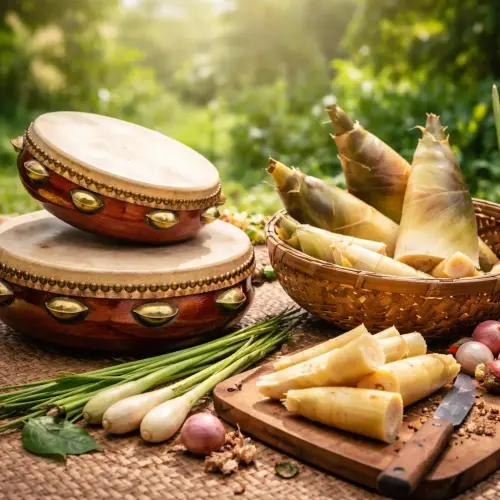
Rebana is a traditional frame drum widely used in Malay, Javanese, and Sundanese music. Its circular wooden frame is covered with goat or cow skin, and small jingles are sometimes attached to the rim. Players strike the skin with their hands or a stick, producing a warm, penetrating sound that can travel across a village.
Cultural Roles of Rebana
The Rebana is not merely an instrument; it is a cultural anchor. In Islamic traditions, the Rebana accompanies dikir barat (choral chanting) and hadrah (praise of the Prophet). In secular contexts, it drives joget dances and Malay theatrical forms like Makyung. The drum’s steady pulse symbolises unity, summoning people to gather—just as a community meal does.
Exploring Rebung: The Bamboo Shoot With Deep Roots
What Is Rebung?
Rebung refers to the young, tender shoots of bamboo. Foraged from the wild or cultivated, these crisp, pale layers are a prized ingredient in Southeast Asian kitchens. From spicy gulai rebung in Sumatra to soured sayur rebung in Java, the shoot is a mark of the rainy season—abundant, fast‑growing, and full of life. For a related guide, see Smart Freezing of Rebung Stock: 5 Steps to Keep Texture Crispy.
Symbolism of Rebung
In Malay folklore, bamboo grows straight and strong; its young shoot (rebung) represents potential and renewal. Villagers say that the way a shoot pushes through the earth mirrors human perseverance. Moreover, dishes featuring rebung are often served during communal feasts, reinforcing bonds among neighbours and relatives.
| Aspect | Rebana | Rebung |
|---|---|---|
| Form | Frame drum (instrument) | Bamboo shoot (food) |
| Main Association | Music, prayer, dance | Cuisine, growth, nature |
| Cultural Role | Community gathering, spiritual expression | Harvest celebration, shared meals |
| Key Symbolism | Unity, rhythm, call to assemble | Renewal, resilience, harvest |
| Linguistic Origin | Possibly from Arabic rabana (“our Lord”), fused with Malay adaptations | From Proto‑Malayo‑Polynesian rebuŋ (“bamboo shoot”) |
The Linguistic Link: Shared Sounds, Shared Meanings
A Question of Etymology
Linguists point out that Rebana may derive from the Arabic rabāna (“our Lord”), entering Malay through religious music. Rebung, on the other hand, comes from the Austronesian root rebuŋ. Despite different sources, the two words share the reb‑ prefix, which in many Malay words carries a sense of “sound” or “vibration” (e.g., rebab, a bowed string instrument; rebet, to flutter). This phonetic echo suggests that speakers intuitively linked the resonant quality of the drum to the fresh, resonant crunch of the shoot.
Echoes in Daily Speech
In rural communities, elders sometimes say “dengar rebana, ingat rebung” (hear the drum, think of the shoot). This folk expression captures the idea that the Rebana and Rebung connection is felt rather than taught. Both evoke a time of year—the end of the monsoon—when bamboo shoots sprout and the drum is carried out for harvest festivals.
Cultural Intersections: Where Drum and Dish Meet
Ritual and Feast
During the Kenduri (communal feast) in many parts of Malaysia and Indonesia, a Rebana ensemble plays while guests gather to share dishes made with fresh rebung. The drum signals the start of the meal; the shoot nourishes the body. Together, they create a multisensory experience—rhythm for the ears, flavour for the tongue, and unity for the soul.
Symbolic Parallels
The round face of the Rebana mirrors the cross‑section of a bamboo shoot. Both are circles of life in miniature. The drum’s skin stretches taut like the fibre layers of the shoot. When struck, the drum vibrates; when cooked, the shoot releases its earthy aroma. These sensory parallels reinforce the Rebana and Rebung connection in the collective imagination.
Reflections on Shared Heritage
Understanding the Rebana and Rebung connection enriches our appreciation of Malay‑Indonesian culture. It reminds us that language is a living web, where a drum and a vegetable can share a hidden kinship. Next time you hear the Rebana beat, pause and think of the tender shoot pushing through the soil. Both are expressions of the same vibrant heritage—one that honours rhythm, growth, and community.
Useful Resources
For a deeper dive into traditional Malay music, visit the Indonesian National Symphony’s article on Rebana history. For more on bamboo shoots in Southeast Asian cuisine, explore Gardenia’s guide to Rebung.
Frequently Asked Questions About Rebana and Rebung connection
What is the Rebana and Rebung connection?
The Rebana and Rebung connection refers to the linguistic and cultural ties between the frame drum (Rebana) and the bamboo shoot (Rebung) in Malay‑Indonesian traditions, including shared phonetic roots, symbolic meanings of community and renewal, and their combined role in rituals and feasts. For a related guide, see Rebana vs Rebung: 5 Surprising Cultural Links You Must Know.
Is Rebana only used in religious contexts?
No. Rebana is also central to secular celebrations, dances such as joget, and theatrical performances like Makyung, making it a versatile social instrument.
Can Rebung be eaten raw?
Raw bamboo shoots contain cyanogenic glycosides which can be toxic. They must be boiled or fermented before consumption to remove harmful compounds.
How is Rebana made?
A Rebana is built from a circular wooden frame, typically from jackfruit or durian wood, with a stretched animal skin (goat or cow) tacked onto one side. Some variants include small metal jingles around the rim.
Where does the word Rebana come from?
It likely entered Malay from Arabic rabāna (meaning “our Lord”), adapted through Islamic musical traditions in the archipelago.
What does Rebung taste like?
Rebung has a mild, slightly sweet flavour with a crunchy texture that absorbs spices well. It is often compared to artichoke hearts or young asparagus. For a related guide, see Rebung Substitute: 5 Smart Ways to Replace Mushrooms or Asparagus in Western Menus.
Are Rebana and Rebung related linguistically?
Not directly; Rebana is likely of Arabic origin while Rebung is Austronesian. However, the shared “reb‑” sound has led to folk associations and a perceived Rebana and Rebung connection in local speech.
What ceremonies use both Rebana and Rebung ?
Kenduri (communal feasts), harvest festivals, and certain wedding traditions in Malaysia and Indonesia often feature Rebana music alongside dishes made with Rebung.
Is Rebung nutritious?
Yes. Rebung is low in calories, high in fibre, and contains potassium, vitamin B6, and antioxidants. It supports digestive health and provides essential minerals.
How long does Rebung last after harvest?
Fresh Rebung keeps for 2–3 days in the refrigerator. For longer storage, blanch and freeze it, or pickle it in brine.
Can Rebana be played solo?
Yes, but it is more commonly played in ensembles of 4–12 drummers. Solo Rebana playing often accompanies storytellers or religious chants.
What size is a typical Rebana ?
Rebana drums vary from about 20 cm (for handheld versions) to 60 cm in diameter (for floor‑standing models used in orchestras).
Do other cultures have drums named similarly?
Yes. Frame drums with the “reb‑” root appear across the Muslim world: ribana in the Middle East, rebanu in parts of Africa, all sharing a common lineage with Rebana.
Is Rebung used in traditional medicine?
In folk medicine, bamboo shoot extracts are used to reduce inflammation and lower cholesterol, though more research is needed to confirm these effects.
What are the main types of Rebana ?
Common types include Rebana Ubi (a large bass drum), Rebana Kecil (small‑hand drum), and Rebana Hadrah (used specifically for Islamic praise).
Why is the Rebana and Rebung connection important?
It illustrates how language and culture can unite distinct objects—a drum and a food—into a shared narrative of community life, seasonal cycles, and artistic expression.
Can I grow my own Rebung ?
Yes, if you have space for running bamboo species. Young shoots appear during the rainy season, and the plant is relatively low‑maintenance in tropical climates.
What does “ rebana ” mean literally?
In Arabic “rabāna” means “our Lord,” but in Malay usage it simply denotes the instrument. The name reflects the drum’s historical role in religious chanting.
Is Rebung a common ingredient outside Southeast Asia?
It is widely used in Chinese, Japanese, and Filipino cuisines as well. Canned bamboo shoots are available in many international supermarkets.
How can I learn to play Rebana ?
Many community centres in Malaysia and Indonesia offer informal classes. Online tutorials from Malay cultural institutes also provide basic rhythm patterns for beginners.