
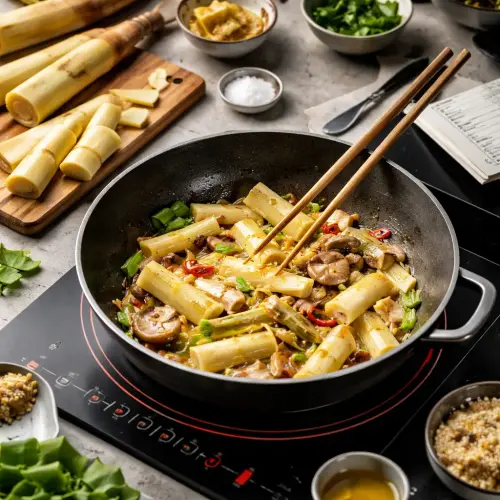
cooking bamboo shoots on induction stove Key Takeaways
Mastering cooking bamboo shoots on induction stove isn’t just about flavor — it’s about efficiency.
- cooking bamboo shoots on induction stove starts with proper soaking and slicing to maximize surface contact with the cooktop.
- Using the precise temperature control of induction saves energy and prevents overcooking.
- A simple timing chart helps you nail the perfect texture every time, from crunchy to melt-in-your-mouth.
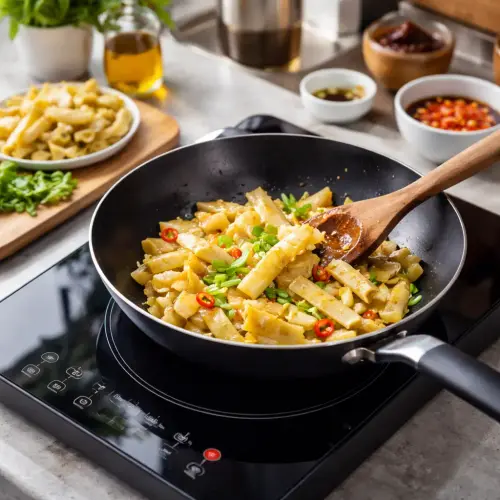
Why cooking bamboo shoots on induction stove Saves Energy and Time
Induction stoves transfer heat directly to the cookware via electromagnetic energy. That means almost no heat is wasted heating the air around the pan. When you’re cooking bamboo shoots on induction stove, this direct heat transfer reduces boil times significantly compared to gas or standard electric stoves. Bamboo shoots contain a lot of water and need thorough cooking to remove bitterness — so every minute saved adds up. For a related guide, see Induct Method Cooking: 5 Key Differences for Gulai Rebung.
The key to unlocking maximum energy savings lies in how you prepare and handle the bamboo shoots before they hit the pan. Pre-soaking, slicing, and even the type of cookware you choose all affect how efficiently heat penetrates the shoots.
7 Energy-Saving Tricks for Perfect Bamboo Shoots
These seven tricks combine traditional bamboo shoot preparation with modern induction technology. Each step is designed to cut energy use without sacrificing quality.
1. Soak Bamboo Shoots Overnight to Reduce Boiling Time
Fresh bamboo shoots contain hydrocyanic acid, which gives them a bitter flavor. Soaking them in cold water for 8–12 hours leaches out many of these compounds before cooking. This means you need less time on the induction stove bamboo shoots require less boiling, saving electricity. Change the water twice during soaking for best results. For a related guide, see Stuck on Cooking Bamboo Shoots Without the Smell? 3 Best Canning Methods.
Pro tip: Add a teaspoon of salt to the soak water — it helps draw out bitterness more effectively.
2. Slice Bamboo Shoots Thinly and Uniformly
Thin, even slices heat through faster and more uniformly on an induction cooktop. Aim for slices about 3–5 mm thick. This maximizes surface area contact with the pan bottom, so the induction field works at peak efficiency. Uneven chunks create hot spots and require longer cooking.
3. Use Flat-Bottomed Stainless Steel or Cast Iron Cookware
Induction stoves won’t work with aluminum or copper unless they have a magnetic base. For cooking bamboo shoots on induction stove, choose a heavy stainless steel or enameled cast iron pot with a perfectly flat bottom. Flat bottoms ensure full contact with the induction coil, preventing energy loss from air gaps. A wider pan also distributes heat more evenly.
4. Start with Boiling Water, Not Cold
Bring your water to a full boil in a kettle before adding it to the pot on the induction stove. Because induction heats water so fast, this trick seems counterintuitive. But pre-boiling in an electric kettle (which is highly efficient) reduces the time the induction hob spends at maximum power. You effectively shift the energy load to a device that may use less electricity per liter.
5. Use the Simmer Setting After the Initial Boil
Once your bamboo shoots reach a rolling boil, immediately reduce the induction hob to a low simmer. Induction stoves hold low temperatures extremely accurately — often within 1–2°C. A gentle simmer is all you need to finish cooking without wasting energy on vigorous boiling. Cover the pot with a tight-fitting lid to trap steam and heat.
6. Parboil in Batches if Cooking Large Quantities
If you’re processing several kilograms of bamboo shoots at once, cook them in batches rather than overcrowding a single pot. Overcrowding drops water temperature, forcing the induction hob to work harder to recover heat. Smaller batches maintain a steady temperature and finish faster overall. The total energy used is often lower than one long, struggling boil.
7. Reserve and Reuse the Cooking Water
The water used for boiling bamboo shoots absorbs some of the bitterness but also retains subtle flavor. After cooking bamboo shoots on induction stove, let the water cool and strain it. Use it as a base for soups, stews, or cooking grains. This indirect energy-saving trick means you’re getting more value from the electricity used to heat that water in the first place.
Timing Chart for cooking bamboo shoots on induction stove
The table below shows approximate boiling and simmering times for different bamboo shoot forms. Times assume pre-soaked shoots and an induction stove set to high for boiling, then low for simmering.
| Bamboo Shoot Form | Initial Boil Time (minutes) | Simmer Time (minutes) | Total Estimated Time |
|---|---|---|---|
| Fresh, whole (small) | 5 | 20 | 25 min |
| Fresh, sliced thin | 3 | 12 | 15 min |
| Fresh, sliced thick (1 cm) | 5 | 18 | 23 min |
| Canned (drained and rinsed) | 2 | 8 | 10 min |
| Frozen (thawed first) | 4 | 15 | 19 min |
These times are guidelines. Test a piece for tenderness after the simmer stage. Overcooking makes bamboo shoots mushy; undercooking leaves a bitter aftertaste.
Common Mistakes When cooking bamboo shoots on induction stove
Avoid these pitfalls to keep your energy savings on track and your shoots perfectly textured.
Using a Pan That’s Too Small
Small pans create a narrow column of water that heats unevenly and requires longer cooking. Use a pot that covers at least 70% of the induction burner’s surface. This ensures the electromagnetic field works efficiently.
Skipping the Soak
Fresh bamboo shoots need a long soak. If you skip it, you’ll need to boil them longer to remove bitterness. That extra time costs electricity and risks overcooking the outer layers while the center stays tough.
Lifting the Lid Repeatedly
Every time you lift the lid, steam escapes and the temperature drops. The induction stove must then work harder to recover. Trust your timing chart and only check near the end of the simmer period.
Useful Resources
For more details on bamboo shoot preparation and the science of induction cooking, check these expert sources.
Frequently Asked Questions About cooking bamboo shoots on induction stove
Frequently Asked Questions About cooking bamboo shoots on induction stove
Can I cook bamboo shoots directly on an induction stove without soaking?
Technically yes, but the result will be more bitter and require longer boiling, which wastes energy. Always soak fresh shoots for at least 8 hours.
Does an induction stove cook bamboo shoots faster than gas?
Yes. Induction transfers heat more directly, reducing boil times by 20–30% compared to gas or electric coil stoves.
What type of pot is best for induction bamboo shoot cooking?
Flat-bottomed stainless steel or enameled cast iron with a magnetic base ensures maximum energy transfer and even heating.
Should I cut bamboo shoots before or after boiling?
Cut them before boiling to increase surface area. Thin slices cook faster and absorb flavors better if you season later.
How do I know when bamboo shoots are fully cooked?
Test with a fork or knife. The shoot should be tender but not mushy. For sliced shoots, the center should offer little resistance.
Can I reuse the cooking water for other dishes?
Yes, strain the water and use it as a broth base for soups or grains. It contains subtle bamboo flavor and saved energy from that initial boil.
Is it safe to cook frozen bamboo shoots without thawing?
You can, but thawing first reduces cooking time by about 5 minutes. Directly boiling frozen shoots takes extra energy to bring the temperature up.
What is the best power setting for simmering bamboo shoots on induction?
Use the lowest simmer setting, usually around power level 2–3 on a 10-level induction hob. This maintains a gentle bubble without wasting heat.
Do I need to change the water during cooking?
For fresh shoots, one water change after the first boil can further reduce bitterness. For canned shoots, simply rinse and boil once.
Can I add salt to the cooking water?
Salt is not necessary during boiling, but a small amount can help draw out bitterness. Add it later if you’re using the water for a soup.
Does the shape of the pot affect energy use?
Yes. A wide, flat pot with a diameter matching the burner zone maximizes contact and reduces energy loss by up to 15%.
Should I cover the pot while boiling bamboo shoots?
Absolutely. A tight lid traps steam and heat, reducing cooking time and energy consumption by roughly 20%.
How do I remove bitterness from bamboo shoots on an induction stove?
Soak overnight, then boil for 5 minutes, discard the water, and simmer in fresh water. This two-step process is efficient on induction.
Can I use a pressure cooker on an induction stove for bamboo shoots?
Yes, many induction-compatible pressure cookers exist. Pressure cooking cuts total time by half, saving even more energy.
Are canned bamboo shoots pre-cooked?
Most canned bamboo shoots are parboiled. You only need to simmer them for 8–10 minutes on induction to heat through and improve texture.
Does the altitude affect cooking time on induction?
Yes. At higher altitudes, water boils at a lower temperature, so you may need to add a few extra minutes of simmering to achieve tenderness.
Can I season bamboo shoots during the boil?
It’s better to season after boiling. Adding soy sauce or vinegar early can make the shoots tough and interfere with bitterness removal.
What is the most energy-efficient way to cook large batches?
Cook in smaller batches using a wide pan, and pre-soak thoroughly. Each batch boils faster, and cumulative energy use is lower than one long boil.
Do induction stoves work with woks for bamboo shoots?
Only if the wok has a flat bottom. Traditional round-bottom woks do not make proper contact with induction burners, reducing efficiency.
Can I store cooked bamboo shoots in the fridge?
Yes. Cool them quickly in an ice bath, drain, and refrigerate in an airtight container for up to 5 days. This saves the energy of re-cooking later.