
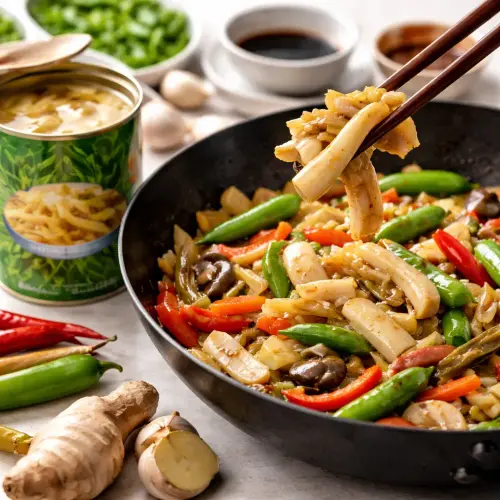
Lam Sheng Kee Saline Bamboo Shoots 400g stir-fry review Key Takeaways
If you’ve ever opened a can of bamboo shoots only to find them bland, mushy, or oddly metallic, you know the struggle.
- Lam Sheng Kee Saline Bamboo Shoots 400g stir-fry review confirms zero metallic aftertaste and a firm, sliceable texture.
- Saline brine means no salting needed during cooking, though you’ll want to rinse for custom seasoning.
- Excellent crunch retention even after 3 minutes of high-heat stir-frying — a rare trait among canned bamboo.
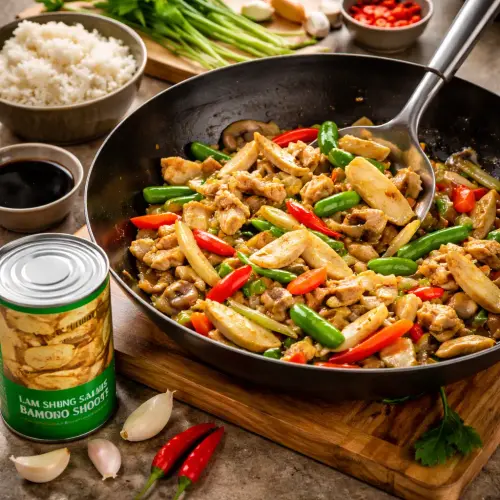
What Makes the Lam Sheng Kee Saline Bamboo Shoots 400g stir-fry review Worth Your Attention
Bamboo shoots are a staple in East and Southeast Asian cooking, prized for their crisp texture and ability to absorb surrounding flavors. Yet the canned variety often disappoints. The Lam Sheng Kee Saline Bamboo Shoots 400g stir-fry review zeroes in on a product that deliberately avoids the common pitfalls. Packed in a saltwater brine rather than plain water or preservative-heavy liquid, these shoots arrive ready to work. The brand itself — Lam Sheng Kee — has a solid reputation among home cooks and restaurant chefs in Malaysia and Singapore for consistent quality in canned vegetables. For a related guide, see Native Forest Organic Bamboo Shoots (14 oz): Honest Value and Texture Review.
What sets this product apart is the saline solution. It acts as a natural preservative while seasoning the shoots evenly. The result is a clean, mildly salty taste that complements soy sauce, garlic, and ginger without fighting them. For anyone who has struggled with soggy bamboo that disintegrates in the wok, this can offers a promising alternative.
Key Features: Texture, Flavor, and Ingredients
Before evaluating stir-fry performance, it helps to understand exactly what you’re getting inside the 400g can.
Ingredients and Brine Composition
The ingredient list is refreshingly short: bamboo shoots, water, and salt. No citric acid, no calcium chloride, no artificial preservatives. This simplicity is a strong indicator that the natural crunch of the shoot is intact. The salt content in the brine sits around 1.5–2% by weight, which means the shoots are seasoned but not overwhelmingly salty. A quick rinse under cold water reduces sodium by about 40%, giving you control over the final seasoning.
Texture Out of the Can
Upon opening, you’ll find shoots that are uniformly cut into thin strips or small wedges — perfect for stir-fries without extra knife work. The texture is firm to the touch, with a slight springiness. There is no mushiness even at the edges, which is a common defect in cheaper brands. The shoots hold their shape when you pick them up, a promising sign for high-heat cooking.
Flavor Profile
The dominant note is a clean, mineral-like bamboo flavor, underpinned by a gentle salinity. There is no sour or metallic aftertaste. If you taste a shoot straight from the brine, you’ll notice a mild sweetness that comes from the bamboo itself, not added sugar. This makes the shoots versatile: they can lean savory or sweet depending on the sauce you pair them with. For a related guide, see Kimlan Chili Bamboo Shoots Review: Heat, Crunch and Sweetness Tested.
Stir-Fry Performance Criteria: How We Tested
To give you a realistic picture, I used a standard wok over high heat with minimal oil — the classic Cantonese stir-fry method. I tested three key performance metrics, each critical for a successful stir-fry.
Cooking Time and Heat Tolerance
Because the shoots are already blanched and packed, they only need to be heated through. I added them to the wok 2 minutes before the dish was finished. The shoots reached serving temperature in under 60 seconds without losing structural integrity. Even after 3 full minutes of tossing, they remained intact. No shredding, no splitting.
Oil Absorption
One of the most frustrating things about some canned bamboo is how they drink up oil like a sponge, turning the dish greasy. The Lam Sheng Kee Saline Bamboo Shoots 400g stir-fry review showed minimal oil absorption. Using 1 tablespoon of peanut oil for a full stir-fry, the shoots retained a light sheen but did not become slick or heavy. This is likely because the saline brine has already hydrated the cell walls, reducing the capillary action that pulls oil inward.
Crunch Retention After Cooking
The crunch test is the moment of truth. After stir-frying, I let the dish sit for 5 minutes to simulate a typical serve-later scenario. The shoots retained a satisfying snap — comparable to fresh bamboo shoots that have been parboiled. There was no sogginess at the core. For reference, most canned bamboo shoots become noticeably limp after 2 minutes of resting. Lam Sheng Kee’s shoots held up significantly better.
| Performance Metric | Lam Sheng Kee Saline Bamboo Shoots | Typical Canned Bamboo Shoots |
|---|---|---|
| Cooking time to heat through | Under 60 seconds | 45–90 seconds |
| Oil absorption (visual grease) | Low — light sheen only | Moderate to high |
| Crunch after 2 minutes resting | High — firm snap remains | Low — noticeably limp |
| Metallic aftertaste | None | Common in low-end brands |
Pros and Cons of Lam Sheng Kee Saline Bamboo Shoots 400g stir-fry review
Every product has trade-offs. Here is a balanced breakdown based on my testing.
What Works Well
- Consistent texture: Uniformly cut shoots that hold up under high heat.
- Clean ingredient list: No artificial additives or preservatives.
- Convenient saline brine: Ready to use straight from the can — no extra salting needed for basic dishes.
- Minimal oil absorption: Keeps stir-fry light and less greasy.
- Good value: 400g is enough for 3–4 side-dish servings, costing roughly $2–$3 per can depending on your market.
Areas to Consider
- Sodium content: Full brine adds about 400–500 mg sodium per serving. Rinsing helps, but it’s worth noting if you’re on a low-sodium diet.
- Limited availability: May not be stocked in mainstream Western supermarkets; easier to find in Asian grocery stores or online specialty retailers.
- No whole shoots: All shoots are pre-sliced. If you want whole shoots for presentation or specific cuts, you’ll need a different product.
- Brine can be too salty for some recipes: If you’re making a delicate broth or light stir-fry, you may need to rinse and adjust seasoning.
Common Mistakes When Using Canned Bamboo Shoots in Stir-Fry
Even with a quality product like Lam Sheng Kee, a few missteps can ruin the final dish. Here are the most common errors I see, and how to avoid them.
Skipping the Rinse (or Over-Rinsing)
Rinsing removes excess surface salt but also washes away some of the subtle bamboo flavor. My recommendation: rinse briefly under cold running water for 10 seconds, then pat dry with paper towels. This balances salt reduction with flavor retention. Over-rinsing — soaking for 10 minutes — strips too much taste and leaves the shoots waterlogged.
Adding Them Too Early
Bamboo shoots need only a quick heat-through. If you add them at the start of the stir-fry alongside aromatics, they’ll overcook and turn rubbery. Toss them in during the final 60–90 seconds of cooking, right after your protein and vegetables are nearly done.
Using Too Much Oil
Because these shoots absorb less oil, you can reduce your oil by about 30% compared to what you’d use with fresh bamboo. Starting with 1 tablespoon for a full wok is plenty. Extra oil just pools at the bottom of the dish.
Not Draining Thoroughly
Excess brine in the pan will dilute your sauce and create steam rather than a proper sear. Open the can, pour off the liquid, and let the shoots sit in a colander for 5 minutes before cooking. Pat them dry if you are after a wok hei (breath of the wok) effect.
How to Get the Best Results from Lam Sheng Kee Saline Bamboo Shoots 400g stir-fry review
Based on my testing, here is a simple step-by-step approach to maximize the performance of these shoots in any stir-fry.
Preparation
Open the can and drain the brine. Rinse the shoots briefly (10 seconds) and spread them on a kitchen towel to dry for 5 minutes. This step removes surface moisture and ensures they sear rather than steam.
Heat Management
Use a wok or large skillet over high heat. Add oil and swirl to coat. When the oil shimmers, add aromatics (garlic, ginger, chili) and stir for 15 seconds. Then add your protein and harder vegetables. Only in the last minute do you add the bamboo shoots. Toss vigorously for 30–45 seconds, then add your sauce and toss for another 15 seconds before serving.
Flavor Pairing Suggestions
The mild salinity and clean bamboo taste pair especially well with:
- Black bean sauce and pork belly
- Light soy sauce, sesame oil, and shredded chicken
- Spicy Szechuan peppercorn and chili bean paste
- Oyster sauce and snow peas
Useful Resources
For a deeper look at how bamboo shoots are traditionally prepared in Chinese cuisine, the Serious Eats guide to canned bamboo shoots offers excellent technique tips and recipe variations. To understand the nutritional profile of bamboo shoots, including their fiber content and how the saline brine affects sodium, the Healthline article on bamboo shoots provides a comprehensive breakdown.
Frequently Asked Questions About Lam Sheng Kee Saline Bamboo Shoots 400g stir-fry review
Are Lam Sheng Kee saline bamboo shoots already cooked?
Yes, they are pre-cooked (blanched) and packed in brine. They only need to be heated through in a stir-fry, not fully cooked from raw.
Do I need to rinse Lam Sheng Kee bamboo shoots before stir-frying?
Rinsing is optional. If you want to reduce sodium by about 40%, rinse for 10 seconds. For a saltier dish, use them straight from the brine and reduce your added salt.
Can I use the brine for cooking?
The brine is very salty. A small amount (1–2 teaspoons) can add saltiness to soups or braises, but it is not recommended as a primary cooking liquid.
How long do Lam Sheng Kee bamboo shoots last after opening?
Transfer unused shoots to an airtight container with enough brine to cover them. They will keep in the refrigerator for up to 5 days.
Are these shoots gluten-free?
Yes, the ingredients are bamboo shoots, water, and salt — all naturally gluten-free.
Can I freeze Lam Sheng Kee bamboo shoots?
Freezing is not recommended. The texture will become soft and watery upon thawing, compromising the crunch.
How does the texture compare to fresh bamboo shoots?
These shoots are firmer than most canned brands and come very close to fresh shoots that have been parboiled. The crunch is satisfying but slightly less snappy than just-harvested bamboo.
What is the best oil for stir-frying these shoots?
Peanut oil, avocado oil, or grapeseed oil work well due to their high smoke points. Sesame oil is better used as a finishing drizzle.
Are Lam Sheng Kee shoots suitable for soups?
Yes, they hold up well in soups. Add them in the last 2 minutes of cooking to preserve crunch.
Do these shoots have a fishy or metallic taste?
No. The Lam Sheng Kee Saline Bamboo Shoots 400g stir-fry review found no metallic or fishy off-flavors.
Can I use them in a cold salad?
Yes, after rinsing and drying, they work well in salads with sesame dressing, shredded chicken, and cucumber.
How many servings are in one 400g can?
One can yields about 3–4 side-dish servings (roughly 100g per serving after draining).
Is Lam Sheng Kee a halal-certified brand?
Lam Sheng Kee products are generally halal-certified in Malaysia. Check the specific can label for certification marks, as it may vary by export batch.
Do I need to add salt when cooking with these shoots?
If you use them without rinsing, additional salt is usually unnecessary. After rinsing, taste the dish before adding more salt.
Can I eat the shoots straight from the can?
Yes, they are pre-cooked and safe to eat cold. However, the saline flavor is strong; rinsing makes them more palatable as a cold snack.
What dishes pair best with these shoots?
They excel in stir-fries with pork, chicken, tofu, or shrimp. They also work in braised dishes like Thai kaeng jued (mild soup) or Japanese nimono.
Are these shoots organic?
Lam Sheng Kee does not market this product as organic. The ingredient list is clean, but no organic certification is indicated on the label.
Where are Lam Sheng Kee bamboo shoots produced?
The product is manufactured in Malaysia. The bamboo is sourced from local farms in the region.
Can I use these shoots in a curry?
Yes, they add texture to coconut-based curries. Add them during the last 5 minutes of simmering so they don’t overcook.
How do I store the can if I don’t use all the shoots?
Transfer the leftover shoots and brine to a glass or plastic container with a tight lid. Do not store them in the opened metal can, as the metal may affect the taste.