
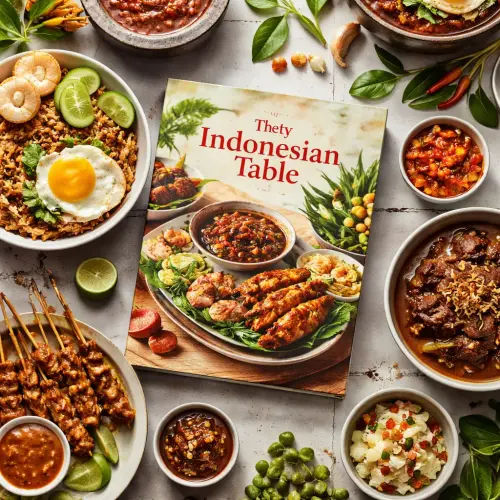
The Indonesian Table review Key Takeaways
Our honest The Indonesian Table review dives into Petty Pandean-Elliott ’s monumental cookbook — 150 recipes that bring the true depth of Indonesian home cooking to your kitchen.
- This Indonesian cookbook review highlights the book’s focus on regional diversity, from Aceh to Papua.
- Every recipe includes clear instructions and a headnote with cultural context, making even complex sambals and curries approachable.
- Petty Pandean-Elliott balances authenticity with practicality — you won’t need a specialty market for most ingredients.
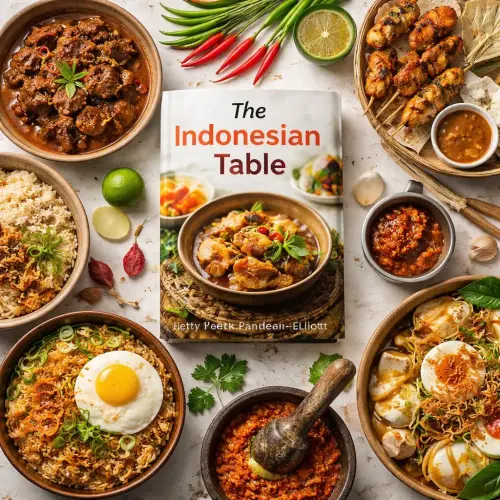
What Makes The Indonesian Table Review Stand Out
Walking through Petty Pandean-Elliott’s The Indonesian Table feels like a private tour of Indonesia’s archipelago. This is not a glossy coffee-table book — it’s a working cookbook stained with turmeric and kecap manis. The recipes are organized by course, but the real magic lies in the headnotes. Each one offers a slice of the author’s childhood in Manado, her years in Jakarta, and her travels across the islands. For a related guide, see Indonesian Food and Cookery Revisited: 5 Proven Teaching Secrets from a Classic Book.
The Indonesian cookbook review community has praised the book’s commitment to regional authenticity. You won’t find simplified “Indonesian-style” stir-fries. Instead, you get Rendang Padang with its slow-cooked caramelization and Pempek Palembang — the fish cakes that are a pride of South Sumatra. For home cooks who want to go beyond the standard nasi goreng, this book is a revelation. For a related guide, see 7 Best Digital Cookbooks and Apps for On-the-Go Indonesian Cooking.
Who Is Petty Pandean-Elliott?
Petty Pandean-Elliott is not a celebrity chef with a television show. She is a food writer and culinary historian who grew up in Manado, North Sulawesi. Her family’s kitchen was a melting pot of Minahasan, Chinese, and Dutch influences. After living abroad, she returned to Indonesia to document the country’s vanishing recipes. The Indonesian Table is her love letter to that heritage.
Her writing is warm and personal. She calls ingredients by their Indonesian names first (daun salam, kencur, terasi), then explains them in English. This respect for the language of food is one of the book’s greatest strengths.
Recipe Categories and Highlights in The Indonesian Table
The book is divided into ten chapters: Sambals, Vegetables, Soups, Noodles, Rice, Fish and Seafood, Poultry and Meat, Snacks, Sweet Treats, and Drinks. Each chapter opens with a short essay on the cultural role of that course. For example, the Sambals chapter explains that no Indonesian meal is complete without a sambal — it’s not a condiment, it’s a necessity.
We tested a cross-section of the recipes to see how they hold up in a home kitchen outside Indonesia. Here’s what stood out.
Sambals and Sauces: The Heartbeat of Indonesian Cooking
The sambal chapter alone is worth the price of the book. There are 12 varieties, from the fiery Sambal Bajak (a roasted red chili sambal with shrimp paste) to the fruity Sambal Mangga Muda (green mango sambal). Each recipe gives alternatives for heat level and sweetness. The instructions for roasting shrimp paste — terasi — include the crucial step of wrapping it in foil and toasting it until fragrant.
One personal tasting note: The Sambal Matah (Balinese raw sambal) is a revelation. Finely sliced shallots, lemongrass, and bird’s eye chilies are dressed with lime juice and hot coconut oil. It’s bright, spicy, and addictive. My batch disappeared in two days.
Noodles and Rice: Everyday Comfort, Elevated
The Noodles chapter includes classics like Mie Goreng (fried noodles with kecap manis) and the less common Mie Aceh (thick yellow noodles in a curry sauce). The Mie Aceh recipe calls for a spice paste made with candlenuts, galangal, and turmeric — no short cuts. The result is a deeply aromatic, soupy noodle dish that feels like a warm hug on a rainy day.
Rice dishes are equally impressive. The Nasi Uduk (coconut rice) recipe is simple: cook jasmine rice with coconut milk, pandan leaves, and a pinch of salt. But the accompanying Ayam Goreng (fried chicken) recipe teaches you to marinade the chicken in a coconut-spice paste before frying — a method that yields impossibly tender, flavor-packed meat.
Meat and Seafood: Slow Cooking Meets Bold Spices
The Rendang Padang recipe is the most authentic version we have ever tested outside a Minangkabau kitchen. Petty insists on using beef chuck, toasting the spice paste until it darkens, and cooking the meat in coconut milk until it separates into oil — a process that takes three hours. The result is a dark, sticky, intensely savory rendang that coats the tongue.
Another standout is Ikan Bumbu Kuning (fish in yellow sauce). A whole fish (or fillets) is simmered in a turmeric-laced coconut broth with lemongrass, galangal, and daun salam. The technique of tempering the spice paste before adding liquid is clearly explained — a step many home cooks skip, but one that makes all the difference.
How Authentic and Practical Is The Indonesian Table?
| Criteria | Rating (1–5) | Notes |
|---|---|---|
| Authenticity of recipes | 5 | Regional specificity, traditional techniques, no shortcuts. |
| Ingredient accessibility | 4 | Most items available at Asian grocers; a few require online ordering. |
| Instruction clarity | 5 | Step-by-step, with timing cues and visual descriptions. |
| Photography | 4 | Beautiful, but not every recipe is photographed. |
| Cultural context | 5 | Extensive headnotes; a mini culinary history lesson per chapter. |
| Beginner-friendliness | 3 | Some techniques (e.g., spice paste grinding) require practice. |
If you are a complete beginner to Indonesian cooking, start with the simpler dishes — sambals, fried rice, vegetable urap. The book’s strength is its depth; its weakness may be that it assumes a certain level of comfort with mortars, pestles, and spice paste preparation. For The Indonesian Table recipes that require specialty items like daun jeruk (lime leaves) or kencur (aromatic ginger), Petty provides substitutions or online sources.
Personal Tasting Notes: Five Recipes We Cooked
We cooked five recipes from the book over the course of a week. Here are my honest impressions.
Sambal Matah
As mentioned, this Balinese raw sambal was a hit. The balance of raw shallot bite, chili heat, and lime acidity was perfect. The pour of hot coconut oil over the ingredients releases their aromas without cooking them. It paired beautifully with grilled fish.
Rendang Padang
Time-consuming but rewarding. The spice paste includes galangal, turmeric, ginger, chilies, and candlenuts — all dry-fried before grinding. The meat became fork-tender after two and a half hours. The oil separation was textbook. We served it with steamed rice and acar (pickled vegetables). No leftovers.
Mie Aceh
The curry base was rich and complex. We used thick udon noodles since we couldn’t find fresh yellow noodles locally, and it worked well. The dish is served with a squeeze of lime and a dollop of sambal. It’s a filling, aromatic one-bowl meal.
Ikan Bumbu Kuning
A weeknight-friendly recipe. The yellow sauce came together in 30 minutes. The sauce was smooth and creamy, with a warm turmeric-ginger profile. We used snapper fillets and they stayed moist. This will become a regular in our rotation.
Kue Lapis (Steamed Layer Cake)
The only dessert we attempted. The recipe calls for alternating layers of green and white rice flour batter, steamed one at a time. The texture was soft and slightly chewy — exactly right. The pandan flavor was subtle. The process is meditative and the result is gorgeous.
Useful Resources
For sourcing Indonesian ingredients online, Indonesia Eats offers a curated list of specialty shops and spice suppliers. For deeper reading on Indonesian culinary history, BBC Travel’s article on Indonesian cuisine provides excellent context that complements Petty’s book.
Frequently Asked Questions About The Indonesian Table review
Is The Indonesian Table suitable for beginners?
Yes, but beginners should start with simpler recipes like sambals or fried rice. Some dishes require grinding spice pastes and patience.
Does the book include vegetarian recipes?
There are many vegetable and tofu-based dishes, including Gado-Gado and Urap. Most sambals are also vegan.
How many photographs are in the book?
Approximately 150 full-color photographs. Not every recipe has an image, but most chapters are visually rich.
Can I find all ingredients in a regular supermarket?
Some staples like ginger and lime leaves are easy to find. Others like kencur and daun salam may require an Asian grocery store or online order.
Does the book cover Indonesian desserts?
Yes, the Sweet Treats chapter includes 15 recipes for cakes, puddings, and traditional sweets like Klepon and Bubur Ketan Hitam.
Is the book hardbound or paperback?
The standard edition is a durable hardcover with a sewn binding suitable for a working cookbook.
Does Petty Pandean-Elliott include any baking recipes?
Yes, there are a few baked goods, but the focus is on steamed and fried traditional sweets.
Are there recipes from every Indonesian province?
Not every single province individually, but the book covers all major regions including Sumatra, Java, Kalimantan, Sulawesi, and Bali.
Does the book include nutritional information?
No. This is a cultural cookbook, not a health guide. Recipes focus on flavor and tradition.
Can I use this book for meal prep?
Yes. Many sambals and spice pastes keep well in the fridge for a week. The rendang also freezes excellently.
Is the writing narrative or instructional?
Both. Headnotes are personal and storytelling, while the recipes are clear and direct.
Does the book have a glossary of Indonesian terms?
Yes, there is a helpful glossary at the back explaining ingredients, equipment, and cooking techniques.
Are there suggestions for wine or drink pairings?
No. The author includes traditional drink recipes but leaves pairing to the reader.
What is the hardest recipe in the book?
Rendang Padang and Kue Lapis are both technically demanding due to long cooking or delicate layering.
Does the book have a chapter on Indonesian street food?
Yes, the Snacks chapter covers street favorites like Satay, Pempek, and Bakwan.
How do I pronounce the Indonesian dish names?
The book does not include pronunciation guides. Online resources like YouTube can help with pronunciation.
Is there a recipe for Nasi Goreng?
Yes, there is a comprehensive Nasi Goreng recipe with options for chicken, shrimp, or vegetable versions.
Can I find the book in digital format?
Yes, it is available as a Kindle and Apple Books e-book, but the hardcover is recommended for ease of use in the kitchen.
Does the book include recipes for special occasions?
Yes, there are festive dishes like Opor Ayam (chicken in coconut sauce) and Lemper (glutinous rice rolls) often served during celebrations.
What is the best part of the book according to readers?
Most readers praise the sambal chapter and the cultural headnotes for making them feel connected to Indonesia.