
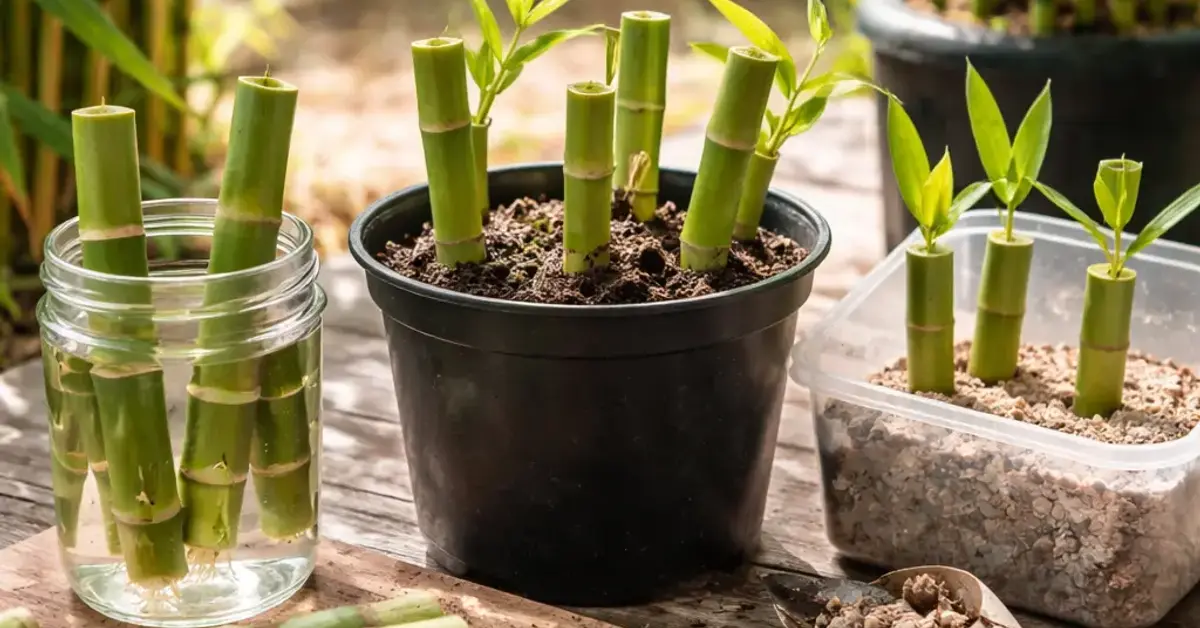
growing bamboo from shoot trimmings Key Takeaways
Bamboo is one of the fastest-growing plants on earth, and you can multiply your stock for free using trimmings from existing shoots.
- Growing bamboo from shoot trimmings is a low-cost, high-success method when you use healthy, green cuttings with nodes.
- Choose between top cuttings, culm cuttings, and ground-layering — each suited to different bamboo types and grower experience levels.
- Consistent moisture, warmth, and indirect light are the three critical factors that determine rooting success.
Why Growing Bamboo from Shoot Trimmings Works So Well
Bamboo is a grass, and like many grasses it propagates readily from stem segments. When you remove a trimming that contains at least one node — the ring-like joint on the stem — you give that cutting the potential to produce roots and a new shoot. This form of vegetative propagation bamboo enthusiasts use is far faster than growing from seed, and it ensures the new plant is genetically identical to the parent. That matters if you are cultivating a specific variety for privacy screens, timber, or ornamental value. For a related guide, see Upcycling Bamboo Shoot Storage Containers: 5 Creative Uses.
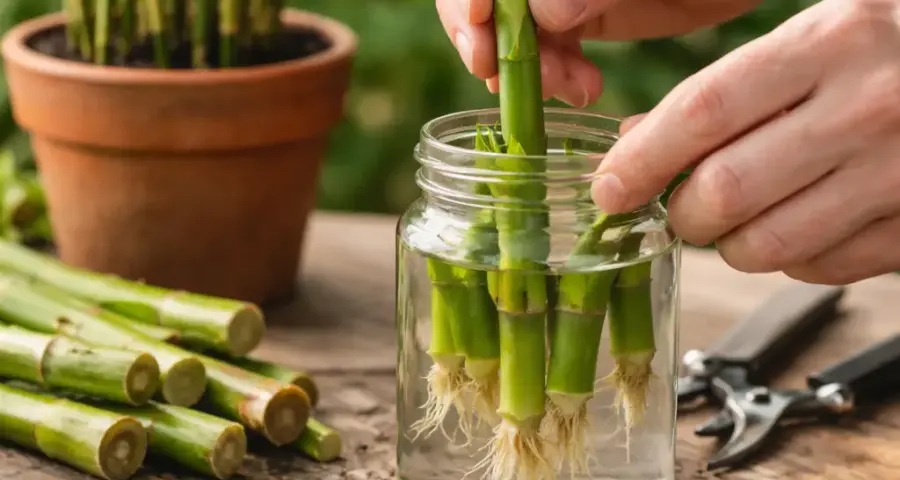
Because bamboo shoots are tough and often semi-woody, they can survive out of the ground for days if kept moist. This resilience makes them ideal candidates for home propagation. With just a clean cut, a container, and some rooting medium, you can turn a single mature clump into dozens of independent plants. For a related guide, see 5 Smart Ways to Save Water While Washing and Boiling Rebung.
What You Need Before You Start: Materials and Parent Plant Selection
Success begins before you make the first cut. Gather these supplies and choose your parent bamboo carefully.
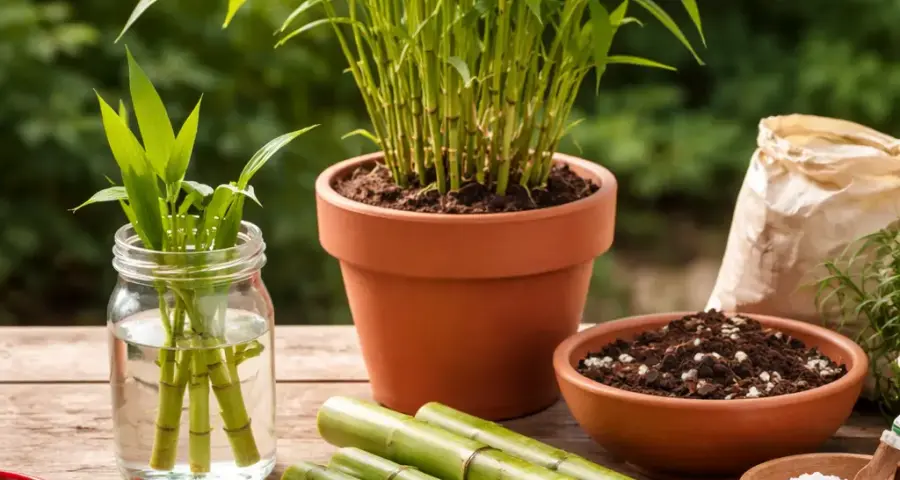
Required Materials for Bamboo Propagation
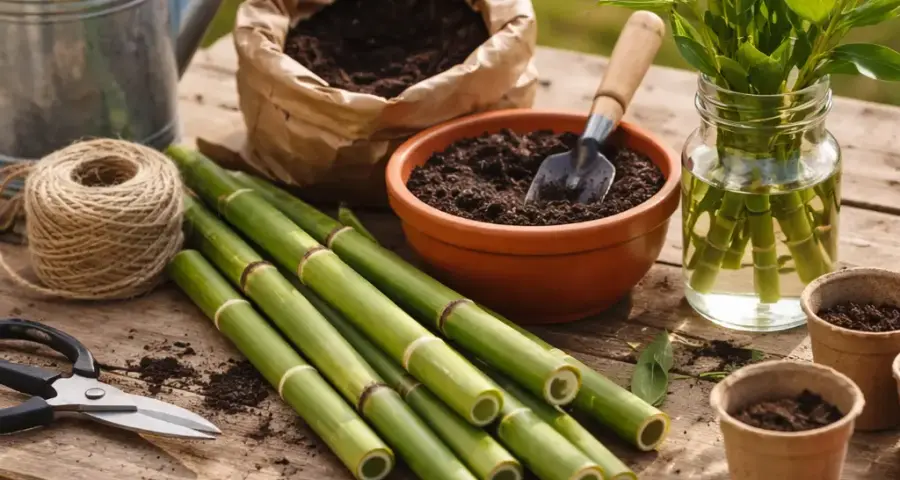
- Sharp pruning shears or a fine-toothed handsaw (sterilized with rubbing alcohol)
- Rooting hormone powder or gel (optional but speeds rooting)
- Clean containers (pots with drainage holes at least 6 inches deep)
- Propagation medium: perlite and peat moss mix, or coarse sand and garden soil (50:50 ratio)
- Transparent plastic bags or a humidity dome
- Spray bottle for misting
- Rubber bands or twist ties
How to Choose the Best Parent Shoot
Look for young shoots that are at least as thick as a pencil and have turned from bright green to a slightly darker green or brownish-green. Avoid shoots that are fully yellowed, brittle, or showing signs of pests. The best trimmings come from actively growing plants in spring or early summer when the sap is moving fastest.
Method 1: Top Cuttings — The Easiest Way to Grow Bamboo from Cuttings
Top cuttings are the simplest technique and work well for running bamboo species like Phyllostachys. You take the tip of a shoot that has several leaves still attached.
Step 1: Take the Cutting
Cut a shoot tip that is 12 to 18 inches long. Make the cut just below a node. Remove the lower leaves, leaving only the top two or three leaf clusters. Dip the cut end into rooting hormone powder.
Step 2: Plant the Cutting
Fill a 6-inch pot with moist propagation medium. Insert the cutting so that the bottom node is buried about 2 inches deep. Firm the medium around the stem and water gently.
Step 3: Create a Mini Greenhouse
Cover the pot with a clear plastic bag and secure it with a rubber band. Place the pot in a warm spot with bright, indirect light — a north-facing windowsill works well. Open the bag for 20 minutes every other day to prevent mold.
Step 4: Monitor and Transplant
Roots should appear in 3 to 6 weeks. You will know the cutting is established when new leaves begin to form and you feel resistance when you tug the stem gently. At that point, remove the bag and keep the plant in its pot for another month before moving it to a larger container or the ground.
Method 2: Culm Cuttings — Propagating from Mature Stems
Culm cuttings use a section of the main stem that includes several nodes but no leaves. This method is more reliable for clumping bamboo varieties and yields a stronger root system.
Step 1: Select a Mature Culm
Choose a one- to two-year-old culm that is fully hardened. Cut it close to the ground, then divide it into segments with two or three nodes each. Each segment should be 18 to 24 inches long.
Step 2: Trim the Leaves and Branches
Remove all side branches and leaves from the culm segment. Leave one small branch at the topmost node if you want early leaf growth, but it is not essential.
Step 3: Soak and Apply Rooting Hormone
Soak the entire segment in a bucket of water for 12 to 24 hours. This rehydrates the tissue and softens the nodes. After soaking, dip the bottom end in rooting hormone.
Step 4: Position Horizontally or Vertically
You can plant culm cuttings either horizontally in a long trench (2 inches deep) or vertically with the bottom node buried in a deep pot. Horizontal planting often produces more shoots per segment. Cover the trench with soil and water well.
Expect roots and shoots to appear within 6 to 10 weeks. Keep the soil consistently moist but not soggy during this period.
Method 3: Ground Layering — No-Cut Propagation for Timid Gardeners
Ground layering is technically a form of vegetative propagation bamboo growers use without severing the stem from the parent. It is ideal for beginners who worry about cutting too deep or at the wrong angle.
Step 1: Identify a Low, Flexible Shoot
Find a long shoot that you can bend down to the ground without snapping. Remove leaves from a 6-inch section near the middle of the shoot.
Step 2: Wound and Bury
Make a shallow diagonal cut halfway through the stem at that bare section. Dust the wound with rooting hormone. Bend the shoot down so the wound touches the soil, and pin it in place with a garden staple or a rock. Cover the wounded section with 2 inches of soil.
Step 3: Wait and Sever
Keep the soil around the buried section moist. After 8 to 12 weeks, roots will form at the wound. Once the new plant has several leaves of its own, cut the stem connecting it to the parent clump and lift the rooted layer.
Care Tips for Newly Propagated Bamboo
Whether you used top cuttings, culm cuttings, or layering, the first few months are critical. Here is how to give your young bamboo the best start.
Watering and Moisture
Bamboo loves water but hates standing in it. Water deeply three times a week during the first two months, then reduce to once a week as the plant matures. Mulching the soil surface with 2 inches of straw or bark chips helps retain moisture without waterlogging the roots.
Light Requirements
New bamboo plants need bright, indirect light for the first 3 to 4 weeks. Direct afternoon sun can scorch the tender leaves. After roots are well established, gradually move the pots to a sunnier spot.
Fertilizing
Wait at least 6 weeks after transplant before applying any fertilizer. When you do feed, use a balanced, slow-release fertilizer (e.g., 10-10-10) at half the recommended rate. Bamboo is a heavy feeder once established, but young roots are sensitive to chemical burns.
Troubleshooting Common Problems with Bamboo Shoot Trimmings Guide
| Problem | Likely Cause | Solution |
|---|---|---|
| Leaves turn yellow and drop | Overwatering or poor drainage | Allow soil to dry slightly between waterings; add perlite to improve drainage |
| Cutting turns black at the base | Fungal rot from too much moisture or stale air | Cut off rotted portion, dip in fungicide, replant in fresh medium, and increase air circulation |
| No roots after 8 weeks | Too cold, low humidity, or cutting taken from old/dead stem | Move to warmer spot (75–85°F), mist daily, and verify the parent stem was alive when cut |
| New shoots are thin and weak | Insufficient light or lack of nutrients | Gradually increase light exposure and apply half-strength fertilizer |
| Mold on the cutting or soil surface | Poor air circulation under humidity dome | Open the plastic bag for 30 minutes daily; remove severely affected leaves |
Useful Resources
For a deeper dive into bamboo species selection and rhizome management, the American Bamboo Society offers a comprehensive propagation guide. Visit their members section on bamboo.org for regional advice.
You can also refer to the University of Florida’s IFAS Extension document on bamboo propagation for tropical and subtropical growers: UF/IFAS Bamboo Propagation Recommendations.
Frequently Asked Questions About growing bamboo from shoot trimmings
Can I grow bamboo from any trimming?
Not all trimmings will root. The trimming must include at least one healthy node, come from a living shoot, and be taken during the active growing season (spring to early summer). Old, dry, or diseased shoots rarely root successfully.
Do I need rooting hormone for bamboo propagation ?
Rooting hormone is not strictly required, but it speeds up rooting and increases success rates, especially with culm cuttings. A powder containing IBA (indole-3-butyric acid) works well for bamboo.
How long does it take for bamboo cuttings to root?
Most top cuttings root in 3 to 6 weeks. Culm cuttings may take 6 to 10 weeks. Ground layering takes the longest, often 8 to 12 weeks before roots are strong enough to sever from the parent.
What is the best time of year to propagate bamboo?
Early spring to early summer, when the parent plant is actively growing and sap flow is high, produces the highest rooting rates. Avoid propagation during winter dormancy or mid-summer heat stress.
Can I propagate bamboo in water?
Some people place bamboo cuttings in water to watch roots develop, but this method often leads to weak, water-adapted roots that struggle when transferred to soil. Stick with a well-draining propagation medium for stronger root systems.
How many nodes should a cutting have?
For top cuttings, one buried node is enough. For culm cuttings, two or three nodes per segment improve the chances of root and shoot emergence.
Should I remove all leaves from the cutting?
For top cuttings, leave two or three leaf clusters at the top to enable photosynthesis. For culm cuttings, remove all leaves and side branches to reduce water loss while roots form.
What type of soil is best for rooting bamboo cuttings?
A mix of 50% coarse sand or perlite and 50% peat moss or garden soil provides the drainage and aeration bamboo cuttings need. Avoid heavy clay soils that retain too much water.
Can I plant bamboo cuttings directly in the ground?
Yes, but success is lower because it is harder to control moisture and temperature. If you plant directly outdoors, choose a shaded, protected spot and water daily during dry spells.
Is it better to propagate running or clumping bamboo?
Clumping bamboo often roots more reliably from culm cuttings, while running bamboo responds well to top cuttings and ground layering. Both types can be propagated successfully with the right technique.
Why are my cuttings turning black?
Blackening is usually a sign of fungal rot caused by excessive moisture combined with poor air circulation. Remove the affected cutting, improve ventilation, and reduce watering frequency.
Can I use a plastic bottle as a humidity dome?
Absolutely. Cut the bottom off a clear plastic bottle and place it over the pot. Remove the cap for ventilation. This makes an excellent, inexpensive mini greenhouse.
How do I know if the cutting has rooted without digging it up?
Gently tug on the stem after 4 weeks. If you feel resistance, roots have formed. You can also look for new leaf growth and slight changes in the cutting’s color toward a richer green.
What is the difference between a node and an internode?
The node is the ring-like joint where leaves and branches emerge. The internode is the smooth section between two nodes. For propagation, you must include at least one node because that is where roots will form.
Can I propagate giant timber bamboo from shoot trimmings?
Yes, but use the culm cutting method with thick-walled segments. Giant timber bamboo requires longer segments (3 to 4 nodes) and more patience — roots may take 12 weeks or more.
Do I need to keep the cuttings in full sun?
No. Bright, indirect light is best for the first month. Full sun can dry out the cutting and stress the plant before roots develop.
Is it possible to propagate bamboo from a single leaf?
No. A leaf alone does not contain a node or meristematic tissue capable of producing roots. You need a stem segment with at least one node.
How often should I water newly potted bamboo cuttings?
Keep the propagation medium evenly moist but not waterlogged. Mist the cutting and soil surface daily if you use a humidity dome. Without a dome, water every other day or whenever the top inch of soil feels dry.
What should I do if my bamboo cutting grows leaves but no roots?
This can happen when the cutting uses its stored energy to push leaves before roots form. Reduce the temperature slightly (to around 70°F) and ensure the medium is moist but not wet. Patience is key — roots often appear after the initial leaf flush.
Can I use bamboo shoot trimmings to create a privacy screen quickly?
Propagating from trimmings gives you many plants for free, but they will need one full growing season to establish before they can serve as a dense screen. If you need an instant screen, buy mature potted bamboo instead.