
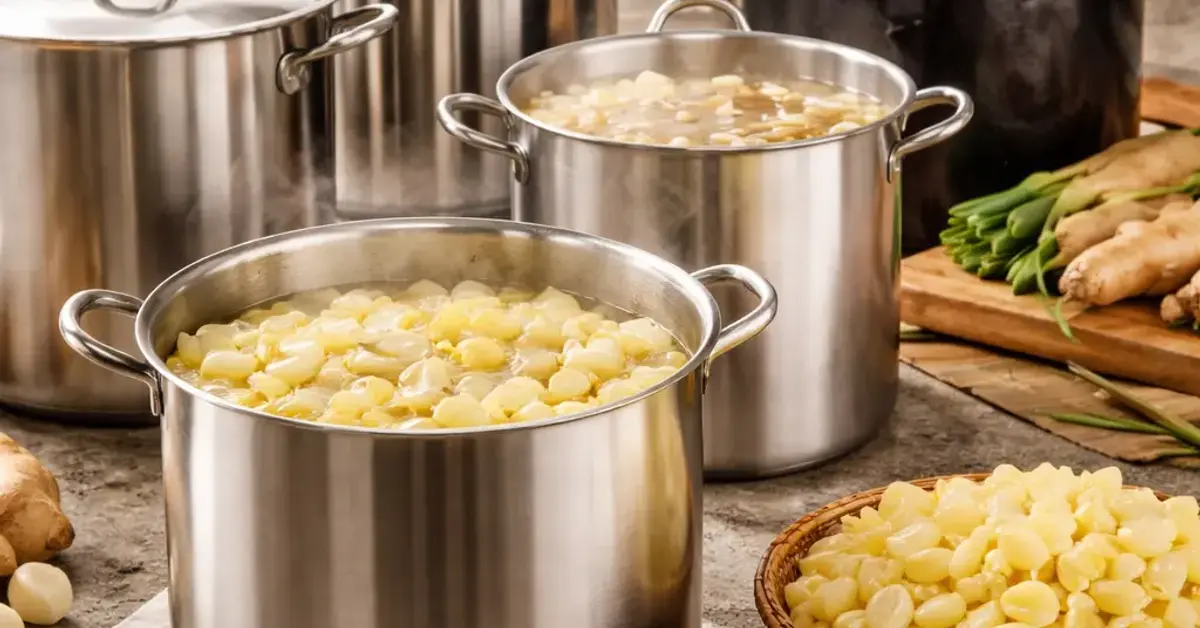
best pot for boiling large amounts of rebung Key Takeaways
Boiling large amounts of rebung (bamboo shoots) demands a spacious, heat-retentive pot that can handle extended simmering without scorching the tender shoots.
- The best pot for boiling large amounts of rebung combines generous capacity (at least 12 quarts), even heat distribution, and a secure lid to contain moisture.
- Stainless steel and enamelled cast iron outperform aluminum and nonstick options for long boils because they resist reactivity and maintain stable temperatures.
- Handle design and lid weight matter more than many cooks realize—heavy lids reduce evaporation, while cool-touch handles improve safety when draining large volumes.
What Makes a Pot the Best Pot for Boiling Large Amounts of Rebung?
Before you buy, it helps to understand why rebung requires more from a pot than, say, boiling pasta. Bamboo shoots contain hydrocyanic acid, which must be leached out through prolonged boiling—often 20 to 45 minutes depending on the variety. A pot that distributes heat unevenly can leave some shoots bitter while others remain undercooked. The best pot for boiling large amounts of rebung must also have enough headroom to allow the shoots to expand without overflowing, especially when you add water to cover them completely. For a related guide, see Budget-Friendly Rebung Kitchen: Your Essential Cost-Saving Guide.
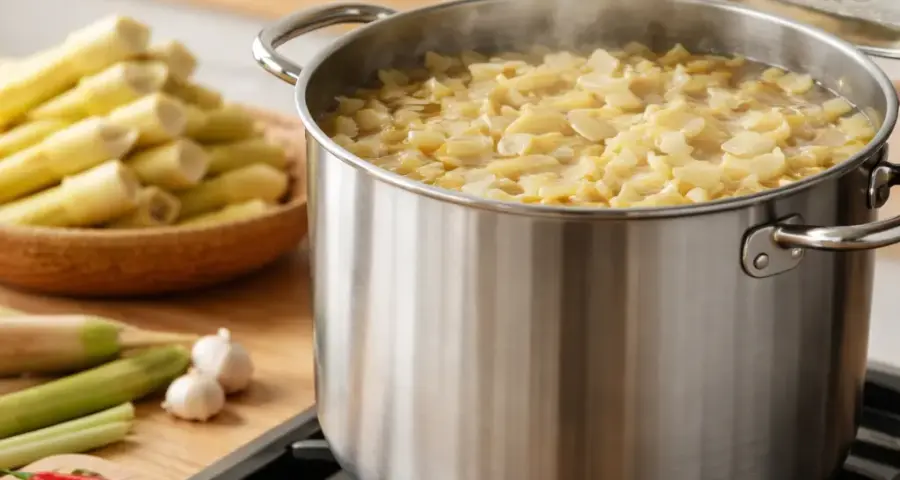
Material Matters: Which Metals Work Best?
Not every pot material is suitable for the acidic water that results from boiling rebung. Aluminum can react and leave a metallic taste. Nonstick coatings degrade under high, sustained heat. The top contenders are:
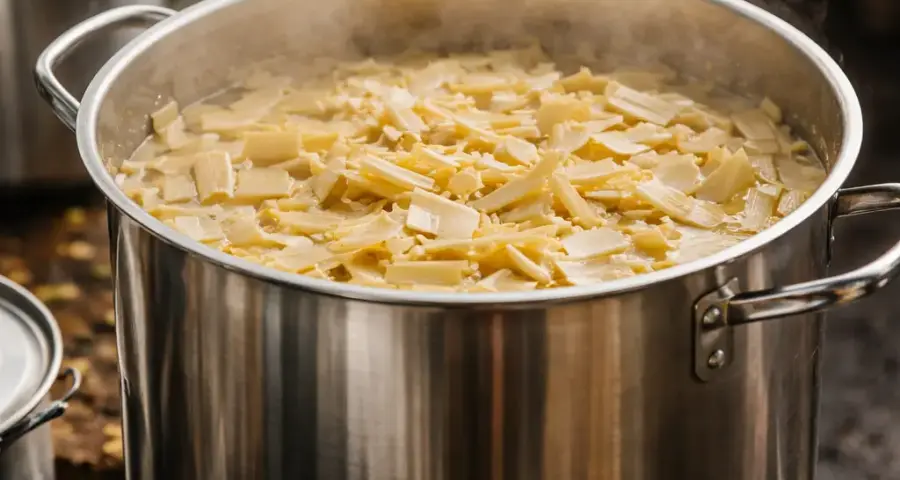
- Stainless steel (tri-ply or multi-clad) – Neutral, durable, and dishwasher-safe. It heats evenly when constructed with an aluminum or copper core.
- Enamelled cast iron – Heavy, excellent heat retention, and non-reactive. Ideal for long, slow boils, but the weight can make handling large batches tricky.
- Hard-anodized aluminum – Lighter than cast iron and non-reactive if the anodization is intact. Less expensive than stainless steel, but the interior can scratch over time.
Size and Capacity: How Big Is Big Enough?
For a family meal, an 8-quart pot may suffice. But when you’re boiling shoots for multiple dishes—say, rebung cooking pot needs for a festive gathering—you’ll want 12 to 16 quarts. Remember that shoots float; a wide diameter gives more surface area for the water to cover them, and a tall pot prevents boil-overs. A 14-quart stainless steel stockpot with a wide base is often the sweet spot for home cooks who process 2 to 3 pounds of fresh rebung at a time. For a related guide, see Kidney Stone Rebung Diet: 5 Essential Tips to Avoid Risks.
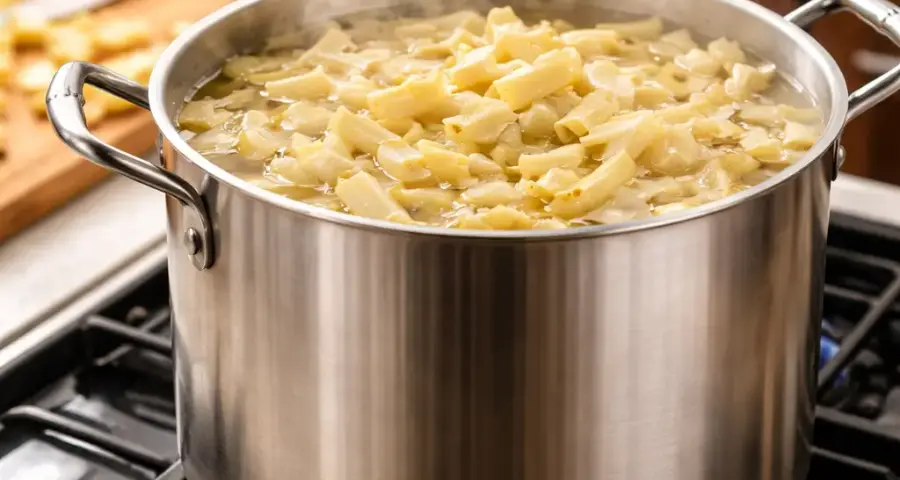
Key Considerations When Choosing a Large Pot for Boiling Rebung
Handle Design and Ergonomics
A full pot of boiling water plus bamboo shoots can weigh over 30 pounds. Riveted, welded side handles that stay cool are non-negotiable. Avoid pots with only one long handle (like a pasta pot) unless you plan to ladle out the water rather than pour. Look for two sturdy loop handles that allow a secure grip with both hands. Silicone-wrapped handles add comfort and heat protection.
Lid Weight and Fit
A heavy, tight-fitting lid reduces steam loss, so you don’t have to keep adding water during the long boil. Glass lids let you monitor the boil without lifting, but they are heavier and more fragile. Metal lids (especially in cast iron or stainless steel) are lighter but may warp over time if the metal is thin. For the best pot for boiling large amounts of rebung, a stainless steel lid with a vapor-release notch is a practical compromise.
Bottom Construction: Thick Base for Even Heat
A thin-bottomed pot creates hot spots that can scorch the shoots. Look for encapsulated bases (aluminum disc bonded to stainless) or fully clad construction where the conductive layer extends up the sides. This ensures that the entire pot heats evenly, not just the bottom. Induction-compatible bases are a bonus if you upgrade your cooktop later.
Comparison Table: Top Pot Candidates for Boiling Rebung
| Pot Model (Example) | Material | Capacity | Key Feature | Best For |
|---|---|---|---|---|
| All-Clad D5 Stockpot | Stainless steel (5-ply) | 12 qt | Even heat, cool-welded handles | Home cooks who want durability |
| Lodge Enamelled Cast Iron Dutch Oven | Cast iron with enamel | 7.5 qt (but deep) | Superior heat retention | Smaller batches, slow simmer |
| Cuisinart Chef’s Classic Stainless Stockpot | Stainless with aluminum disc | 16 qt | Lightweight, large capacity | Big family boils |
| Calphalon Premier Hard-Anodized Stockpot | Hard-anodized aluminum | 12 qt | Nonstick interior, stay-cool handles | Easier cleanup |
| Le Creuset Signature Enamelled Cast Iron | Enamelled cast iron | 13.25 qt | Excellent heat distribution | Serious rebung enthusiasts |
Expert Tips for Boiling Rebung in a Large Pot
Step 1: Prep and Pre-Boil
Slice the shoots lengthwise or into thick coins to increase surface area. Rinse them under cold water to remove dirt, then place them in the pot and cover with cold water by at least 2 inches. Bring to a boil rapidly, then reduce to a gentle simmer.
Step 2: Skim and Change Water (If Needed)
For very fresh or wild shoots, some cooks prefer to boil for 10 minutes, discard the water, add fresh water, and continue boiling. This extra step reduces bitterness significantly. A best pot for boiling large amounts of rebung with a built-in strainer or colander insert can simplify this process.
Step 3: Monitor Salt and Acidity
Add salt only after the first 15 minutes of boiling; salt added too early can toughen the shoots. A squeeze of lemon or a splash of vinegar in the water helps neutralize residual bitterness and keeps the shoots white.
Common Mistakes When Choosing a Pot for Rebung
- Buying too small – A crowded pot leads to uneven cooking and bitter results. Always go one size larger than you think you need.
- Ignoring handle heat – Metal handles without silicone or plastic grips can burn your hands when you try to drain. Test the handles in the store if possible.
- Choosing a wide, shallow pot – Rebung needs depth to stay submerged. A sauté pan or braiser is not suitable.
- Overlooking induction compatibility – If you plan to use an induction cooktop, make sure the pot is magnetic (stainless steel with a ferromagnetic base).
Useful Resources
For a deeper look at bamboo shoot preparation techniques, visit Serious Eats’ guide to cooking bamboo shoots. To compare cookware materials and their heat conductivity, refer to Cook’s Illustrated stockpot reviews.
Final Recommendations by Scenario
For the weekend rebung prepper who processes 3–5 pounds every week: a 16-quart stainless steel stockpot with an encapsulated base, such as the Cuisinart Chef’s Classic 16 qt. It offers the best balance of weight, capacity, and price.
For the enthusiast who values aesthetics and heat retention and cooks smaller batches: a 13-quart enamelled cast iron pot like Le Creuset Signature. It performs beautifully and looks great on the stovetop. Just be ready to handle the weight.
For the budget-conscious family cook who wants a best pot for boiling large amounts of rebung without breaking the bank: a 12-quart hard-anodized aluminum stockpot with stay-cool handles. It heats quickly and cleans easily, though you may need to replace it after a few years if the coating wears.
Choosing the best pot for boiling large amounts of rebung doesn’t have to be complicated. Focus on material, size, handle safety, and lid fit, and you’ll avoid the common pitfalls that lead to burnt or bitter bamboo shoots. Happy cooking!
Frequently Asked Questions About best pot for boiling large amounts of rebung
Can I use an aluminum pot to boil bamboo shoots?
It is not recommended. Aluminum reacts with the acidic compounds released during boiling, which can darken the shoots and give them a metallic taste. Stainless steel or enamelled cast iron are safer choices.
What size pot do I need for 2 pounds of rebung?
For 2 pounds of fresh rebung, use at least a 10-quart pot. The shoots need room to move freely in the water, and you need enough headspace to prevent boil-overs.
Is enamel cast iron too heavy for daily rebung boiling?
If you have good upper body strength and only boil 1–2 times per week, enamelled cast iron is fine. For frequent use, consider a lighter stainless steel pot to avoid fatigue when lifting and draining.
Should I use a lid while boiling rebung?
Yes. A lid reduces evaporation and keeps the water temperature steady. However, leave it slightly ajar or use a vented lid to allow steam to escape and prevent the pot from boiling over.
How often should I change the water when boiling rebung?
For most varieties, one water change halfway through the boil is enough to reduce bitterness. If the water becomes very dark or smells strongly, change it once more.
Can I use a pressure cooker to boil rebung?
A pressure cooker works for small amounts but is not ideal for large batches. The high pressure can break down the shoots too quickly, and most pressure cookers are too small for family-sized portions.
Are glass lids better than metal lids?
Glass lids let you see the boil without lifting, which saves heat. However, they are heavier and can break if dropped. Metal lids are lighter and more durable, but you lose the visual cue.
What is the best handle design for a large rebung pot?
Two riveted loop handles made of stainless steel with silicone grips are ideal. They stay cool and provide a secure grip when you tilt the pot to pour off water.
Do I need a pot with a strainer insert?
It is helpful but not necessary. A strainer insert lets you lift the shoots out without dumping the hot water, which can be safer and more convenient when handling large quantities.
Can I boil rebung in a nonstick pot?
Only if the nonstick coating is rated for high heat (above 450°F). Many standard nonstick coatings degrade under the sustained simmer required for rebung. Stick to stainless steel or enamel.
What thickness of pot base is best?
A base of at least 4–5 mm thick (especially in a multi-clad construction) prevents hot spots. Thinner bases (2–3 mm) are fine for rapid boils but increase the risk of scorching during longer simmering.
Is a 20-quart pot too large for home use?
Not if you regularly boil 4–6 pounds of rebung or host large gatherings. For everyday use, 12–16 quarts is more manageable for storage and cleaning.
How do I clean a pot after boiling rebung?
Soak the pot in warm, soapy water for 15 minutes to loosen any stuck bits. Use a non-abrasive sponge to avoid scratching stainless steel or enamel. For stubborn residue, a paste of baking soda and water works well.
Can I leave rebung in the cooking water overnight?
No. Once boiled, drain the shoots and store them in fresh water in the refrigerator. Leaving them in the cooking water can make them sour and degrade their texture.
What does “headroom” mean in pot sizing?
Headroom is the empty space between the water surface and the pot rim. For boiling rebung, you need at least 2–3 inches of headroom to prevent the water from foaming over.
Should I buy a pot with a copper core?
Copper cores offer superior heat conductivity, but they are expensive and often require special care. Tri-ply stainless steel provides 95% of the performance at half the price.
Is a 5-ply pot better than 3-ply for rebung?
For boiling, 3-ply is sufficient. 5-ply adds extra layers of aluminum and stainless steel, which improves heat retention slightly but also increases weight and cost. It matters more for searing than for boiling.
Are stockpots with a pouring rim useful?
Yes. A pouring rim (a small lip on the rim) helps you pour out water with less spillage, especially when the pot is full and heavy. Look for this feature on larger pots.
What type of pot do restaurants use for rebung?
Most restaurants use commercial-grade 20- to 40-quart stainless steel stockpots with aluminum-clad bases. They are durable, easy to clean, and can withstand heavy daily use.
Can I use a pasta pot with a built-in colander?
Yes, a pasta pot with a colander insert works well for rebung because you can lift out all the shoots at once. Just make sure the pot is tall enough to keep the shoots submerged.