
cleaning bamboo steamers Key Takeaways
Bamboo steamers are prized for their ability to infuse food with a gentle, aromatic steam, but they require specific care to avoid cracking, odors, and mildew.
- cleaning bamboo steamers must always be done by hand — never use a dishwasher or harsh detergents.
- Proper drying and storage are just as important as the wash itself to prevent mold growth.
- A simple weekly maintenance routine will preserve the bamboo’s natural beauty and extend its life significantly.
What You Need to Know Before Cleaning Bamboo Steamers
Bamboo is a porous, natural material. Unlike metal or silicone steamers, it absorbs moisture and food oils easily. If you skip the proper after-use routine, odors and mildew can develop within days. How to clean bamboo steamer starts with understanding that the goal is not sterility — it’s removing food residue while preserving the wood’s integrity. For a related guide, see Kidney Stone Rebung Diet: 5 Essential Tips to Avoid Risks.

Why Regular Cleaning Matters
Leftover starch from dumplings or fish oils can seep into the bamboo fibers. Over time, this creates a breeding ground for bacteria and a musty smell. Regular bamboo steamer cleaning also prevents the layers from warping, which can cause the lid to fit poorly.
What You’ll Need
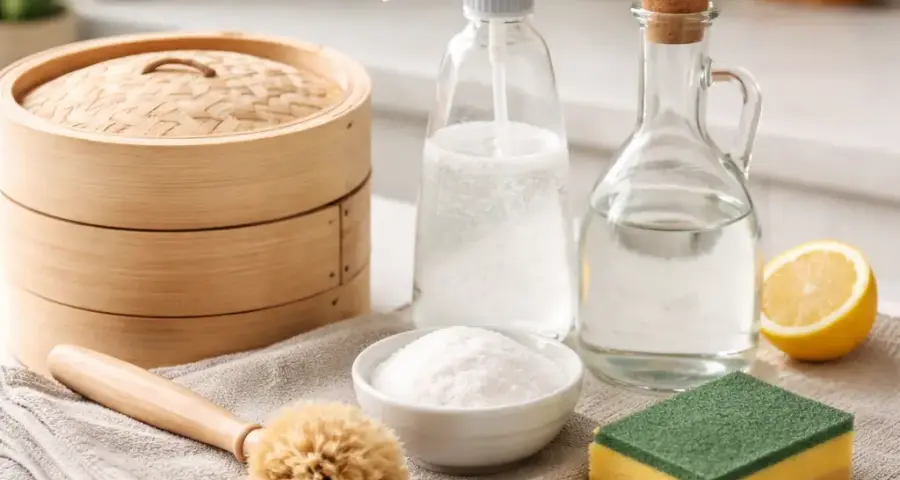
Before you start, gather a soft sponge or brush, a mild dish soap (free of bleach or strong fragrances), a clean towel, and white vinegar (optional for deep cleaning). Avoid steel wool or abrasive pads — they scratch the surface and make bamboo more absorbent. For a related guide, see Easy Way to Blanch and Shock Rebung for Salads | Avoid Soggy Results.
Step-by-Step Guide to Cleaning Bamboo Steamers
Follow these seven steps to keep your steamer in peak condition. The process takes only a few minutes but makes a huge difference.
Step 1: Let It Cool Completely
Never plunge a hot bamboo steamer into cold water. The rapid temperature change can cause the wood to crack. Set it aside for 10–15 minutes until it reaches room temperature.
Step 2: Remove Loose Food Particles
Gently tap the steamer over a trash bin or use a soft brush to dislodge any stuck bits of dough or vegetable. If you used a liner (like cabbage leaves or parchment), dispose of it now.
Step 3: Wash With Mild Soap and Warm Water
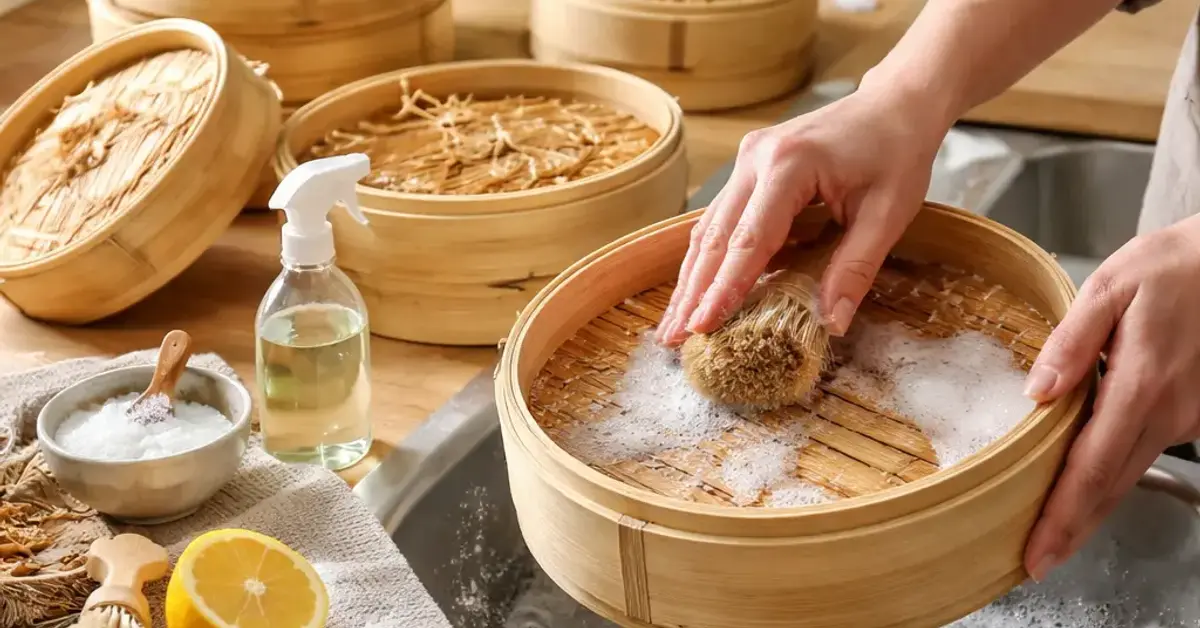
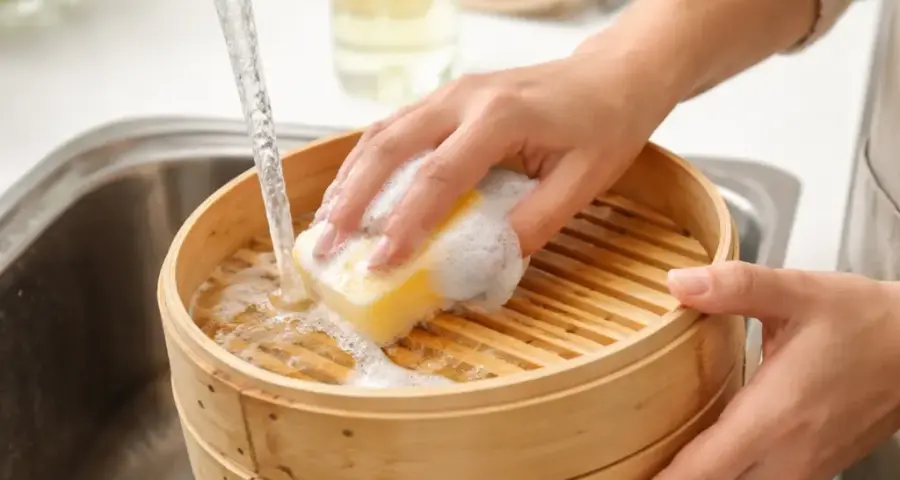
Use a small amount of mild dish soap and warm — not hot — water. Dip your sponge and wipe the interior and exterior surfaces. For stubborn spots, let the soapy water sit for a minute before wiping. Bamboo steamer cleaning should be gentle; do not submerge the steamer for more than a few seconds.
Step 4: Rinse Quickly With Clean Water
Run the steamer under a stream of warm water to remove soap residue. Again, keep this brief — prolonged soaking weakens the bamboo fibers.
Step 5: Air-Dry Thoroughly
Shake off excess water and place the steamer in a well-ventilated area, not directly on a heat source or in full sun (which can warp the wood). A dish rack works well. Allow both the base and lid to dry completely before stacking or storing.
Step 6: Remove Odors With Vinegar (If Needed)
If you notice any musty or fishy smell, mix equal parts white vinegar and water. Wipe the interior surfaces with this solution, then rinse and dry as usual. The vinegar neutralizes odors without leaving a chemical residue. This is a key bamboo steamer maintenance step for heavy users.
Step 7: Store in a Dry, Airy Spot
Never store a bamboo steamer while it is still damp. Keep it in a cabinet with the lid slightly ajar to allow air circulation, or hang it in a dry pantry. Stacking multiple baskets tightly can trap moisture, so nest them loosely or place a paper towel between layers.
Bamboo Steamer Maintenance Schedule
A consistent schedule prevents problems before they start. Use this simple plan to integrate bamboo steamer maintenance into your cooking routine.
| Frequency | Action |
|---|---|
| After each use | Cool, wash, rinse, air-dry thoroughly |
| Weekly (or after 5 uses) | Vinegar wipe to remove odors and light stains |
| Monthly | Inspect for cracks, mold, or discoloration |
| Every 3 months | Light coat of food-grade mineral oil on exterior (not on cooking surfaces) to prevent drying |
Common Mistakes That Ruin Bamboo Steamers
Even experienced cooks make these errors. Avoid them to keep your steamer performing well.
Using Dishwasher or Harsh Chemicals
Dishwasher detergents and high heat will strip the natural oils from bamboo, leaving it brittle. Bleach or ammonia-based cleaners also damage the fibers and may leave harmful residues.
Skipping the Drying Step
Putting a damp steamer into a cabinet is the fastest way to grow mold. Even if you are in a hurry, at least wipe the inside with a towel and leave it on the counter overnight.
Storing in a Sealed Bag or Container
A plastic bag or airtight container traps moisture, which promotes mildew. Bamboo needs to breathe — always store it in a location with some airflow.
How to Remove Mold From a Bamboo Steamer
If you discover small patches of black or green mold, do not panic. Most mold can be removed without ruining the steamer.
Light Mold
Wipe the affected area with a cloth dipped in white vinegar. Let it sit for five minutes, then scrub gently with a soft brush. Rinse and dry thoroughly. Exposure to indirect sunlight for a few hours also helps kill lingering spores.
Heavy Mold
If mold has penetrated deep into the bamboo or the steamer has a strong musty odor after cleaning, it may be time to replace the steamer. Bamboo steamer cleaning cannot always reverse deep fungal growth.
Useful Resources
For additional guidance on bamboo cookware care, check out these trusted sources:
Consistent bamboo steamer cleaning and mindful storage will keep your steamer performing beautifully for countless meals. By following these straightforward steps, you can enjoy perfectly steamed dumplings, buns, and vegetables without worrying about premature wear or unwanted flavors.
Frequently Asked Questions About cleaning bamboo steamers
Can you put a bamboo steamer in the dishwasher?
No. Dishwasher heat and harsh detergents will warp, dry out, and potentially crack the bamboo. Always hand wash with mild soap and warm water.
How often should I clean my bamboo steamer?
Clean it after every single use. Even if you only steamed vegetables for a few minutes, food residue and moisture remain in the pores.
Can I soak my bamboo steamer to remove stuck food?
Avoid prolonged soaking. Instead, let cool water sit in the basket for two to three minutes, then scrub gently with a soft brush.
Why does my bamboo steamer smell bad?
Odors usually come from trapped food oils or moisture. A wipe with white vinegar and thorough drying usually eliminates the smell.
How do I remove stains from a bamboo steamer?
Light stains from soy sauce or turmeric fade naturally with use. For stubborn marks, rub with a paste of baking soda and water, then rinse.
Can I use soap on a bamboo steamer?
Yes, a small amount of mild dish soap is fine. Avoid heavy-duty detergents, bleach, or antibacterial soaps that may leave residues.
Should I oil my bamboo steamer?
Only the exterior surfaces need occasional food-grade mineral oil (once every few months). Never oil the cooking surface or the inside.
How do I store a bamboo steamer?
Store it completely dry in a well-ventilated cabinet. Leave the lid slightly ajar or place a paper towel between stacked baskets to allow airflow.
Can I use vinegar to clean my bamboo steamer?
Yes. White vinegar is excellent for removing odors and mild mold. Dilute it with equal parts water before wiping the inside surfaces.
How do I prevent mold in my bamboo steamer?
Dry the steamer completely after every wash and store it where air can circulate. Avoid storing in damp basements or near the stove where steam rises.
Is it safe to use a moldy bamboo steamer?
Not for food. Light mold can sometimes be cleaned with vinegar, but if the mold is deep or the steamer smells musty after cleaning, replace it.
Can I use a bamboo steamer for meat without a liner?
You can, but it is better to use cabbage leaves, parchment paper, or a reusable silicone liner. This prevents juices from seeping into the bamboo and causing odors.
Why is my bamboo steamer cracking?
Cracking usually happens due to rapid temperature changes (e.g., cold water on a hot steamer) or long exposure to dry air. Allow the steamer to cool naturally and keep it away from heaters.
How long should a bamboo steamer last?
With proper care, a good quality bamboo steamer can last two to five years. Regular cleaning and proper storage are the biggest factors.
Can I use bleach to sanitize my bamboo steamer?
No. Bleach will weaken the bamboo fibers and may leave harmful residues. Stick to vinegar or a mild soap solution.
Can I put my bamboo steamer in the refrigerator with leftover food?
It is not recommended. Bamboo absorbs moisture from the fridge and food odors. Transfer leftovers to a sealed container and clean the steamer promptly.
How do I clean the bamboo steamer tie or string?
Most bamboo steamers come with a natural twine binding. If it gets dirty, wipe it with a damp soapy cloth and let it air-dry. If the twine breaks, you can replace it with food-grade cotton string.
Can I clean a bamboo steamer with lemon juice?
Lemon juice works similarly to vinegar for removing odors. Use it in the same way — diluted with water — but rinse thoroughly to avoid a sticky residue.
Is it okay to use a bamboo steamer with a wok?
Yes, bamboo steamers are traditionally used with a wok full of simmering water. Just make sure the water does not touch the bamboo — the steam should lift the basket above the liquid.
What is the best way to dry a bamboo steamer quickly?
After washing, shake off excess water and wipe the inside with a dry towel. Place it in front of a fan or in a warm (not hot) spot for an hour to speed up drying.