
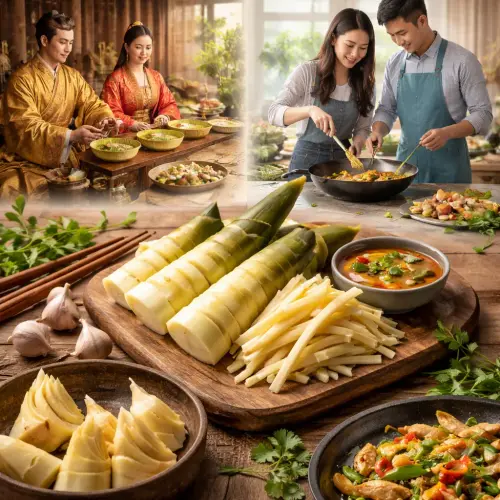
Bamboo Shoot Consumption Key Takeaways
From a prized tribute fit for emperors to a humble stir-fry ingredient, bamboo shoot consumption has undergone a remarkable transformation over thousands of years.
- Bamboo shoot consumption began as a seasonal delicacy reserved for Chinese royalty, documented as early as the Zhou Dynasty.
- Key shifts include the move from wild foraging to mass cultivation, the development of canning and preservation, and the spread of bamboo shoots into international cuisines.
- Modern trends focus on sustainability, plant-based eating, and rediscovering traditional fermentation methods, making bamboo shoots more relevant than ever.
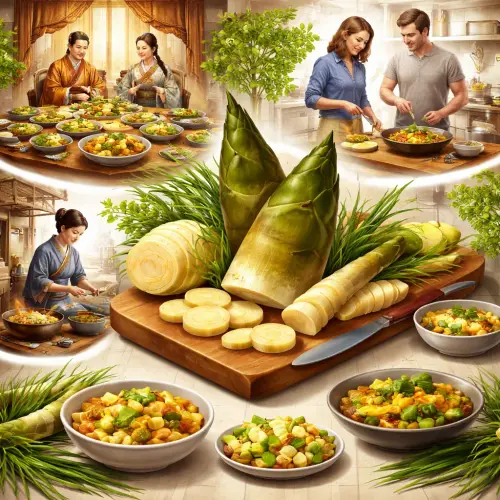
The Imperial Origins of Bamboo Shoot Consumption
Picture a misty morning in the 6th century BCE during the Eastern Zhou Dynasty. A royal forager, barefoot and careful, walks through a bamboo grove in what is now southern China. He carries a wooden knife, forbidden to touch the tender shoots with metal for fear of disturbing the earth spirits. These shoots, known as sǔn, were not food for the commoner. They were a tribute item, packed in salted mud and carried by runners to the emperor’s palace. For a related guide, see 5 Easy Tips for Sustainable Wild Rebung Foraging in the Forest.
The earliest known records of bamboo shoot consumption appear in the Book of Songs, a Confucian classic compiled around 600 BCE. One poem describes a feast where “tender bamboo shoots are cooked with fragrant herbs.” This was not a side dish—it was a symbol of seasonal renewal and imperial favor. The shoots were believed to carry the essence of spring, and consuming them was a way to align with nature’s cycles. For a related guide, see Why Revisiting ‘Urab Rebung’ Is a Must‑Try Vegan Salad.
Why Only Royalty Ate Bamboo Shoots
Several factors kept bamboo shoots exclusive. First, the harvest window was brutally short—only a few weeks in early spring before the shoots turned into woody bamboo. Second, the shoots required immediate preparation. If left unpicked for more than 24 hours, they developed a bitter, almost toxic compound called taxiphyllin. Only well-trained palace cooks knew the precise techniques of boiling, fermenting, and rinsing to neutralize this compound. Finally, bamboo was economically valuable as a building material. Eating the shoots meant sacrificing potential timber, a trade-off only the wealthy could afford.
By the Han Dynasty (206 BCE–220 CE), bamboo shoot consumption had become codified in culinary texts. The Qimin Yaoshu, an ancient agricultural manual, devotes an entire chapter to preserving shoots in brine and vinegar. This marks the beginning of bamboo shoots moving from an exclusive fresh delicacy to a preserved ingredient that could be traded and stored.
Change #1: From Royal Tribute to Common Pantry Staple
The first major shift in bamboo shoot consumption change over time came during the Tang and Song dynasties (7th–13th centuries). As trade routes expanded and agricultural techniques improved, bamboo cultivation spread beyond imperial gardens. Farmers in Sichuan, Zhejiang, and Fujian provinces began growing specific varieties like Moso bamboo (Phyllostachys edulis) specifically for their shoots.
By the Ming Dynasty, bamboo shoots were no longer a luxury. A 1590 cookbook, the Bencao Gangmu by Li Shizhen, lists bamboo shoots as a “cooling and cleansing” food suitable for all classes. Street vendors in Hangzhou sold boiled shoots seasoned with soy sauce and sesame oil for a few copper coins. This democratization of bamboo shoot consumption mirrored broader social changes in China, where once-elite ingredients gradually entered the everyday diet.
Change #2: The Technology of Preservation
The second pivotal change in bamboo shoot consumption was the invention of reliable preservation methods. Before the 19th century, fresh bamboo shoots were available only in spring and only in regions where bamboo grew. Travelers and settlers moving inland or northward craved this taste of home but lacked access. Indigenous techniques of sun-drying, salting, and fermenting helped, but they altered the flavor and texture significantly.
The Arrival of Canned Bamboo Shoots
In the 1860s, European canning technology arrived in East Asian ports. By 1880, several Chinese and Japanese factories began exporting canned bamboo shoots to Europe and North America. This was a game-changer for bamboo shoot consumption. Suddenly, a cook in San Francisco or London could open a tin of shoots in January. The flavor was milder and the texture softer than fresh, but it made the ingredient accessible year-round.
Today, approximately 70% of bamboo shoots sold globally come in cans or vacuum-packed pouches. The largest producers are China, Thailand, and Taiwan. Fresh shoots remain prized among chefs, but canned shoots dominate the mass market. The trade-off is convenience versus nutrition: fresh shoots contain significantly more fiber and enzymes, while canned varieties often lose some nutrients during the blanching and canning process.
| Preservation Method | Flavor Quality | Availability | Typical Use |
|---|---|---|---|
| Fresh (seasonal) | Earthy, slightly sweet | Spring only | Stir-fries, soups |
| Canned | Mild, soft | Year-round | Curries, salads |
| Fermented/dried | Intense, umami | Year-round | Served hot, or rehydrated for braises |
| Vacuum-packed (precooked) | Neutral | Year-round | Instant meals |
Change #3: Global Migration and Culinary Fusion
As Chinese, Japanese, and Southeast Asian diaspora communities grew in the 20th century, they carried their food traditions—including bamboo shoot consumption—to every continent. This is the third major change: bamboo shoots moved from being an exclusively Asian ingredient to a global one. For a related guide, see Rebung Chef: 5 Powerful Traditions Behind Kitchen and Shoots.
In the 1970s, the rise of American Chinese restaurant culture introduced millions of Western diners to bamboo shoots in dishes like chop suey and kung pao chicken. The shoots were valued for their water chestnut-like crunch and their ability to absorb sauces without becoming mushy. By the 1990s, bamboo shoots appeared in upscale fusion cuisine, such as bamboo shoot and truffle risotto in New York restaurants or bamboo shoot ceviche in Peruvian-Japanese kitchens.
This global spread also prompted a revival of ancient Chinese cuisine bamboo shoots techniques. Chefs in London and Melbourne began seeking out fresh shoots and traditional fermentation methods, often learning from elderly grandmothers in rural Fujian. The cycle of food history had turned: what was once peasant knowledge was now haute cuisine.
Change #4: The Health and Sustainability Revolution
In the last decade, bamboo shoot consumption has undergone its most dramatic shift yet—driven not by taste or availability, but by health science and environmental awareness. A 2018 study in the Journal of Ethnic Foods noted that bamboo shoots contain 2.5 grams of dietary fiber per 100 grams, along with significant levels of potassium, vitamin B6, and antioxidants. They are also naturally low in calories and fat.
The Superfood Factor
Modern consumers seeking plant-based proteins and gut-friendly foods have rediscovered bamboo shoots. Social media platforms like Instagram and TikTok are full of recipes using bamboo shoots in smoothie bowls, keto-friendly salads, and even as a substitute for pasta in noodle dishes. The keyword “bamboo shoot noodles” has seen a 300% search increase since 2020. This health-driven demand has changed modern bamboo shoot recipes, which now emphasize raw or lightly cooked shoots to preserve their nutrient profile.
Sustainable Harvesting Practices
Bamboo grows faster than almost any other plant on Earth—some species can grow 1 meter per day. This makes bamboo shoots an exceptionally sustainable crop. They require little water, no pesticides, and regenerate from the same root system year after year. Consumers increasingly value this in an age of climate anxiety. The global bamboo shoot market is projected to grow at a CAGR of 4.5% from 2024 to 2030. You can read more about the economic and environmental benefits in the FAO’s report on bamboo as a sustainable resource.
Change #5: A Return to Ancient Fermentation
The fifth and most recent change in bamboo shoot consumption is a surprising one: a return to antiquity. As the global food movement embraces fermentation for gut health, bamboo shoots are being pickled, kimchi-fied, and sour-brined in ways that echo ancient Chinese cuisine bamboo shoots practices.
Traditional northeastern Thai som tam uses fermented bamboo shoots as a tangy counterpoint to spicy papaya salad. In Japan, menma—fermented bamboo shoots—is a standard ramen topping. Korean chefs now ferment shoots with gochujang and ginger. This trend is not only about flavor but also about reducing waste. Fermented shoots keep for months, addressing the ancient problem of a short harvest window.
Chef Ming Tsai, in a recent interview with Saveur Magazine, noted that “we are rediscovering what our ancestors knew: bamboo shoots are the original slow food.” This philosophical shift—from convenience back to craft—represents the most profound change in bamboo shoot consumption since the invention of the can.
Conclusion: From Emperor to Home Cook
Bamboo shoot consumption has traveled an astonishing arc. It began as a sacred food for ancient Chinese emperors, wrapped in ritual and exclusivity. It evolved into a humble pantry staple, preserved in cans and shared across cultures. Today, it is simultaneously a health food, a sustainable crop, and an emblem of culinary heritage. The journey from kingdom to kitchen is not just a story of a vegetable; it is a mirror of human progress—our desire for taste, our hunger for connection, and our growing respect for the earth.
Whether you enjoy them in a steaming bowl of ramen, a fresh spring stir-fry, or a modern noodle substitute, you are participating in a history that is over 2,500 years old. And that is the beauty of food: it carries the past into every bite.
Useful Resources
For a deeper dive into the economic and environmental impact of bamboo as a crop, read the FAO report on bamboo sustainability.
Chef Ming Tsai’s reflections on traditional preparation techniques offer a modern perspective. Read the full feature in Saveur Magazine.
Frequently Asked Questions About Bamboo Shoot Consumption
Why were bamboo shoots once considered a royal food in China?
In ancient China, bamboo shoots were highly seasonal, required immediate preparation by skilled cooks, and competed with bamboo’s economic value as timber. They were also seen as a symbol of spring renewal and were often sent as tribute to the emperor.
How has bamboo shoot consumption changed over time?
Bamboo shoot consumption has evolved from a rare imperial delicacy to a mass-market canned product, then to a global ingredient used in fusion cuisine, and most recently to a health food celebrated for its fiber and sustainability.
What ancient record first mentions bamboo shoot consumption?
The earliest known mention is in the Book of Songs (Shijing), a Confucian classic from around 600 BCE, which describes a feast featuring tender bamboo shoots cooked with herbs.
How do modern bamboo shoot recipes differ from ancient ones?
Ancient recipes used slow boiling, salting, and fermenting to neutralize toxins. Modern recipes often use canned pre-treated shoots for convenience, but a recent trend returns to fresh and fermented shoots for their superior flavor and nutritional benefits.
Are bamboo shoots safe to eat raw?
Fresh bamboo shoots contain taxiphyllin, a cyanogenic glycoside that can release cyanide when raw. They must always be boiled for at least 20 minutes or fermented before consumption. Canned shoots are pre-cooked and safe to eat directly.
What is the bamboo shoot harvest window?
The harvest window for most bamboo species is only 10 to 14 days in early spring. Once the shoot emerges from the soil, it must be harvested quickly before it becomes woody and tough.
Which country is the largest producer of bamboo shoots today?
China is the world’s largest producer, accounting for roughly 80% of global bamboo shoot output. Other significant producers include Thailand, Japan, Vietnam, Indonesia, and India.
What are the health benefits of eating bamboo shoots?
Bamboo shoots are low in calories, high in dietary fiber, and provide potassium, vitamin B6, antioxidants, and a modest amount of protein. They support digestive health, heart health, and weight management.
How did canning change bamboo shoot consumption?
Canning made bamboo shoots available year-round and globally accessible for the first time. It reduced the labor-intensive preparation required for fresh shoots, though it softened the texture and slightly reduced nutrient content.
What is menma?
Menma is a Japanese preparation of fermented bamboo shoots, typically seasoned with soy sauce, salt, and sometimes chili. It is a classic topping for ramen and has a tangy, umami flavor.
Are bamboo shoots sustainable to farm?
Yes, bamboo is one of the most sustainable crops. It requires minimal water, no synthetic pesticides, grows rapidly, and regenerates from its root system without replanting. Bamboo shoots also absorb more carbon dioxide per hectare than many trees.
How do you cook fresh bamboo shoots?
Fresh bamboo shoots must be peeled, sliced, and boiled in water for at least 20 minutes to remove bitterness and toxins. Some cooks add rice bran or chili to the boiling water to draw out impurities. After boiling, they can be stir-fried, braised, or added to soups.
What is the difference between canned and fresh bamboo shoots?
Fresh shoots have a firmer, crunchy texture and a stronger earthy flavor. Canned shoots are softer, milder, and already cooked. Fresh shoots retain more fiber and nutrients but require more preparation. Canned shoots offer convenience and year-round access.
Did ancient Chinese texts mention bamboo shoots as medicine?
Yes, Li Shizhen’s Bencao Gangmu (1590) described bamboo shoots as a “cooling and cleansing” food, used to aid digestion, reduce phlegm, and treat fevers. This medicinal view persisted in Chinese food therapy for centuries.
Can you eat bamboo shoots on a keto diet?
Yes, bamboo shoots are keto-friendly. They contain only about 2 grams of net carbohydrates per 100 grams, making them an excellent low-carb vegetable for stir-fries, salads, and even “noodle” substitutes.
How do you store fresh bamboo shoots?
Fresh bamboo shoots should be stored unwashed in the refrigerator and used within 3 to 5 days. For longer storage, they can be blanched and frozen, or preserved through pickling, fermenting, or drying.
What dishes commonly use bamboo shoots?
Common dishes include stir-fried bamboo shoots with pork, ramen with menma, Thai green curry with bamboo shoots, Chinese hot and sour soup, Korean japchae, and bamboo shoot salads with sesame dressing.
Are bamboo shoots a common allergen?
Bamboo shoot allergies are rare but documented. Symptoms may include oral itching, skin rash, or digestive discomfort. If you are allergic to grasses or other members of the Poaceae family, you should test with a small amount first.
What is bamboo shoot kimchi?
Bamboo shoot kimchi is a Korean variation of traditional kimchi. Thinly sliced bamboo shoots are fermented with gochugaru (chili flakes), garlic, ginger, fish sauce, and scallions. It has a crunchy texture and a spicy, tangy flavor.
How did bamboo shoots spread to Western cuisine?
Bamboo shoots entered Western cuisine primarily through Chinese immigration in the 19th and 20th centuries. Canned shoots became a standard ingredient in American Chinese restaurants. Later, fusion chefs and health food enthusiasts adopted and reimagined them.