
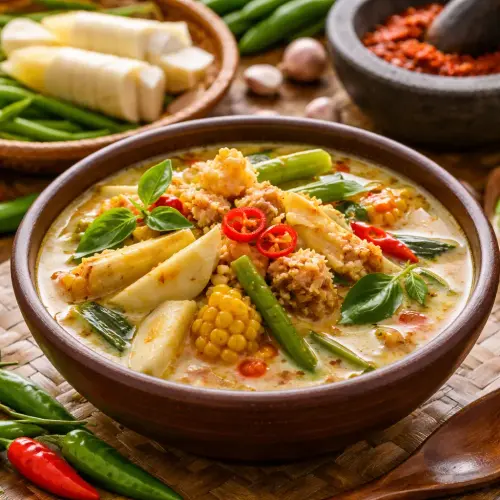
lodeh rebung Key Takeaways
This article is your guide to mastering lodeh rebung , a creamy and spicy coconut bamboo shoot soup from Lumajang, East Java.
- Lodeh rebung is a traditional Indonesian vegetable stew with a coconut milk base, bamboo shoots, and a fiery spice paste.
- Using fresh, seasonal vegetables like young jackfruit and long beans enhances the stew’s texture and flavor profile.
- Our five easy tips focus on ingredient prep, spice balancing, cooking technique, and serving suggestions for authentic results.
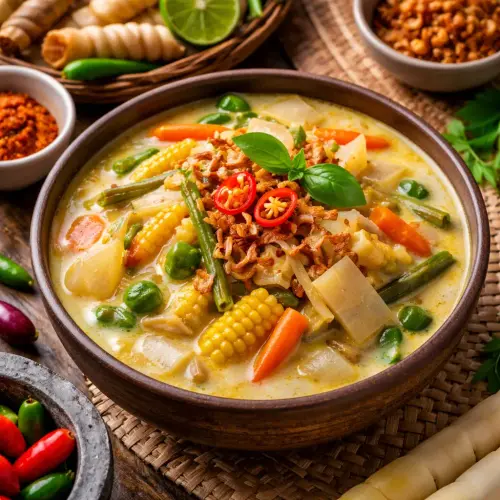
What Makes Lumajang-Style Lodeh Rebung So Special?
There is a reason why the air in Lumajang, a regency nestled at the foot of Mount Semeru, smells like home. It is the scent of lodeh rebung simmering on a kerosene stove, a dish that captures the soul of Javanese home cooking. Unlike its cousins from other regions, the Lumajang version is known for its audacious spice blend and an almost decadent creaminess, all while being packed with whatever vegetables the market offers that morning.
Lodeh rebung is not just a soup; it is a narrative of the land. The star ingredient, bamboo shoots (rebung), are harvested during the rainy season, symbolizing renewal and abundance. The dish is a testament to the Indonesian philosophy of makanan musiman (seasonal eating), where the stew changes with the harvest calendar. This particular style from Lumajang uses a spicy coconut bamboo shoot soup base that is thicker and more aromatic than other Javanese sayur lodeh, thanks to the generous use of turmeric leaf, galangal, and a paste of bird’s eye chilies. For a related guide, see Special Javanese Sayur Lodeh Rebung with Shrimp and Tofu: Easy Classic Recipe.
This seasonal Indonesian vegetable stew is also a masterclass in texture. The bamboo shoots provide a satisfying crunch, while young jackfruit (nangka muda) melts into the broth, creating a creamy Indonesian vegetable soup that feels both hearty and refreshing. Whether you are a seasoned cook or a curious beginner, understanding the context of this dish elevates your cooking from a mere recipe to a cultural experience.
Your Ingredient Checklist for a Perfect Lodeh Rebung Recipe
The beauty of this Lodeh rebung recipe lies in its flexibility, but certain ingredients are non-negotiable for achieving that Lumajang authenticity. Below is a breakdown of what you need and why each element matters.
The Essential Spice Paste (Bumbu Halus)
This paste is the heart of the dish. You will need:
- Red chilies and bird’s eye chilies: For heat and color. Adjust the ratio based on your tolerance.
- Shallots and garlic: The savory foundation.
- Kencur (aromatic ginger): This is what gives Lumajang lodeh rebung its distinctive medicinal aroma. Do not skip it.
- Turmeric and ginger: For earthiness and a golden hue.
- Candlenuts: These add creaminess and thickness to the paste.
Key Vegetables for the Stew
The seasonal rotation is flexible, but this classic combination works wonders:
- Bamboo shoots (rebung): Use fresh, young shoots that have been boiled to remove bitterness. Canned shoots are a decent substitute but lack the same texture.
- Young jackfruit (nangka muda): This absorbs the coconut milk beautifully, giving the stew body.
- Long beans and chayote (labu siam): For crunch and sweetness.
- Melinjo leaves and skin: A traditional addition that adds a slight bitterness and complex flavor.
To get the freshest bamboo shoots, check this guide on selecting and preparing bamboo shoots from The Spruce Eats.
The Creamy Base
- Coconut milk: Use a mix of thick (kental) and thin (cair) coconut milk. The thick milk is added at the end to prevent curdling.
- Turmeric leaf (daun kunyit): Tied in a knot and simmered, it infuses the stew with a floral, earthy aroma that is unmistakable.
5 Easy Tips for a Creamy, Spicy Lodeh Rebung
Now that you have your ingredients, here are the insider techniques that separate an average stew from a Lumajang masterpiece.
Tip 1: Pre-Boil Your Bamboo Shoots Twice
Fresh bamboo shoots contain hydrocyanic acid, which gives them a bitter, metallic taste. To neutralize this, boil the sliced shoots in salted water for 15 minutes, drain, and repeat. After the second boil, rinse them under cold water. This process ensures your lodeh rebung is clean-tasting and highlights the spice paste.
Tip 2: Saute the Spice Paste Until Fragrant
Do not rush this step. After grinding your bumbu halus (spice paste), fry it in a little oil over medium heat until the raw smell disappears and the oil separates. This usually takes 5–7 minutes. The paste should look darker and glossy. This step is critical for a spicy coconut bamboo shoot soup that is deeply flavorful, not watery.
Tip 3: Add Vegetables in Stages
Hard vegetables like bamboo shoots and chayote go in first. Once they are tender, add the long beans and jackfruit. The melinjo leaves and softer vegetables should go in last. This ensures every component in your seasonal Indonesian vegetable stew retains its ideal texture.
Tip 4: Temper the Coconut Milk
To prevent your coconut milk from curdling, never let the stew boil violently after adding the thick coconut milk. Stir gently and consistently. Some cooks in Lumajang even remove the pot from the heat for a minute before adding the thick milk, then return it to a low simmer.
Tip 5: Finish with a Squeeze of Lime
Just before serving, add a small squeeze of lime or a piece of asam kandis (dried mangosteen rind). This acidity balances the rich creaminess and elevates the overall taste profile of your creamy Indonesian vegetable soup.
Step-by-Step Lumajang Lodeh Rebung Cooking Process
Follow these steps to build your stew layer by layer.
Step 1: Prepare the Spice Paste
Combine 6 red chilies, 5 bird’s eye chilies, 8 shallots, 4 cloves of garlic, 2 cm kencur, 2 cm turmeric, 2 cm ginger, and 3 candlenuts in a mortar or food processor. Grind into a smooth paste.
Step 2: Saute and Bloom
Heat 4 tablespoons of cooking oil in a large pot. Saute the spice paste with 2 bay leaves, 2 cm galangal (smashed), and 1 turmeric leaf (tied). Cook until fragrant and the oil separates.
Step 3: Build the Stew
Add 800 ml of thin coconut milk to the pot. Bring to a gentle simmer. Then add, in order: 250 g bamboo shoots, 200 g young jackfruit, 1 chayote (cut into matchsticks). Cook for 15 minutes.
Step 4: Add Remaining Vegetables
Toss in a handful of long beans (cut into 3 cm pieces) and 50 g melinjo leaves. Cook for another 5 minutes. Season with 1 tablespoon of palm sugar and 2 teaspoons of salt, adjusting to taste.
Step 5: Finish with Thick Coconut Milk
Reduce heat to low. Slowly stir in 200 ml of thick coconut milk. Simmer gently for 5 minutes, stirring occasionally. Do not let it boil. Taste and adjust seasoning. Serve hot over steamed rice with sambal terasi for an authentic touch.
Serving Suggestions for the Perfect Lodeh Rebung
A bowl of lodeh rebung is a meal in itself, but it shines brightest when paired with the right companions. Serve it with a mound of steamed white rice, a side of crispy fried tempeh, and a dollop of sambal terasi (shrimp paste chili sauce). For texture, add some krupuk (prawn crackers) to the side. The salty crunch of the crackers contrasts beautifully with the creamy, spicy broth. You can find excellent tips on making sambal terasi from this BBC Good Food recipe.
Closing Reflection: The Soul of a Stew
Cooking lodeh rebung is more than following a recipe; it is an act of remembering. Every time the kitchen fills with the scent of turmeric and galangal, it weaves a small thread back to the bustling markets of Lumajang. This stew teaches patience—letting the flavors marry slowly, allowing the bamboo shoot to soften without losing its character. It is a dish that asks you to taste the season, to appreciate what the earth provides at that moment. So take your time. Stir the pot with intention. And when you lift that spoonful of creamy, spicy broth to your lips, you are not just eating. You are traveling. For a related guide, see Easy Javanese Sayur Lodeh Rebung with Shrimp and Tofu (Classic Recipe).
Useful Resources
Explore more about Indonesian cooking techniques and ingredient sourcing to enhance your lodeh rebung experience.
- Learn how to select and prepare fresh bamboo shoots – A guide on the Spruce Eats covering everything from cleaning to cooking.
- Authentic sambal terasi recipe – The perfect spicy accompaniment to your creamy stew, from BBC Good Food.
Frequently Asked Questions About lodeh rebung
What does lodeh rebung taste like?
Lodeh rebung has a creamy, savory base from coconut milk, balanced by earthy turmeric, spicy chilies, and the unique crunch of bamboo shoots. It is mild-to-spicy and deeply aromatic.
Can I use canned bamboo shoots for lodeh rebung?
Yes, but fresh bamboo shoots provide a superior texture and flavor. If using canned, rinse them thoroughly and boil for 5 minutes to remove any metallic taste.
Is lodeh rebung vegan?
Traditionally, yes. The base is purely vegetable-based with coconut milk. The standard recipe does not include any meat, seafood, or dairy.
What is the difference between sayur lodeh and lodeh rebung?
Sayur lodeh is a general term for vegetable stew in coconut milk. Lodeh rebung specifically highlights bamboo shoots (rebung) as the star ingredient, often with a thicker broth.
How do I prevent coconut milk from curdling?
Add the thick coconut milk after turning off the heat, or keep the flame very low. Stir gently and continuously to avoid sudden temperature changes that cause curdling.
Can I freeze lodeh rebung?
Yes, but the texture of the vegetables, especially bamboo shoots, may soften upon thawing. Store it in an airtight container for up to 1 month. Reheat gently over low heat.
What vegetables can I substitute in this seasonal stew?
You can use swap chayote for zucchini, long beans for green beans, or add carrots for sweetness. The key is to maintain a mix of crunchy and soft textures.
Is lodeh rebung spicy?
The spice level is adjustable. Lumajang-style uses bird’s eye chilies for heat. You can reduce the number of chilies for a milder stew or increase for more heat.
What is kencur and can I skip it?
Kencur (aromatic ginger) has a distinct camphor-like aroma essential for authentic Javanese flavor. Skipping it changes the character, but you can substitute with galangal in a pinch.
How do I prepare fresh bamboo shoots?
Peel the tough outer layers, slice thinly, and boil twice in salted water for 15 minutes each time. Rinse with cold water to remove bitterness before using.
Can I make lodeh rebung without coconut milk?
You can use a nut milk like cashew or almond, but the signature creaminess and flavor of the stew will significantly change. Coconut milk is integral to the dish.
What is the best rice to serve with lodeh rebung?
Steamed white jasmine rice is traditional. Its mild flavor and fluffy texture balance the rich, spicy coconut broth perfectly.
How long does lodeh rebung last in the fridge?
Store in an airtight container for up to 3 days. The flavors often deepen overnight, making it even tastier the next day.
Can I add chicken or shrimp to lodeh rebung?
While not traditional, some home cooks add shredded chicken for protein. If doing so, add cooked chicken at the end to avoid overcooking.
What is the role of candlenuts in the recipe?
Candlenuts act as a thickener and add richness to the spice paste. They are not toxic when cooked, but should not be eaten raw. Macadamia nuts are a good substitute.
Do I need to add melinjo leaves?
Melinjo leaves add a unique slight bitterness and are traditional in East Javanese cooking. They are optional but recommended for authenticity.
Can I use pumpkin in lodeh rebung?
Yes, pumpkin is a great addition. It adds natural sweetness and a creamy texture that complements the bamboo shoots well.
What if I dont have turmeric leaf?
You can substitute with a small piece of turmeric root or a pinch of dried turmeric powder. The flavor will be less floral but still workable.
How do I know when the young jackfruit is cooked?
Young jackfruit is tender when it can be easily pierced with a fork. It usually takes about 15–20 minutes in the simmering broth.
Is lodeh rebung a main dish or a side dish?
In Indonesia, it is typically served as a main dish with rice and sides. It can also be part of a larger spread with other dishes.