
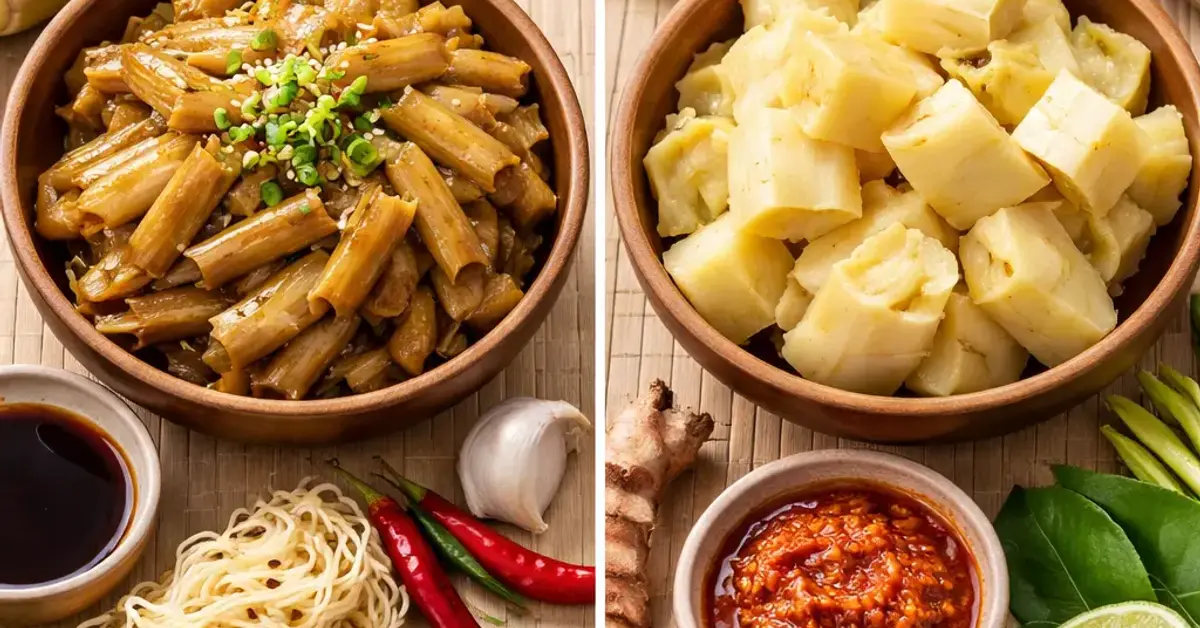
Menma vs. Rebung Key Takeaways
If you have ever slurped a bowl of authentic Japanese ramen, you have likely encountered menma — those dark, shred-like bamboo shoots sitting proudly on top of the broth.
- Menma is fermented with salt and often seasoned with soy sauce, giving it a deep umami flavor; rebung is usually eaten fresh or boiled, with a mild, grassy taste.
- Texture-wise, menma is firm, chewy, and slightly fibrous; rebung is tender and crisp when young, becoming softer with cooking.
- Culturally, menma is a classic ramen topping, while rebung is a pantry staple in many Indonesian vegetable dishes.
What Exactly Are Menma vs. Rebung?
If you have ever slurped a bowl of authentic Japanese ramen, you have likely encountered menma — those dark, shred-like bamboo shoots sitting proudly on top of the broth. On the other side of Asia, Indonesian cuisine uses rebung, a different bamboo shoot type, in countless everyday recipes. While both come from bamboo, they are processed, flavored, and used very differently.
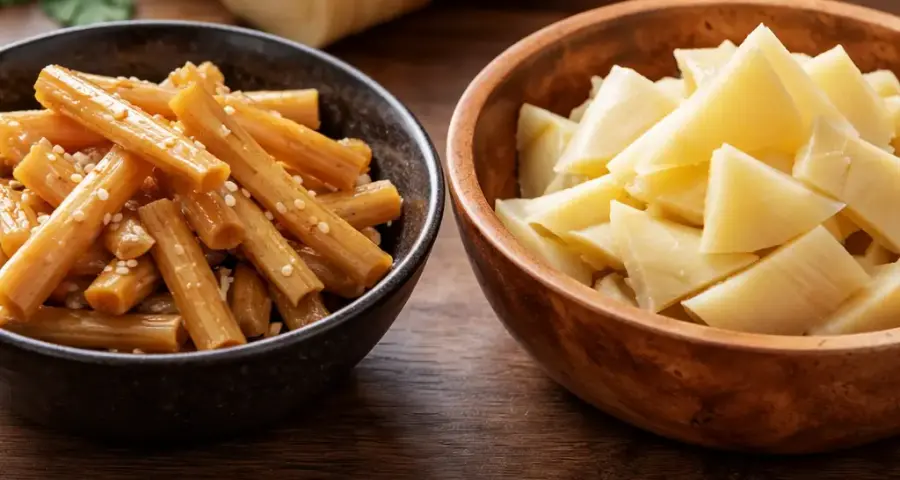
Menma is traditionally made from ma bamboo (Dendrocalamus latiflorus) shoots that are fermented with salt and then seasoned with soy sauce, sesame oil, and sometimes chili. The fermentation process gives menma its signature umami and chewy texture. Rebung, on the other hand, refers to young bamboo shoots from species like Gigantochloa or Bambusa vulgaris, harvested fresh and typically boiled to remove bitterness before being added to dishes. The key difference is that menma vs rebung represents a contrast between a fermented, aged ingredient and a fresh, seasonal vegetable. For a related guide, see 7 Easy Javanese Rebung Recipes: From Lodeh to Urap.
5 Differences Between Menma and Rebung
To help you choose the right ingredient for your cooking, here are the five most important distinctions.
1. Origin and Cultural Role
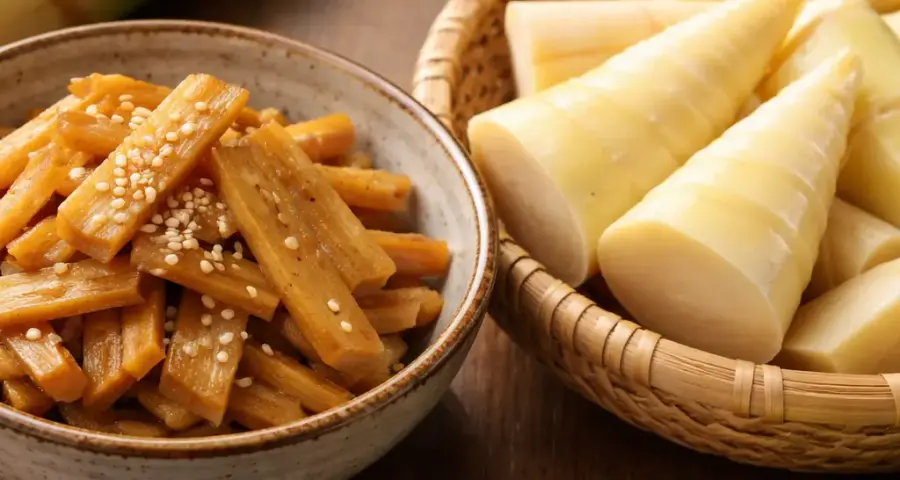
Menma originated in China and was adopted by Japan, where it became a staple ramen topping. Today, menma is almost exclusively associated with Japanese ramen culture — you rarely see it used elsewhere. Rebung, in contrast, is a cornerstone of Indonesian home cooking. It appears in dishes like sayur lodeh, tumis rebung, and gulai rebung, especially during the rainy season when bamboo shoots are abundant. Understanding the cultural role helps you use menma vs rebung authentically. For a related guide, see Sundanese Rebung Guide: 3 Easy Salads and Stir-Fries to Try.
2. Preparation and Processing
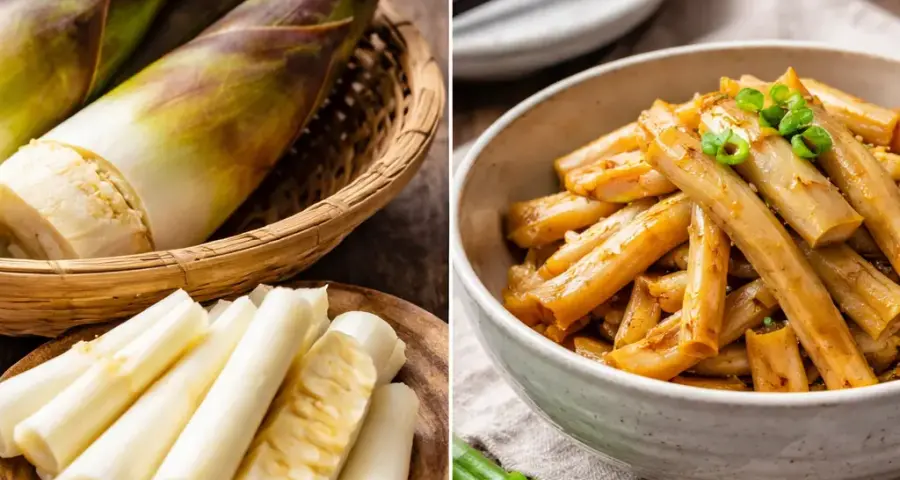
Menma undergoes a fermentation process: bamboo shoots are salted, aged for weeks or months, then rehydrated and seasoned. This process concentrates flavor and transforms texture. Rebung is typically peeled, sliced, and boiled in salted water to remove bitterness and cyanide compounds. Some cooks also ferment rebung briefly for certain dishes, but that is uncommon. If you are comparing Japanese menma guide vs Indonesian rebung guide, the processing is the biggest divergence.
3. Texture Profile
| Aspect | Menma | Rebung |
|---|---|---|
| Firmness | Firm, chewy, slightly crunchy | Tender, crisp when young |
| Fibrousness | Moderately fibrous, holds shape in soup | Less fibrous, breaks apart if overcooked |
| Mouthfeel | Snappy, dense, satisfying bite | Soft, succulent, almost like a tender vegetable |
Because texture is a primary reason people choose one over the other, this is a critical part of any bamboo shoot comparison. Menma retains its bite even after simmering, while rebung becomes delicate.
4. Flavor Differences
Menma is savory, salty, and rich in umami from fermentation and added seasonings like soy sauce and mirin. It has a slight sourness from the ferment. Rebung is much milder — grassy, slightly sweet, and earthy, with a subtle bitterness that boiling removes. Chefs often season rebung heavily with garlic, shallots, chilies, and coconut milk to give it depth. The flavor gap between menma and rebung is wide; they cannot be swapped without adjusting the entire dish.
5. Culinary Uses Beyond the Obvious
Menma is almost synonymous with ramen. However, it also appears in Japanese rice bowls, stir-fried noodles, and salads. Rebung is incredibly versatile: stir-fried with shrimp paste, simmered in coconut curry, pickled for a sour side dish, or mixed into dumplings. In the menma vs rebung debate, versatility goes to rebung.
Nutritional Differences Between Menma and Rebung
Both are low in calories and contain dietary fiber, but their nutritional values diverge due to processing.
- Menma is high in sodium because of the salt used in fermentation and seasoning. A typical serving of menma (about 30 g) contains around 400–600 mg of sodium. It also offers trace amounts of iron and B vitamins from the fermentation process.
- Rebung is much lower in sodium (especially if boiled and not salted heavily). It is a good source of potassium, copper, and vitamin B6. Rebung also contains small amounts of protein and antioxidants. Nutritionally, rebung fits better into low-sodium diets.
If you have high blood pressure or are watching salt intake, choose rebung over menma. For an umami boost in a bowl of ramen, menma is the better choice.
How to Substitute Menma vs Rebung in Recipes
Because they are so different, direct substitution is rarely a good idea. But you can adapt:
- Need menma but only have rebung? Ferment sliced rebung in salt water for a few days, then rinse and season with soy sauce and sesame oil. The result will be milder than authentic menma but closer in texture.
- Need rebung but only have menma? Briefly boil menma to reduce saltiness, then cut into smaller pieces and use in stir-fries. The chewy texture will still work in many Indonesian stir-fry dishes.
These workarounds show that adaptability is possible, but for best results, use each ingredient as intended. A solid bamboo shoot comparison helps you decide when to stock each.
Useful Resources
For more detail on how menma is traditionally made, check out the Japanese Cooking 101 menma guide.
If you are interested in Indonesian rebung recipes and preparation tips, visit Indonesia Eats rebung guide.
Frequently Asked Questions About Menma vs. Rebung
Can I use menma in Indonesian recipes?
You can, but the flavor will be much saltier and more umami than traditional rebung. It works best in bold curry or stir-fry dishes where you can adjust seasoning.
Can I substitute rebung for menma in ramen?
Not directly. Rebung is too soft and lacks the salty, fermented taste of menma. For a better match, quick-pickle or ferment rebung with soy sauce before using.
Are menma and rebung from the same bamboo species?
No. Menma usually comes from ma bamboo (Dendrocalamus latiflorus), while rebung can come from several species like Gigantochloa or Bambusa vulgaris.
Is menma healthy to eat?
In moderation, yes. Menma is low in calories and fat but high in sodium, so people with hypertension should limit portions.
Is rebung safe to eat raw?
No. Raw bamboo shoots contain cyanogenic compounds that can be toxic. Always boil rebung thoroughly before eating.
Does menma need to be cooked?
Menma is usually sold pre-cooked and seasoned. It is generally added to hot dishes near the end of cooking or used as a topping.
Where can I buy menma?
Asian grocery stores, Japanese specialty shops, or online retailers like Amazon sell menma in jars or vacuum packs.
Where can I find fresh rebung?
Asian markets in Southeast Asia or specialized greengrocers carry fresh rebung. It is often sold in a jar or can as well.
Is menma gluten-free?
Traditional menma made with soy sauce may contain wheat. Check the label for gluten-free certification.
Is rebung low-FODMAP?
Bamboo shoots are low-FODMAP in small servings (under ½ cup). However, individual tolerance varies.
Can I freeze menma?
Yes, menma freezes well. Store in an airtight container for up to 3 months. Thaw in the refrigerator before use.
Can I freeze rebung?
Yes. Blanch fresh rebung first, then freeze in airtight bags. Use within 6 months for best quality.
What does menma taste like?
Menma has a deep, salty, umami flavor with a hint of sourness from fermentation. The texture is firm and chewy.
What does rebung taste like?
Rebung tastes mildly grassy and earthy, with a subtle sweetness. After boiling, bitterness is removed.
Is menma same as bamboo shoots?
Menma is a specific type of prepared bamboo shoot. It is not the same as fresh or canned bamboo shoots.
Is rebung same as bamboo shoots?
Yes, rebung is the Indonesian word for young bamboo shoots. It is the same ingredient but prepared differently across regions.
Which is better for ramen: menma or rebung?
Menma is far better for ramen due to its salty, umami flavor and chewy texture that holds up in hot broth.
Which is better for stir-fry?
Rebung is ideal for stir-fry because it absorbs seasonings and stays tender-crisp. Menma would overpower the dish with saltiness.
Can I make menma at home?
Yes, but it is time-consuming. You need fresh ma bamboo shoots, salt, and a fermentation period of at least 2 weeks.
Can I make rebung at home?
Yes. Simply peel, slice, and boil young bamboo shoots until tender. Then store in brine or cook immediately.