
Taring Bali Key Takeaways
Taring Bali refers to the towering, intricately lashed bamboo scaffolding that dominates Balinese ceremonial life.
- Taring Bali serves as a sacred threshold in weddings, representing the link between the human and divine realms.
- During Nyepi, bamboo watchtowers called taring allow pecalang (village security) to oversee the Day of Silence without disturbing the stillness.
- Construction relies on traditional simpul (lashing) techniques using bamboo, coconut fiber rope, and zero nails, making them truly temporary by design.
What Makes Taring Bali So Culturally Powerful?
Walk through any Balinese village in the weeks leading up to a major ceremony, and you will see bamboo scaffolding rising from temple courtyards and family compounds. This is Taring Bali—a tradition that transforms humble bamboo into towering structures that scrape the sky. Balinese Hindus believe that the higher the taring reaches, the closer it brings prayers to the gods. Each pole is not just a piece of material; it is a bridge between the earthly and the spiritual. For a related guide, see Why Revisiting ‘Urab Rebung’ Is a Must‑Try Vegan Salad.
The word taring itself derives from the Old Javanese root taring, meaning “to weave or interlace.” Across Bali, these temporary bamboo structures represent the universe’s woven order—a web of connections between ancestors, spirits, and the living community.
How Are Temporary Bamboo Structures Bali Built by Hand?
There is no blueprint when it comes to building temporary bamboo structures Bali. Master craftsmen, known as tukang taring, arrive at dawn with bundles of green bamboo, coconut fiber ropes, and a well-trained eye for proportions. The process is entirely team-based, often involving the entire banjar (traditional neighborhood association). For a related guide, see 7 Surprising Benefits: Harvesting Bamboo Shoots Makes Bamboo Grow Better.
Materials and Tools of the Trade
Only split bamboo of the tiying tali variety is used—it is flexible yet strong enough to hold several people. The lashing material is tali ijuk (black palm fiber rope), which tightens naturally as it dries. No nails, screws, or metal fasteners are allowed; they are considered spiritually disruptive.
The Lashing Technique (simpul)
The secret to these towering structures lies in the simpul knot, a series of diagonal and figure-eight wraps that lock bamboo poles together without slipping. A single taring gate at a wedding may involve over a thousand individual lashings. The result is a structure that can withstand strong winds and even support dancers performing on platforms high above the ground.
Why Do Grand Weddings Feature Such Elaborate Balinese Wedding Decorations?
In Bali, a wedding is not just a union between two people—it is a cosmic event that restores balance between the bhuta (unseen forces) and the manusia (human realm). Balinese wedding decorations built as taring serve as the ceremonial gateway, or angkul-angkul, through which the couple symbolically steps into a new life.
A Gateway That Honors Ancestors
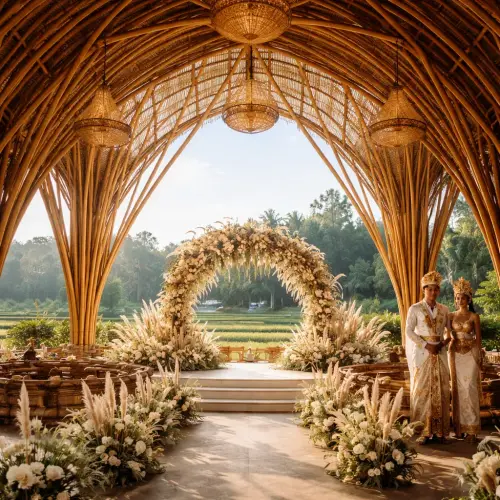
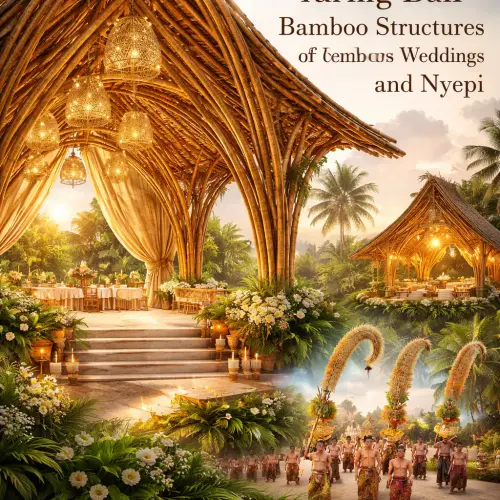
At the entrance of every grand wedding venue, a double-sided taring structure rises, often painted in gold and white, representing the sacred mountain and the sea. Families pour weeks of work into decorating these frames with young coconut leaves, frangipani flowers, and offerings. The bride and groom walk through this portal as the village priest chants blessings.
Community Identity on Display
I once sat with Pak Nyoman, a tukang taring in Ubud, as he lashed the final crossbeams for his grandson’s wedding. He explained, “Taring is our signature. When people see a big taring in the village, they know a family is celebrating. It tells the story of our togetherness.” Each neighbourhood tries to outdo the previous one in height and intricacy, turning the street into a gallery of living art.
How Do Nyepi Bamboo Structures Keep the Silence Sacred?
Nyepi, the Balinese “Day of Silence,” presents a paradox: how do you enforce total quiet without human activity? The answer lies in Nyepi bamboo structures—watchtowers built just days before the holiday. Pecalang (traditional security officers) climb into these lightly built platforms at dawn and remain there for 24 hours, keeping an eye on the village streets below without speaking, eating, or making a sound.
The Watchtower Design
Unlike wedding taring, which are wide and decorative, Nyepi watchtowers are tall, narrow, and minimalist—usually a single bamboo pole topped with a small platform. Pecalang sit cross-legged in these structures, wrapped in white cloth to signify purity. From their perch, they ensure no lights, fires, work, travel, or entertainment disturb the silence.
A Personal Memory of Nyepi in Sidemen
During my first Nyepi in Bali, I was invited by a friend to observe from inside his family compound. As dusk fell, I saw a lone pecalang perched on a bamboo tower, motionless against the purple sky. The entire village had gone mute, yet the bamboo structure seemed alive—breathing softly in the wind, reminding everyone that even in silence, the community watches together.
The Ephemeral Beauty of Taring Bali: Why Letting Go Matters
Perhaps the most striking aspect of Taring Bali is that none of these structures last. After a wedding ends, the bamboo is dismantled within two days. After Nyepi, the watchtowers are taken down by sunset on Ngembak Nyepi (the following day). The bamboo poles are often reused for scaffolding or firewood, but the elaborate lashings are cut without ceremony.
Impermanence as Spiritual Practice
Balinese philosophy teaches that attachment leads to suffering. Taring embodies this lesson physically: no matter how beautiful or massive the structure, it must return to the earth. This ephemeral nature makes each event precious. Unlike permanent wedding arches that stay for decades, a taring is experienced fully in the moment, then released. It teaches participants and guests alike that nothing can be owned—only borrowed and honored.
Modern Challenges and Preserving the Tradition
Younger Balinese are increasingly turning to metal scaffolding or PVC pipes for speed and cost. But traditional tukang taring worry that the soul of the ceremony disappears with the bamboo. Several cultural foundations and village councils now offer workshops to teach simpul lashing to the next generation, ensuring that this living craft does not fade away.
Checklist: What to Look for in Authentic Taring Bali
| Feature | Authentic Taring | Modern Substitute |
|---|---|---|
| Material | Green tiying tali bamboo | Metal pipe or PVC |
| Lashing | Ijuk (palm fiber) rope, simpul knot | Nylon straps or wire |
| Duration | 2–3 days max | Up to a week (if built with wire) |
| Spiritual role | Gateway for divine energy | Purely decorative |
| Dismantling | Full removal by community | Often left standing longer |
Useful Resources
For a deeper look into Balinese bamboo architecture, visit Veranda Magazine’s feature on bamboo traditions exploring how traditional builders innovate with sustainability.
To understand the spiritual significance of Nyepi, the Bali Spirit guide to Nyepi offers clear explanations of the rituals and the role of bamboo watchtowers.
Frequently Asked Questions About Taring Bali
What is Taring Bali exactly?
Taring Bali refers to traditional, temporary bamboo scaffolding or watchtowers used for religious ceremonies, weddings, and the Nyepi holiday. They are hand-lashed using palm fiber rope and no nails.
Why are these bamboo structures temporary?
Balinese philosophy emphasizes impermanence. Temporary structures teach non-attachment, honor the specific ceremony, and are dismantled within days to return materials to the earth or reuse them.
How high can a Taring Bali structure reach?
Typical wedding gateways reach 6 to 12 meters (20 to 40 feet). Nyepi watchtowers can go higher—up to 15 meters—to give pecalang a full view of the village.
Who builds these structures?
A specialized craftsman called a tukang taring leads the construction, often with help from the local banjar (neighborhood association). It is a community effort.
What materials are used in temporary bamboo structures Bali ?
Green bamboo (usually tiying tali), black palm fiber rope (tali ijuk), and occasionally young coconut leaves for decoration. No metal or permanent fasteners are permitted. For a related guide, see 5 Easy Tips for Sustainable Wild Rebung Foraging in the Forest.
How long does it take to build a wedding taring ?
A medium-sized gateway takes 3 to 5 days with a team of 6–10 people. Larger structures for village festivals may require up to two weeks.
What is the simpul knot?
The simpul is a traditional diagonal lashing knot used to bind bamboo poles without slipping. It is the key technique that gives Taring Bali its strength.
Can I hire a tukang taring for my wedding in Bali?
Yes, many villages have craftsmen available for outside events. Expect to coordinate through the local banjar or a wedding organizer familiar with Balinese traditions.
Are Nyepi bamboo structures safe to sit in?
Yes, despite looking precarious, the lashing technique creates a stable platform. The bamboo is selected for its strength, and the structure is tested before the ceremony.
What is the difference between taring and ogoh-ogoh ?
Ogoh-ogoh are large demon-like statues built from bamboo and papier-mâché for Nyepi eve processions. Taring is the scaffolding structure itself, while ogoh-ogoh rides on top of it.
Do all Balinese villages use taring ?
Most villages in Bali that maintain traditional customs use taring for major ceremonies, especially in the central and eastern regencies. Coastal areas sometimes use simpler bamboo structures.
How much does an authentic Taring Bali cost?
Costs vary widely. A simple wedding gateway may cost IDR 5–15 million (about USD 300–1,000) in materials and community labor donations. Elaborate structures for large temples can exceed IDR 50 million.
Can I take photos of taring during a ceremony?
Generally yes, but always ask permission from the family or temple priest first. Never climb on the structure or touch offerings placed near it.
What happens to the materials after dismantling?
Bamboo poles are often stored for reuse in future ceremonies or used as construction material. Rope scraps are composted or burned. Nothing goes to waste.
Is metal scaffolding ever allowed in Balinese ceremonies?
Some modern events use metal frame structures for convenience, but traditionalists consider them spiritually inappropriate. For a fully authentic Taring Bali, only bamboo and natural fiber are used.
How do Balinese wedding decorations incorporate taring ?
Taring serves as the entrance portal and sometimes as a central platform for offerings. Decorations include woven palm leaves, fresh flowers, and gold-painted bamboo accents.
Why do Balinese believe taring connects to the gods?
Height is associated with holiness in Balinese Hinduism. The taller the structure, the closer it reaches the heavens. Taring becomes a physical channel for prayers to ascend.
Are women allowed to build taring ?
Traditionally, lashing and climbing are done by men, while women prepare decorations and offerings. However, younger women in some villages now participate in building smaller structures.
Can I learn to lash Taring Bali bamboo?
Yes, several cultural centers in Ubud and Gianyar offer half-day workshops in simpul lashing. It is a great hands-on way to appreciate the craft.
What is the spiritual message of a taring that is dismantled?
It reminds the community that life is fleeting, and that beauty exists in moments rather than objects. The act of dismantling together reinforces bonds of mutual support.