
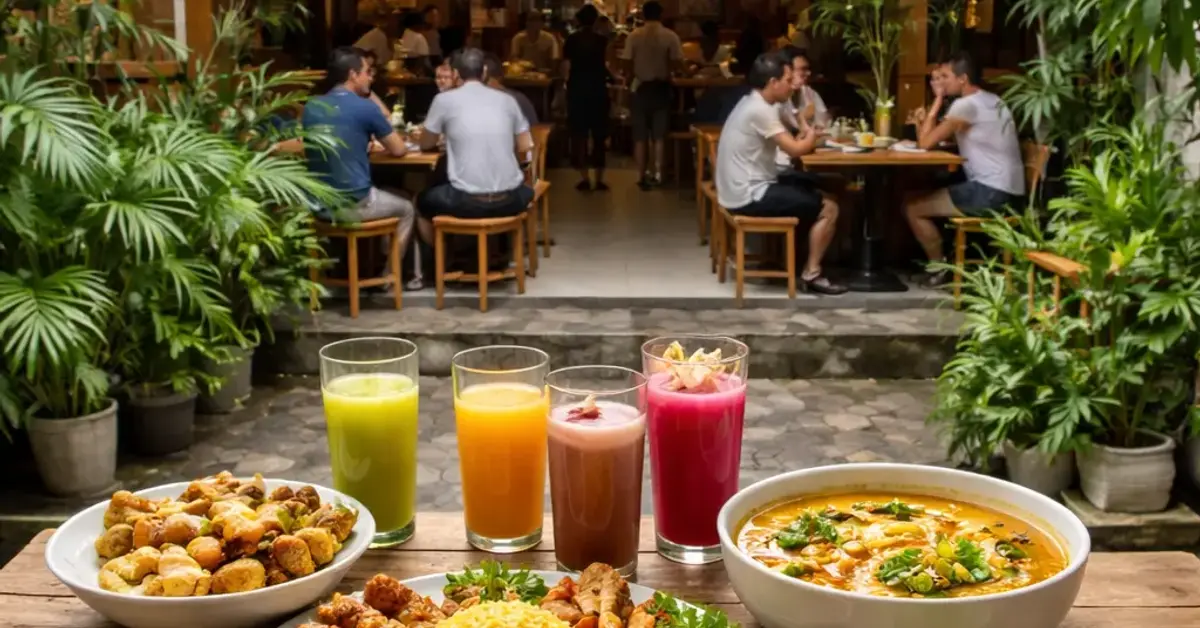
Warung Vegetarian Somayoga in Yogyakarta Key Takeaways
Tucked away in a quiet gang near Prawirotaman, Warung Vegetarian Somayoga in Yogyakarta feels more like a friend’s backyard kitchen than a restaurant.
- Warung Vegetarian Somayoga in Yogyakarta offers a rotating menu of 5–7 authentic Indonesian plant-based dishes daily, many using local heritage recipes.
- The vibe is relaxed and intimate — a perfect spot to escape the bustle of Malioboro and eat like a local.
- Portions are generous, prices are humble, and the owner’s personal touch makes every meal feel special.
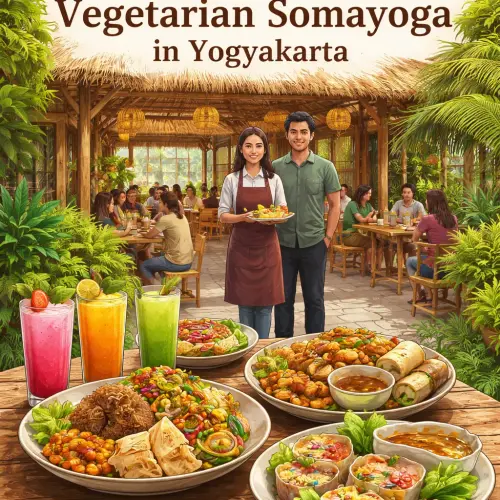
What Makes Warung Vegetarian Somayoga in Yogyakarta So Special?
Yogyakarta’s food scene is a kaleidoscope of sizzling street stalls, sweet gudeg carts, and bustling angkringan. Yet, if you leave your hotel early enough, you might find yourself squeezing down a narrow lane in the Prawirotaman district, following a faint trail of fried shallots and lemongrass. That’s how I ended up at Warung Vegetarian Somayoga in Yogyakarta — a warung so unassuming that I walked past it twice.
The moment you step under its low wooden awning, the tempo shifts. The owner, Ibu Maya, greets you with a soft smile and invites you to sit on a woven mat. No menus are handed out; instead, she gestures towards a glass cabinet holding five clay bowls of the day’s creations. This is not fast food — it’s slow food served with deliberate care.
The Story Behind Warung Vegetarian Somayoga: More Than Just Plant-Based Food
Warung Vegetarian Somayoga began in 2015 as a small experiment. Ibu Maya, a Javanese home cook with a love for traditional herbal cooking, wanted to prove that Indonesian cuisine could stand strong without meat, eggs, or dairy. She uses ingredients like tempeh, jackfruit, coconut milk, and an arsenal of lesser-known spices such as kencur (aromatic ginger) and salam leaves. For a related guide, see Full of Plants Vegan Indonesian Curry Recipe: Easy 1-Pot Review.
Every dish here is vegan by default, though you wouldn’t notice because the flavours are so deeply layered. The warung’s philosophy revolves around Yogayana, a Javanese concept of moderation and harmony — meaning no dish overpowers another on the table. It’s a philosophy that turns a meal into meditation. For a related guide, see The Indonesian Table Review: 150 Essential Recipes for Real Flavor.
Ambiance and Service: Dining Inside a Home Kitchen
The entire warung seats only eight people. The open kitchen is visible from the dining area, allowing you to watch Ibu Maya stir curries and fry tempeh with calm precision. The walls are lined with hand-painted murals of Javanese shadow puppets, and the scent of coconut oil and galangal fills the humid air. Service is unhurried — you are encouraged to eat with your right hand and chat with other diners.
A Detailed Tasting of 5 Signature Plant-Based Dishes at Somayoga
During my three visits, I worked through most of the rotating menu. Here are the dishes that left lasting impressions, each a testament to why Warung Vegetarian Somayoga in Yogyakarta deserves a spot on every plant-based traveller’s list.
1. Rawon Tempeh – The Black Nut Broth Reimagined
Traditional rawon uses beef, but here it’s replaced with thick slabs of tempeh. The broth is a deep obsidian colour, tinted by kluwek (a fermented black nut that gives rawon its signature hue). The flavour is earthy, slightly smoky, and savoury. The tempeh holds its shape remarkably well, offering a chewy bite that mimics meat. A mound of steamed rice and a spoonful of sambal complete the picture. This is comfort food with a story.
2. Gudeg Tanpa Telur – Young Jackfruit in Sweet Coconut Broth
Gudeg is Yogyakarta’s crown jewel, and Somayoga’s vegan take omits the hard-boiled egg and chicken. The jackfruit is slow-cooked for hours until it turns caramel-brown and tender, absorbing the sweet, savoury coconut cream sauce. It’s served with crispy krecek (vegan cow-skin crackers made from cassava). The contrast between the sticky jackfruit and the crunchy krecek is addictive.
3. Peyek Kacang Hijau – Mung Bean Crackers
These are not a main dish but deserve solo praise. Made from soaked mung beans, rice flour, and turmeric, they are deep-fried until golden and paper-thin. Each cracker shatters in your mouth with a spicy, nutty hit. Ibu Maya serves them as a palate cleanser between heavier dishes, and they work brilliantly to reset your taste buds.
4. Lodeh Labu Siam – Chayote in Spiced Coconut Milk
A simple Javanese vegetable stew, but executed with precision. The chayote retains a gentle crunch, and the broth is laced with lemongrass, galangal, and a whisper of chilli. It’s not spicy; instead, it’s aromatic and creamy, reminding you how satisfying a well-made vegan lodeh can be. Perfect to pour over rice.
5. Tape Ketan Hitam – Fermented Black Glutinous Rice Dessert
For dessert, the warung occasionally serves this Javanese classic. Black sticky rice is fermented with a natural starter (ragi), giving it a mildly alcoholic, tangy flavour. It’s sweetened with palm sugar and served cold. The texture is like a thick pudding with whole grains. It’s an acquired taste — complex, funky, and incredibly satisfying if you love fermented foods.
A Personal Anecdote: The Moment I Understood the Somayoga Spirit
On my second evening, a group of local university students squeezed into the warung. They ordered the rawon tempeh and began a passionate discussion about traditional Javanese herbal remedies. Ibu Maya served them extra crackers and joined the conversation. I sat there, spooning dark broth, realising that Warung Vegetarian Somayoga in Yogyakarta is more than a restaurant — it’s a community kitchen where food bridges generations and philosophies. That night, the rawon tasted richer.
How Warung Vegetarian Somayoga Compares to Other Plant-Based Food in Yogyakarta
To help you plan your food tour, here’s a quick comparison between Somayoga and two other popular plant-based food spots in the city.
| Warung | Atmosphere | Menu Variety | Price Range (IDR) | Best For |
|---|---|---|---|---|
| Warung Vegetarian Somayoga | Intimate home kitchen | Daily rotating (5–7 dishes) | 15,000–25,000 | Authentic Javanese vegan |
| Warung Bumi (Prawirotaman) | Modern bohemian cafe | International + Indonesian | 25,000–40,000 | Western-style vegan bowls |
| Rumah Makan Sains Alam | Spiritual ashram vibe | Set menu (buffet style) | 20,000–30,000 | Raw food and juice cleanses |
Practical Tips for First-Time Visitors to Warung Vegetarian Somayoga
Warung Vegetarian Somayoga in Yogyakarta operates on a limited schedule, and here’s how to make the most of your visit.
- Go early. The warung opens at 11:00 AM, and the best dishes sell out within two hours.
- Bring cash. No card payments are accepted. Small bills are appreciated.
- Learn the local greeting. A friendly “Sugeng siang” (good afternoon) goes a long way with Ibu Maya.
- Ask for sambal. There are three types available — terasi-free, tomato-based, and a fiery green sambal with bird’s eye chilli.
- Wheelchair accessibility. The warung has two steps at the entrance and narrow seating.
Final Verdict: Is Warung Vegetarian Somayoga Worth the Hype?
Unequivocally yes. Warung Vegetarian Somayoga in Yogyakarta delivers an authentic, heartfelt experience that commercial vegan spots cannot replicate. The food is not only plant-based but also rooted in Javanese culinary wisdom. Prices are low, portions are satisfying, and the atmosphere is genuinely peaceful. If you are open to eating with your hands, sitting on the floor, and trusting the day’s menu, you will leave with a full stomach and a warm heart.
What Could Be Better
Honesty matters in a review. The warung has limited seating, so you might have to wait during peak hours. Also, the menu changes without notice — if you fall in love with a dish, you may not find it on your next visit. For travellers on a tight itinerary, this unpredictability can be frustrating.
Useful Resources
If you want to explore more about Javanese plant-based cooking or plan your Yogyakarta food journey, these resources provide deeper context:
- Bali Globalist Article on Jogja’s Plant-Based Food Scene — A broader overview of vegan-friendly spots across the city.
- Kompas Travel Guide for Indonesian Street Food — Background on traditional dishes like rawon and gudeg for culinary travellers.
Frequently Asked Questions About Warung Vegetarian Somayoga in Yogyakarta
Is Warung Vegetarian Somayoga fully vegan?
Yes, all dishes are vegan by default. Ibu Maya uses no eggs, dairy, honey, or animal-based seasonings. Even the sambal is free of shrimp paste.
What are the opening hours?
The warung is open from 11:00 AM until all food is sold out, typically by 3:00 PM. It is closed on Sundays.
Is the warung easy to find?
It is hidden in a small gang off Jalan Prawirotaman. Search for “Somayoga” on Google Maps; the pin is accurate. Look for a wooden sign with painted flowers.
Does the menu change daily?
Yes, Ibu Maya cooks based on fresh local market produce. Expect 5–7 different dishes each day, always including a soup, a main protein, and a vegetable stew.
How much does a meal cost?
A full meal with rice, two side dishes, and a drink costs between 15,000 and 25,000 IDR (approximately 1 to 1.50 USD).
Do they speak English?
Basic English is spoken. Ibu Maya understands simple questions about ingredients, but it helps to use hand gestures or a translation app.
Can I make a reservation?
No, the warung operates on a first-come, first-served basis. Reservations are not available due to the small number of seats.
Is the food very spicy?
Most dishes are mild to moderately spiced. The heat comes from separate sambal bowls that you can add to your preference.
Do they serve gluten-free options?
Many dishes are naturally gluten-free because they use rice, tempeh, and coconut milk. However, some crackers and soy sauce may contain wheat; ask the owner to be sure.
Can I take photos or film?
Yes, polite photography of your food is welcome, but avoid taking close-up pictures of Ibu Maya without her permission.
Is the warung family-friendly?
Yes, children are welcome. The warung is quiet, and the food is gentle on young palates, especially the lodeh and rice dishes.
What is the best time to visit?
Arrive between 11:30 AM and 12:30 PM for the freshest selection and shortest wait. After 1:30 PM, many dishes are already finished.
Is there a set menu or can I choose dishes?
There is no set menu; you select from the day’s available clay bowls. Ibu Maya will recommend pairings based on your preferences.
Do they serve coffee or tea?
Yes, they serve traditional Javanese ginger tea (wedang jahe) and black coffee. No espresso-based drinks are available.
Is the warung accessible by public transport?
Yes, you can take a Trans Jogja bus to the Prawirotaman stop, then walk 5 minutes through the alley.
Can I have leftovers packed?
Yes, Ibu Maya can pack any uneaten food in banana leaves for you to take away. Please bring your own container if you have one.
Are there Western-style toilets?
The warung has a modest squat toilet behind the kitchen. It is clean but basic, lacking hot water.
What makes the rawon tempeh different from other places?
Ibu Maya uses a double-fermented kluwek paste that gives the broth an extra layer of smoky depth, distinct from the more common single-fermented versions.
Is the warung pet-friendly?
Pets are not allowed inside the small dining area due to limited space, but service animals are accommodated.
Can I buy ingredients or spices from the warung?
Occasionally, Ibu Maya sells small jars of her homemade sambal, tempeh bacem, and spice pastes. Ask her directly during your visit.