
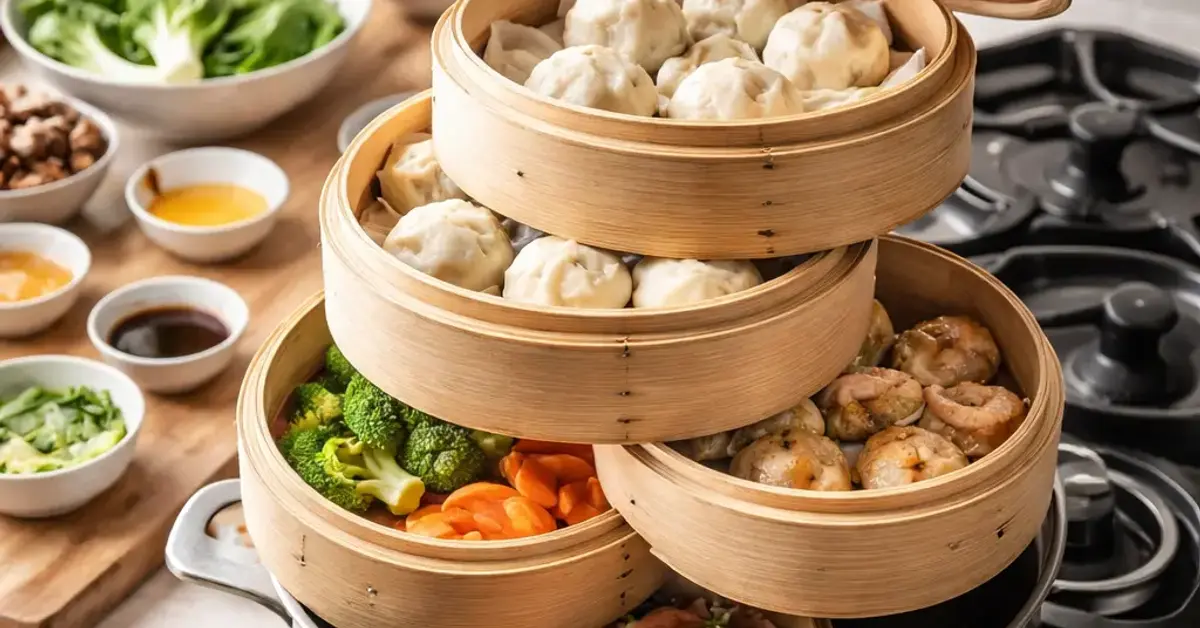
bamboo steamer station setup Key Takeaways
Setting up a bamboo steamer station for multiple dishes is easier than you think once you understand layering order, steam circulation, and timing tricks.
- A proper bamboo steamer station setup relies on steam-tight stacking, perforated liners, and staggered ingredient placement.
- Arrange dishes by cooking time — fastest at the top, slowest at the bottom — so everything finishes together.
- Use natural separators like cabbage leaves or parchment rounds to keep flavors distinct and prevent sticking.
Why a Bamboo Steamer Station Setup Matters for Multiple Dishes
Cooking several dishes at once in a bamboo steamer saves time, energy, and stovetop space. But stacking ingredients haphazardly leads to uneven cooking, soggy wrappers, and mingled flavors. A deliberate steamer station for multiple dishes ensures each component — from shrimp dumplings to broccoli — steams to perfection. Whether you are preparing dim sum for a party or meal-prepping for the week, mastering your bamboo steamer station setup transforms a simple basket into a versatile multi-course solution.
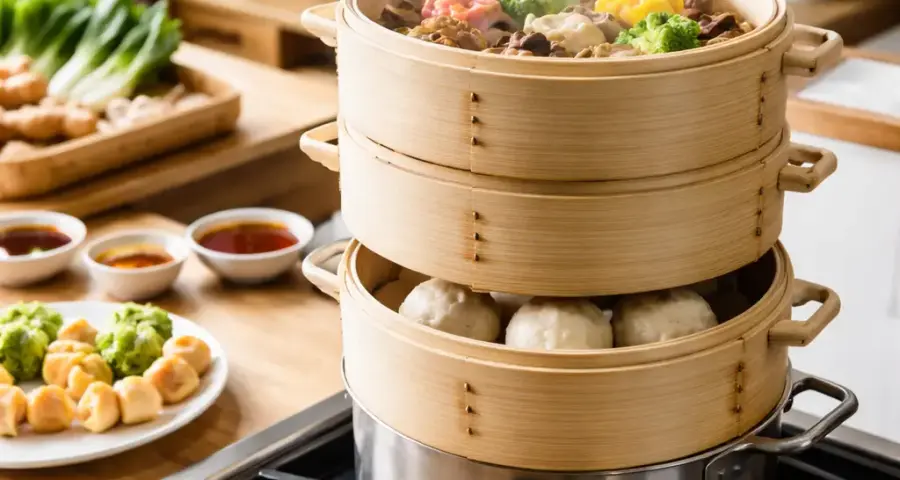
The key principles are circulation, heat retention, and thoughtful timing. Bamboo breathes naturally, absorbing excess moisture and imparting a subtle earthy aroma. But that same breathability means gaps in the stack waste steam and slow cooking. Sealing the lid tightly and aligning basket layers correctly makes all the difference. For a related guide, see 7 Essential Rebung Camping Cooking Tips for a Flavorful Outdoor Feast.
Essential Equipment for a Successful Steamer Station
Before you start layering, gather the right tools. A complete bamboo steamer station setup requires more than just baskets.
Bamboo Steamer Sizes and Tiers
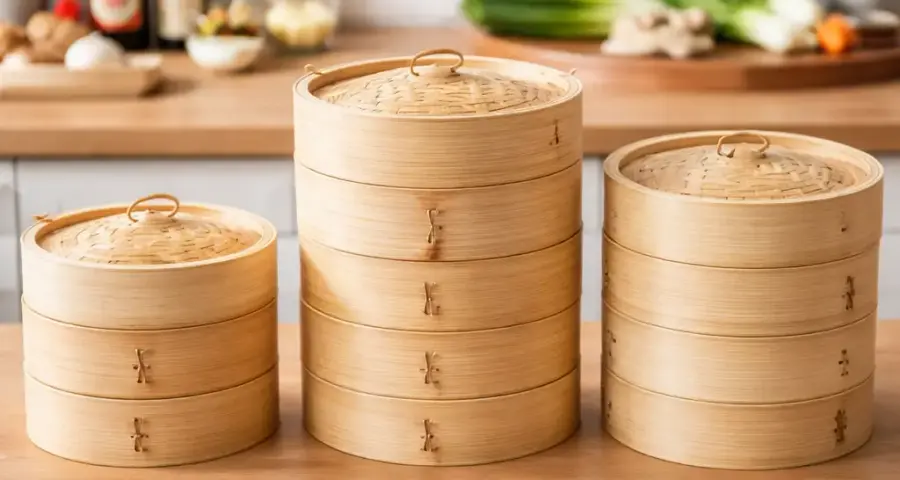
Standard bamboo steamers come in 8‑inch, 10‑inch, and 12‑inch diameters. For three or more dishes, a 10‑inch or 12‑inch set with at least three tiers works best. Ensure the baskets nest snugly inside each other and that the lid fits tightly. Many brands sell stackable sets specifically designed for multi‑dish how to set up a bamboo steamer scenarios.
Wok or Deep Pot for the Base
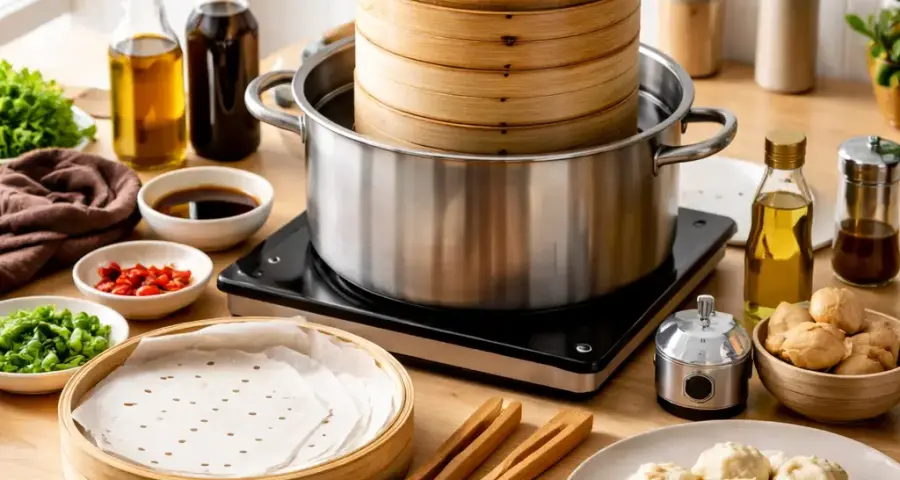
The bottom of your steamer station should sit over a wok or a deep pot with a diameter slightly smaller than the steamer’s base. This prevents the baskets from slipping and keeps the water seal around the edges. Fill the wok with about 2 inches of water — enough to generate steady steam for 20–30 minutes without boiling dry.
Liners, Dividers, and Separators
Perforated parchment paper rounds, cabbage leaves, or silicone steamer mats keep food from sticking. To layer multiple dishes without flavor transfer, place strong‑smelling ingredients (like fish or garlicky greens) in a separate tier and use a piece of parchment or lotus leaf as a barrier. Alternatively, use small heat‑proof ramekins to hold saucy items like steamed eggs or custard buns. For a related guide, see 7 Essential Tips for Cleaning Bamboo Steamers – Keep Them Like New.
Step‑by‑Step: Bamboo Steamer Station Setup for 3+ Dishes
Follow these steps to build a balanced steamer station for multiple dishes that cooks everything evenly.
Step 1: Soak the Steamer Baskets
If your bamboo steamer is new or dry, soak the baskets in cool water for 10–15 minutes before the first use. This prevents the bamboo from scorching and helps form a tighter seal. Shake off excess water before stacking. For repeated use, a quick rinse under the tap is enough.
Step 2: Arrange the Ingredients by Cooking Time
Place the longest‑cooking items in the bottom basket closest to the steam source. For example, thick vegetable slices or large buns go on the lowest tier. Medium‑time items such as fish fillets or meat dumplings occupy the middle tier. Quick‑cooking items like shrimp dumplings or thinly sliced greens go on the top tier. This staggered arrangement lets you add and remove baskets as needed without disturbing the entire stack.
Step 3: Use Liners and Dividers
Cut parchment rounds with small holes punched in the center to allow steam flow. Place one round in each basket. For especially sticky items, brush the liners lightly with oil. If one dish produces liquid (like marinated tofu), line that basket with a double layer of parchment or a silicone mat to contain drips.
Step 4: Build the Stack and Start Steaming
Set the wok or pot over high heat until the water boils, then reduce to medium‑high. Stack the filled baskets one at a time, starting with the bottom tier. Place the lid on top. Maintain a steady, vigorous steam — the water should bubble actively but not splatter. Check the water level every 10 minutes and add hot water as needed.
Step 5: Time Each Tier Independently
Use a timer for each tier based on the recipe. For example:
- Bottom tier: 15–18 minutes (large pork buns)
- Middle tier: 10–12 minutes (chicken siu mai)
- Top tier: 6–8 minutes (shrimp har gow)
When the top tier is done, lift it off carefully and set it aside covered with a clean towel. Continue steaming the lower tiers if they need more time. This staggered removal is the secret to a successful bamboo steamer station setup.
Common Mistakes and How to Fix Them
Even experienced cooks hit snags. Here are the most frequent issues with a steamer station for multiple dishes and quick solutions.
- Soggy wrappers: Caused by too much moisture. Use perforated parchment and avoid overcrowding — leave at least 1 inch between items for steam to escape.
- Uneven cooking: The steam source may be too weak or the baskets tilted. Ensure the wok is centered and the water boils steadily. Rotate the entire stack 180 degrees halfway through cooking.
- Flavor mixing: Strong smells from fish or garlic can permeate other dishes. Wrap aromatic items in a double layer of parchment or place them in a ramekin. Alternatively, designate one tier exclusively for pungent ingredients.
- Basket sticking to pot: The steam ring that forms between the bottom basket and wok can cause sticking. Lift the basket slightly and twist it gently after 5 minutes to break the seal. You can also place a bamboo trivet or a small metal steaming rack inside the wok.
Optimizing Your Bamboo Steamer Station Setup for Different Cuisines
A versatile bamboo steamer station setup works for more than dim sum. Here are variations for common cuisine types.
Chinese Dim Sum Spread
Layer har gow and siu mai on the top tier (6–8 minutes), chicken feet or sticky rice in the middle (10–12 minutes), and pork spare ribs or large buns on the bottom (15–18 minutes). Serve each tier directly as a course — no need to transfer to plates.
Thai or Vietnamese Steamed Baskets
Use the top tier for delicate dumplings or wontons, the middle for marinated fish or chicken wrapped in banana leaves, and the bottom for sticky rice in a cheesecloth bag. The banana leaves add fragrance without overpowering other dishes.
Steamed Vegetables and Proteins for Meal Prep
Layer quick‑cooking greens like bok choy or broccoli on top, chicken breasts or tofu on the middle tier, and root vegetables (carrots, potatoes) cut into uniform cubes on the bottom. Use a single sheet of parchment per tier to catch drips. Steam 15–18 minutes total, removing the top tier after 8 minutes.
Useful Resources
For more on steaming techniques and timing, check these reliable sources:
- Serious Eats – How to Use a Bamboo Steamer – Detailed guide on preparation, soaking, and best practices.
- The Woks of Life – Bamboo Steamer Tips – Practical advice on multi‑tier steaming for authentic Chinese dishes.
Frequently Asked Questions About bamboo steamer station setup
Can I use a bamboo steamer without soaking it first?
Yes, if the bamboo is already seasoned from previous use. For new steamers, soaking prevents scorching and helps create a better steam seal.
How do I prevent bamboo baskets from smelling like food?
Rinse baskets with warm water after each use and let them air‑dry completely. Occasionally wipe with a mild vinegar solution to neutralize odors. Avoid soap, which can soak into the bamboo. For a related guide, see Kidney Stone Rebung Diet: 5 Essential Tips to Avoid Risks.
Can I stack three baskets safely?
Yes, three baskets are standard. Ensure each basket sits snugly and the lid fits flat. Four baskets can work if the steam source is powerful enough and the baskets are identical.
Do I need a special wok for bamboo steamers?
No. Any wide pot or wok with a diameter slightly smaller than the steamer base will work. The key is a stable fit and enough water depth for 20‑30 minutes of steaming.
What size bamboo steamer is best for multiple dishes?
A 10‑inch or 12‑inch diameter set provides enough surface area for overlapping items and room for small ramekins. Smaller 8‑inch sets work for two dishes but are tight for three or more.
How long does it take to steam dim sum in a multi‑tier setup?
Total time is determined by the longest‑cooking item, usually 15‑18 minutes for large buns or ribs. Quick items like har gow take only 6‑8 minutes and should be added later or placed on the top tier for easy removal.
Can I steam raw meat and vegetables together?
Yes, as long as juices from raw meat do not drip onto ready‑to‑eat foods. Place raw meat on the bottom tier with a solid parchment liner. Cook vegetables on upper tiers.
How do I keep bamboo steamers from drying out?
Soak dry baskets for 10‑15 minutes before each use. Store them in a dry place away from direct sunlight, and never leave them on a hot burner without water in the wok.
Is it safe to use a bamboo steamer on an induction cooktop?
Indirectly — place a stainless steel or cast iron pot on the induction surface, then set the steamer on top. Bamboo cannot sit directly on induction because it does not conduct magnetic energy.
Can I line baskets with plastic wrap?
No. Plastic wrap will melt under steam heat. Use parchment paper, cabbage leaves, silicone mats, or natural bamboo leaves instead.
How do I clean a bamboo steamer after use?
Rinse with warm water and scrub gently with a soft brush. Never use soap or submerge for long periods. Dry in a warm oven or sunlight to prevent mold.
What can I do if my bamboo steamer is too tall for my pot?
Use a larger wok or a deep stockpot that can accommodate the full height. Alternatively, remove the lid from the steamer and cover the stack with a tight‑fitting pot lid or a dome of aluminum foil.
Do I need to rotate the steamer baskets while cooking?
Rotating the entire stack 180 degrees halfway through cooking promotes even heat distribution, especially if your burner has hot spots. It is optional but recommended for consistent results.
Can I use a bamboo steamer for desserts?
Absolutely. Steamed cakes, puddings, and custard buns work beautifully. Line the basket with parchment and steam at a moderate heat to avoid curdling.
How do I prevent parchment from sticking to food?
Brush the parchment with a thin layer of oil before placing sticky items. For dumplings, cut the parchment into small squares and place one under each piece.
Can I cook frozen dim sum in a bamboo steamer?
Yes. Add 2‑3 minutes to the standard cooking time and do not thaw first. Space frozen items slightly farther apart to allow steam circulation.
Why does water drip onto my food from the lid?
Condensation forms on the bamboo lid and can drip. Wrapping the lid in a clean kitchen towel absorbs condensation. Alternatively, tilt the lid slightly to let drips fall to the side.
Can I use a bamboo steamer to reheat leftovers?
Yes. Steaming revives rice, buns, and dumplings better than microwaving. Steam for 3‑5 minutes until heated through. Watch that wrappers do not get soggy.
How do I know when the water level is too low?
If steam weakens or you hear the water sizzling aggressively, add hot water immediately. Keep an electric kettle nearby to refill without interrupting the boil.
Can bamboo steamers go in the dishwasher?
Never. Bamboo will crack, warp, and lose its natural properties. Hand‑wash only and dry thoroughly.