
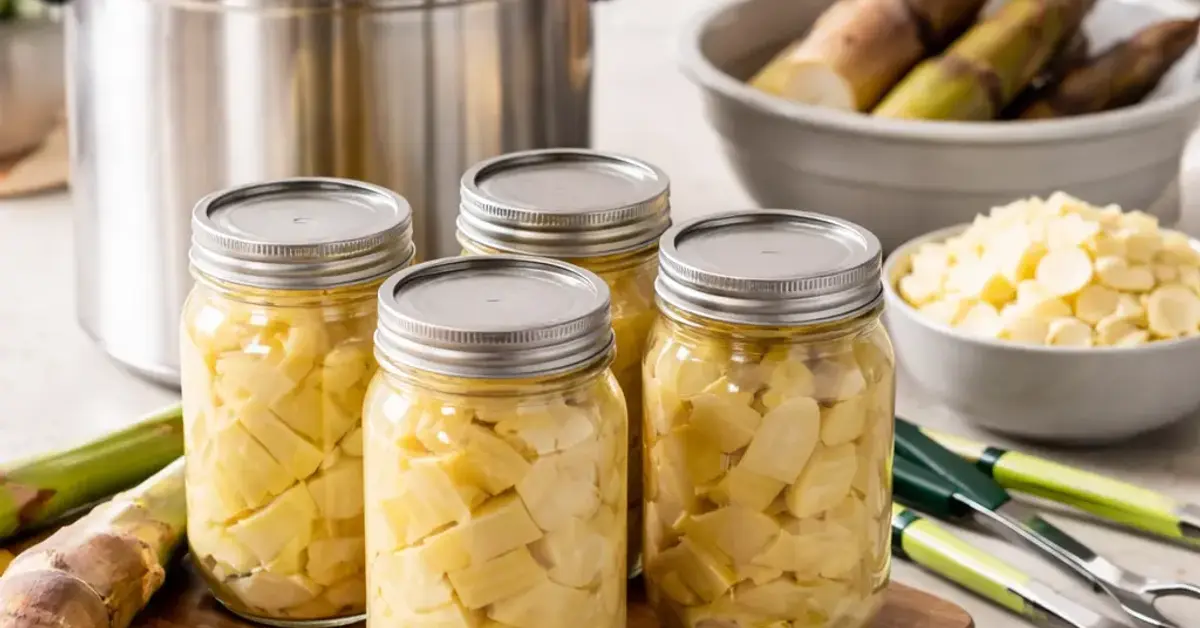
how to can bamboo shoots Key Takeaways
Pressure canning is the only safe method for preserving fresh bamboo shoots at home because of their low acidity.
- Always use a pressure canner — never a water bath — when you how to can bamboo shoots to prevent the risk of botulism.
- Blanching before packing removes natural toxins and improves texture, giving you a safer, more palatable final product.
- Proper headspace and processing time vary by jar size and altitude, so always check your canner manual before starting.
Why You Must Pressure Can Bamboo Shoots
Bamboo shoots are a low-acid vegetable, which means they create an ideal environment for Clostridium botulinum spores if preserved improperly. The only approved home method for safely canning them is pressure canning, which reaches temperatures above 240°F (115°C) to destroy harmful spores. Understanding this principle is the foundation of everything else in this guide.
What You Need Before You How to Can Bamboo Shoots
Gather the following equipment and ingredients before you begin. Preparation prevents mistakes that could compromise safety or quality.
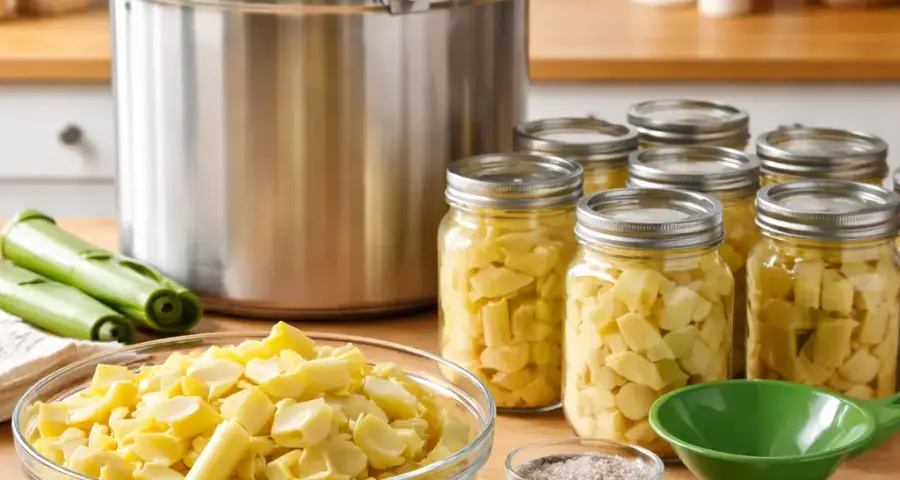
Equipment Checklist
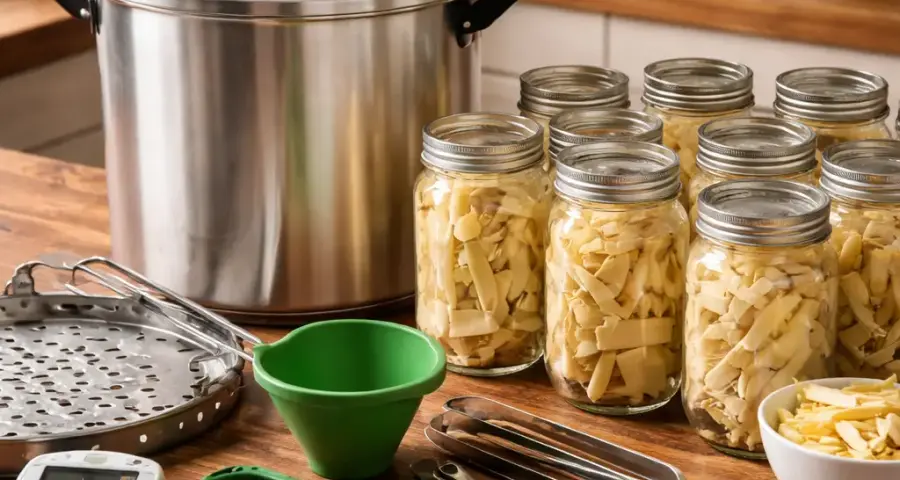
- Pressure canner with a rack (dial-gauge or weighted-gauge; both work)
- Quart or pint mason jars with new lids and rings
- Large pot for boiling water (blanching step)
- Sharp knife and cutting board
- Jar lifter, funnel, bubble remover, and clean towels
Ingredient Notes
Use only fresh bamboo shoots — canned or frozen shoots are not suitable for re-canning. Choose shoots that are firm, pale yellow or ivory, and free of blemishes. Avoid any that feel spongy or have a strong sour smell. For best texture, harvest or buy shoots that are less than 6 inches long, as larger ones tend to be fibrous and bitter. For a related guide, see Sous-Vide Bamboo Shoots: 5 Mistakes to Avoid for Perfect Texture.
Step-by-Step Guide to How to Can Bamboo Shoots at Home
Follow these exact steps to produce safe, delicious canned shoots. Each stage matters, so do not skip or shorten any recommended time.
Step 1: Clean and Trim the Shoots
Remove the tough outer layers of leaves until you reach the tender, pale inner core. Rinse thoroughly under cold water to remove soil and grit. Cut away any discolored or woody parts at the base. Slice the shoots into uniform pieces — about 1-inch chunks or ½-inch slices work well for most recipes.
Step 2: Blanch the Shoots
Place the sliced shoots in a large pot and cover them with fresh water. Bring to a rolling boil and cook for 5 minutes. Drain the water completely. This step neutralizes the natural bitterness and removes hydrocyanic acid compounds present in raw bamboo. Never skip blanching — it directly affects both safety and flavor.
Step 3: Pack the Jars
Pack the hot blanched shoots into clean, warm jars. Leave 1 inch of headspace for pint jars or 1¼ inches for quart jars. For hot pack method, add boiling water or a light brine (1 teaspoon salt per quart of water is optional for flavor). Use a bubble remover tool to slide along the inside edges and release trapped air. Wipe the jar rims with a damp cloth, center the lid, and screw the band to fingertip-tight.
Step 4: Process in the Pressure Canner
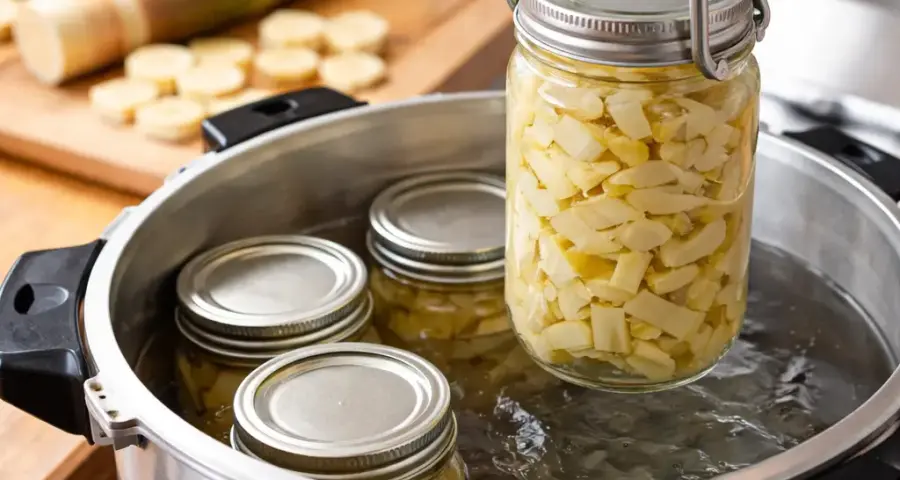
Place the jars on the rack in your canner. Add 2 to 3 inches of hot water according to your canner manual. Lock the lid and heat until steam escapes steadily from the vent. Allow steam to vent for 10 minutes before closing the vent or adding the weight. Bring the canner to the correct pressure: 10 pounds for a dial-gauge canner or 11 pounds for a weighted-gauge canner at sea level. Process pints for 30 minutes and quarts for 35 minutes.
Step 5: Cool and Store
Turn off the heat and let the canner cool naturally — never force cool by running water over it. Wait until the pressure drops to zero, then wait an additional 10 minutes before opening. Use a jar lifter to remove jars and place them on a towel away from drafts. Let them cool completely for 12 to 24 hours. Check the seals by pressing the center of each lid — it should not flex up or down. Label with the date and store in a cool, dark place.
Common Mistakes When You How to Can Bamboo Shoots
Even experienced home canners sometimes make errors that affect safety or quality. Here are the most frequent ones and how to avoid them.
Skipping the Blanch
Blanching isn’t optional. Raw bamboo shoots contain compounds that can cause digestive discomfort and off-flavors. Boiling them before packing ensures a clean, neutral base for cooking later.
Overfilling or Underfilling Jars
Too much headspace leads to seal failure; too little causes siphoning (liquid loss during processing). Stick to the 1-inch or 1¼-inch rule depending on jar size.
Incorrect Pressure Adjustments for Altitude
Altitude affects boiling temperatures. If you live above 1,000 feet, you must increase the pressure. At 1,001 to 3,000 feet, add 2 pounds for a dial-gauge canner (or use the same weight but increase time for weighted-gauge — consult your manual). Always check the National Center for Home Food Preservation guidelines for your specific altitude.
Tips for the Best Texture and Flavor
To get shoots that are tender but not mushy, start with fresh young shoots and process them for the minimum recommended time. Over-processing can turn them into mush. If you plan to stir-fry or add the shoots to soups later, slightly under-blanching them (4 minutes instead of 5) can help them retain some crunch. A pinch of salt in the brine is optional but helps preserve color and subtle flavor.
How to Use Your Canned Bamboo Shoots
Once sealed, your shoots are shelf-stable for 12 to 18 months. Use them in stir-fries, curries, soups, salads, or as a side vegetable. Simply drain and rinse before adding to your dish — no further cooking is required because they are already fully cooked during the canning process. If any jar has a broken seal, mold, off-odor, or leaking lid, discard it immediately without tasting.
Useful Resources
For official processing times and altitude adjustments, always refer to the National Center for Home Food Preservation. For community-tested recipes and troubleshooting, the Healthy Canning website offers practical advice from experienced canners.
Frequently Asked Questions About how to can bamboo shoots
Can I water bath can bamboo shoots ?
No. Bamboo shoots are a low-acid vegetable. Water bath canning does not reach high enough temperatures to kill C. botulinum spores. Only pressure canning is safe. For a related guide, see Revive Canned Bamboo Shoots: 5 Easy Fixes for Limp Veggies.
How long do home-canned bamboo shoots last?
Stored in a cool, dark place, properly sealed jars remain safe for 12 to 18 months. For best quality, use within one year.
Do I need to add salt or vinegar?
Salt is optional and used only for flavor — it does not preserve the shoots. Vinegar is not needed because pressure canning handles safety. You can use plain boiling water.
Why are my canned bamboo shoots mushy?
Mushiness usually comes from over-processing or using older, larger shoots. Use young tender shoots and process for the minimum recommended time.
Can I reuse lids?
No. Canning lids are designed for single use. Reusing them increases the risk of seal failure. Always use new lids for each batch.
What is headspace and why does it matter?
Headspace is the empty room between the food and the lid. Leaving the correct amount allows for expansion during processing and helps form a proper vacuum seal. Too little or too much causes seal problems.
How do I adjust for high altitude?
Add 2 pounds of pressure per 1,000 feet above sea level for dial-gauge canners. For weighted-gauge canners, use the 15-pound weight above 1,000 feet. Check your canner manual or NCHFP for exact numbers.
Can I can bamboo shoots without blanching?
Blanching is a critical safety and quality step. It removes bitter compounds and softens the shoots for proper packing. Do not skip it.
What kind of pressure canner should I use?
Either a dial-gauge or weighted-gauge canner works. Dial-gauge models let you see the exact pressure, while weighted-gauge models regulate pressure automatically. Both are safe when used correctly.
Is it safe to can bamboo shoots with other vegetables?
Only if the mixture has a tested recipe. Mixed low-acid vegetables should follow a validated pressure canning recipe. Do not create your own combinations without tested guidelines.
Can I use frozen bamboo shoots for canning?
Frozen shoots have already undergone texture changes from freezing and thawing. They do not can well and may become mushy. Start with fresh shoots for best results.
What should I do if a jar doesn’t seal?
Refrigerate unsealed jars and use them within one week, or reprocess within 24 hours with a new lid, making sure the rim is clean and headspace is correct.
Can I add spices or garlic to the jars?
If using a tested recipe, yes. Garlic and spices are safe in small amounts but do not change the processing time. For the most consistent results, add flavor after opening the jar.
How do I know if my canned shoots are safe to eat?
Before opening, check for bulging lids, leaks, or visible mold when opening. If any of these signs appear or if the liquid looks cloudy or smells off, discard without tasting.
Why do my shoots taste bitter?
Bitterness usually indicates insufficient blanching or using overly mature shoots. Ensure you boil the sliced shoots for at least 5 minutes before packing.
Can I reduce the processing time?
No. Processing times are based on scientific testing to ensure all bacteria are destroyed. Never shorten the time, even by a few minutes.
Is a pressure cooker the same as a pressure canner?
Many pressure cookers can be used as canners if they hold at least 4 quart jars and maintain steady pressure. Smaller pressure cookers do not work because they cannot maintain pressure long enough for safety.
Can I can bamboo shoots in quart jars instead of pints?
Yes. Process quart jars for 35 minutes (instead of 30 for pints) at the correct pressure. Make sure your canner can accommodate the taller jars.
Should I vent the canner before pressurizing?
Yes. Venting for 10 minutes before closing the vent or adding the weight ensures that air is expelled, which allows accurate pressure readings and even heat distribution.
Is it necessary to cool jars completely before testing seals?
Yes. Jars should cool undisturbed for 12 to 24 hours. The vacuum seal forms as the contents cool. Testing too early can break the seal or give a false reading.