
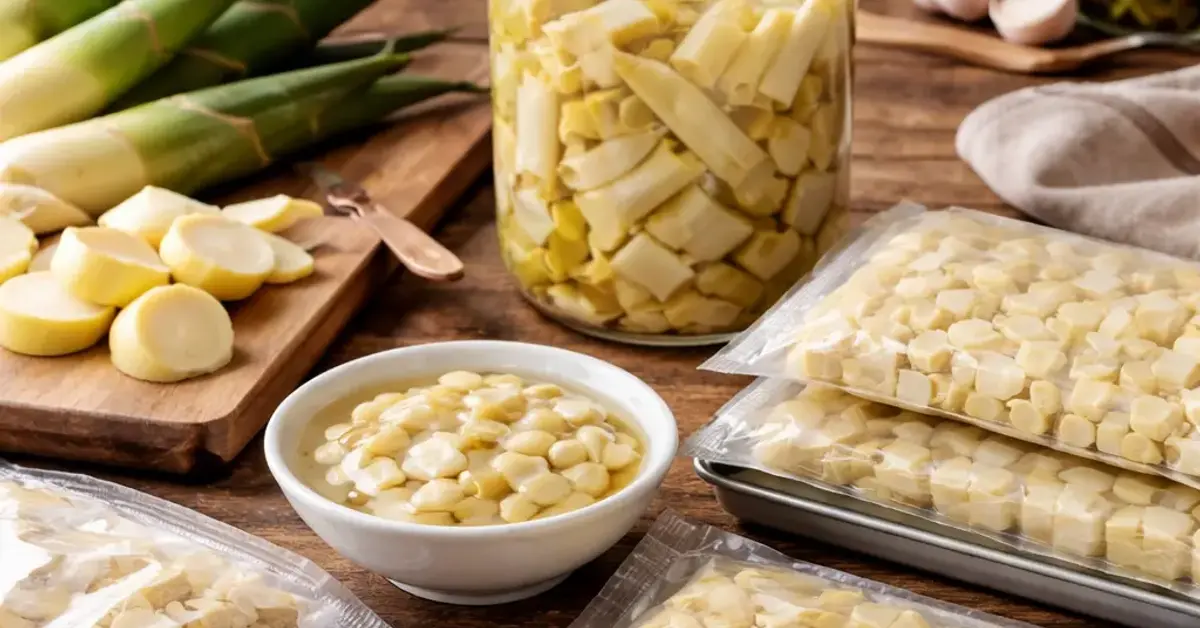
Rebung storage Key Takeaways
Proper rebung storage lets you enjoy tender bamboo shoots long after the harvest season ends.
- Rebung storage requires a seasonal plan: harvest in peak months, then freeze, pickle, or dry each batch at the right time.
- Blanching before freezing preserves texture and flavor for up to 12 months.
- Fermenting and pickling add variety and extend shelf life without freezer space.
Why a Month‑by‑Month Rebung Storage Plan Works
Bamboo shoots grow in seasonal flushes, and their tenderness fades quickly after harvest. Without a deliberate schedule, you either eat them all in a few weeks or lose them to spoilage. Breaking the year into monthly actions ensures that each stage—harvest, blanch, freeze, pickle, dry—happens at the optimal window. This approach also helps you avoid the classic mistakes of overcrowding your freezer or forgetting to rotate older batches. For a related guide, see Harvest Wild Rebung Indonesia: Best Season and Timing Guide.
Month 1–2: Peak Harvest and Immediate Rebung Storage
During the first two months of the shoot season, you will have the most abundant and tender harvest. This is the time to act fast, because shoots toughen within days of being cut.
Step 1: Clean and Trim
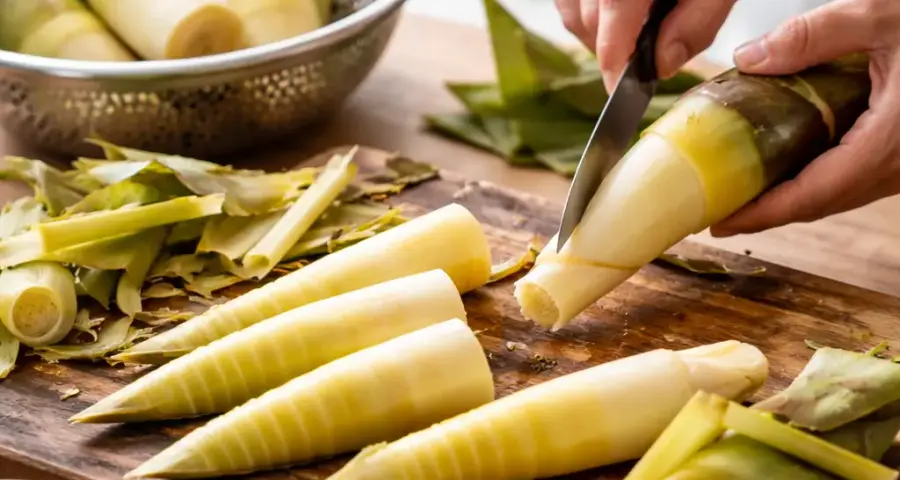
Remove the tough outer layers and trim the woody base. Slice the tender inner shoots into uniform pieces—rings, strips, or chunks—depending on how you plan to use them later. Uniform pieces blanch and freeze evenly.
Step 2: Blanch for Long‑Term Freezing
Bring a large pot of water to a rolling boil. Drop in the shoot pieces and blanch for 3–5 minutes (thicker pieces need closer to 5 minutes). Immediately transfer them to an ice bath to stop the cooking. Drain well and pat dry. This step neutralizes enzymes that cause bitterness and mushiness during frozen rebung storage.
Step 3: Pack and Freeze
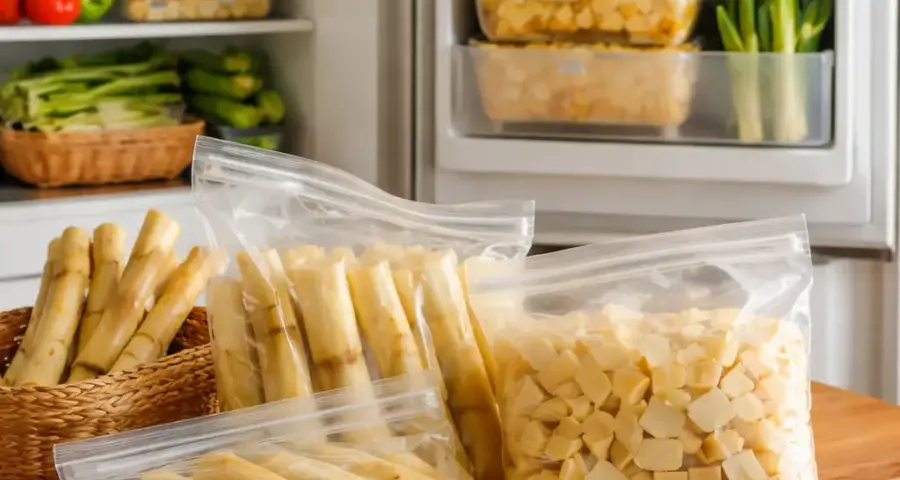
Spread blanched pieces on a tray lined with parchment paper and freeze for 1–2 hours until solid. Then transfer them to airtight freezer bags or vacuum‑sealed packs. Squeeze out as much air as possible, label with the date, and return to the freezer. Properly frozen shoots maintain good texture for up to 12 months.
Month 3: Fermenting for Probiotic Rebung Storage
If your freezer is getting full, fermentation offers a shelf‑stable alternative that also boosts gut health.
Simple Salt‑Brine Fermentation
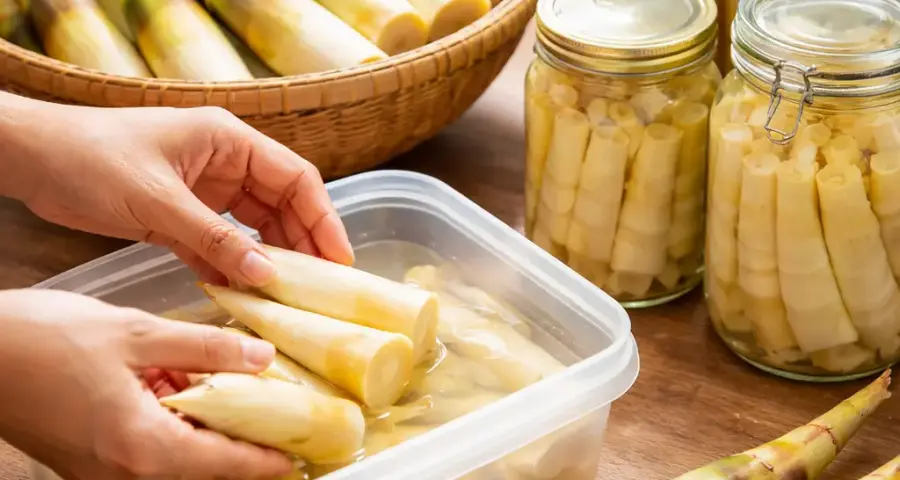
Slice blanched shoots into thin strips. Pack them into a clean glass jar and cover with a 3% salt brine (30 grams salt per liter of water). Weigh the shoots down with a fermentation weight so they stay submerged. Cover loosely and leave at room temperature (18–22°C) for 5–7 days. Taste daily—once the sourness suits you, move the jar to the fridge. Fermented bamboo shoots keep for months and add a tangy crunch to salads and spring rolls.
Month 4–5: Pickling and Spiced Rebung Storage
By month four, the fresh supply is tapering off. This is the perfect time to prepare pickled shoots.
Quick Pickle Brine Recipe
Combine equal parts rice vinegar and water, plus a tablespoon of sugar and a teaspoon of salt per cup of liquid. Bring to a boil, then pour over blanched shoot pieces in a jar. Add garlic, chilies, or ginger for extra flavor. Seal and refrigerate. The pickles are ready in 48 hours and keep for 3–4 months.
Month 6–7: Drying for Lightweight Rebung Storage
Dried bamboo shoots are a staple in many Asian cuisines. They require no freezer space and last years when stored properly.
Dehydrator or Sun‑Drying
Slice blanched shoots into thin strips about 3 mm thick. Arrange them in a single layer on dehydrator trays and dry at 50°C for 6–10 hours, until brittle. Alternatively, sun‑dry on clean screens for 2–3 days in hot, dry weather, covering them at night. Store dried shoots in an airtight container in a cool, dark pantry. To use, rehydrate in warm water for 20–30 minutes.
Month 8: Inventory Check and Rotation
By mid‑year, you have multiple batches in the freezer, jars of pickles, and dried shoots. Take an inventory day. Label everything clearly with dates and contents. Move older frozen bags to the front so you use them first. Check pickled jars for any signs of spoilage (cloudy brine, off smells) and discard if necessary.
Month 9–10: Creative Uses for Your Stockpile
Now your stored shoots are ready to shine. Frozen shoots work best in cooked dishes—add them directly to soups, curries, or stir‑fries without thawing. Pickled shoots make excellent toppings for rice bowls or tacos. Dried shoots add an intense, earthy flavor to broths and braises. Experiment with different recipes to keep meals interesting and to prevent any one batch from languishing. For a related guide, see Rebung Storage Guide: Smart Tips for Fresh, Canned, Frozen, or Dried.
Month 11–12: Preparing for the Next Harvest
As the year winds down, assess what remains. Use up any old frozen batches in big batches of soup or curry that you can freeze again (though texture will soften a bit). Clean and sterilize all jars, fermenting weights, and dehydrator trays. Review what worked and what didn’t—maybe you need more pickles next year or fewer dried shoots. This reflection makes next season’s rebung storage even smoother.
Quick‑Reference Rebung Storage Timeline Table
| Month | Action | Storage Outcome |
|---|---|---|
| 1–2 | Harvest, blanch, freeze | Frozen shoots (up to 12 months) |
| 3 | Ferment in brine | Probiotic shoots (up to 6 months refrigerated) |
| 4–5 | Pickle with vinegar | Quick pickles (3–4 months refrigerated) |
| 6–7 | Dry in dehydrator or sun | Dried shoots (2+ years pantry) |
| 8 | Inventory and rotate | No waste, all batches in good condition |
| 9–10 | Cook with stored shoots | Variety of meals, stockpile used evenly |
| 11–12 | Clear old stock, clean equipment | Ready for next harvest |
Troubleshooting Common Rebung Storage Problems
Even with a solid plan, things can go wrong. Here are fixes for the most common issues.
Frozen shoots turn mushy
This usually means they were not blanched long enough or were not dried thoroughly before freezing. Next time, blanch for the full recommended time and pat pieces very dry. Use mushy shoots in blended soups or purees where texture does not matter.
Pickled shoots develop off‑flavors
Always use clean jars and fresh brine. If the brine turns cloudy or smells yeasty, discard the batch. Check that shoots are fully submerged to prevent mold.
Dried shoots are tough
Rehydrate them longer than you think. If they still feel chewy, simmer them in broth for 10–15 minutes before adding to your dish.
Optimization Tips for the Best Rebung Storage
- Invest in a vacuum sealer: It drastically reduces freezer burn and extends frozen quality beyond 12 months.
- Label everything: Include the date and preparation method. It is easy to forget which bag is blanched versus raw after a few months.
- Rotate seasonally: Use the oldest frozen shoots first. A “first in, first out” system saves you from discovering a forgotten bag from two years ago.
- Match method to use: Freeze for stir‑fries, pickle for salads, dry for soups. Diversifying your rebung storage methods gives you more culinary flexibility.
Useful Resources
For more detailed instructions on safe pressure canning of bamboo shoots (an advanced method not covered here), visit the National Center for Home Food Preservation. To explore traditional Indonesian fermentation techniques for rebung, check out this ScienceDirect overview of bamboo shoot fermentation.
Frequently Asked Questions About Rebung storage
How long can I store fresh bamboo shoots in the fridge?
Unpeeled fresh shoots wrapped in a damp paper towel inside a plastic bag will keep in the fridge for 1–2 weeks. For best quality, process them within a few days of harvest.
Do I need to blanch bamboo shoots before freezing?
Yes. Blanching stops enzyme activity that causes browning, bitterness, and mushiness during freezing. Always blanch for 3–5 minutes, then ice‑bath, before freezing for long‑term rebung storage.
Can I store bamboo shoots raw in the freezer?
Raw freezing is not recommended. Without blanching, the shoots will turn brown, develop an off taste, and become unpleasantly soft when thawed. Always blanch first.
How long do frozen bamboo shoots last?
Properly blanched and vacuum‑sealed shoots maintain good quality for 10–12 months in a freezer set to –18°C (0°F). After that, they are still safe but texture may decline.
What is the best way to thaw frozen bamboo shoots?
For cooked dishes, add them directly from frozen to the pot—no need to thaw. For salads or cold preparations, thaw overnight in the fridge and drain any excess water.
Can I pickle bamboo shoots without vinegar?
Yes. You can ferment them in a salt brine (lacto‑fermentation) instead of using vinegar. The result is tangy and probiotic, with a different flavor profile than vinegar pickles.
How do I know if my fermented bamboo shoots have gone bad?
Spoiled ferments develop a foul, rotten smell, visible mold on the surface, or a slimy texture. If you see or smell any of these, discard the entire batch.
Do dried bamboo shoots need to be refrigerated?
No. Dried shoots stored in an airtight container in a cool, dark pantry remain safe for years. Refrigeration can cause condensation and encourage mold if the container is not perfectly sealed.
How do I rehydrate dried bamboo shoots?
Soak them in warm water for 20–30 minutes until pliable. For a deeper flavor, simmer them in broth for 10–15 minutes before adding to your recipe.
Can I can bamboo shoots at home?
Yes, but only using a pressure canner—bamboo shoots are low‑acid and require high‑temperature processing to prevent botulism. Follow tested guidelines from sources like the National Center for Home Food Preservation.
What varieties of bamboo are best for storage?
Phyllostachys edulis (Moso) and Dendrocalamus asper are popular because of their thick, tender shoots. All edible varieties can be stored using the methods described, but thinner shoots dry faster.
Can I store bamboo shoots in oil?
Storing fresh or blanched shoots in oil at room temperature creates a risk of botulism. If you want oil‑packed shoots, keep them refrigerated and consume within one week.
Why are my pickled bamboo shoots soft?
Overcooking before pickling or using too much vinegar can soften shoots. Blanch for only 3 minutes and use a balanced brine to maintain crunch.
How do I store bamboo shoot tips differently from the thicker base?
The tender tips are best eaten fresh or frozen whole. The tougher base sections benefit from longer blanching (5–6 minutes) and are excellent for drying or pickling.
What is the best container for freezing bamboo shoots?
Vacuum‑sealed bags are ideal because they remove air and prevent freezer burn. Heavy‑duty freezer bags with as much air pressed out as possible also work well.
Can I use the same brine for multiple batches of fermented shoots?
It is better to start fresh brine each time to avoid transferring unwanted microbes. Reusing brine can lead to inconsistent fermentation and spoilage.
How do I store cooked bamboo shoots?
Cooked shoots should be refrigerated in an airtight container and used within 3–4 days. They can also be frozen, but expect a softer texture upon reheating.
Do bamboo shoots lose nutrients during storage?
Blanching causes some loss of water‑soluble vitamins like vitamin C, but most minerals and fiber remain. Dried shoots concentrate nutrients by weight.
Can I store different batches of bamboo shoots together?
Yes, but only if they were harvested and blanched the same day. Mixing batches from different weeks can lead to uneven texture and spoilage risk.
Is it safe to store bamboo shoots in the freezer if the power goes out?
A full freezer keeps food safe for about 48 hours if the door stays closed. After that, check the temperature—if shoots have thawed and warmed above 4°C, discard them.