
blanch and shock rebung for salads Key Takeaways
Preparing rebung (bamboo shoots) for a crisp, refreshing salad takes more than just chopping.
- Blanch and shock rebung for salads preserves the shoot’s natural crunch and bright color.
- The shock step is essential — it halts carryover cooking that would otherwise leave rebung limp.
- Proper timing (2–3 minutes blanching, immediate ice bath) guarantees a salad-ready texture every time.
What You Need to Know Before You Blanch and Shock Rebung for Salads
Rebung (young bamboo shoots) has a dense, slightly fibrous texture and a mild earthiness that pairs beautifully with tangy dressings and fresh herbs. But raw rebung can be tough and carry a faint tannic bite. A controlled blanch softens the fibers just enough without turning the shoot into mush, while the shock locks in that just-cooked snap. For a related guide, see Rebung Steaming Guide: 5 Expert Tips for Bamboo Steamers.
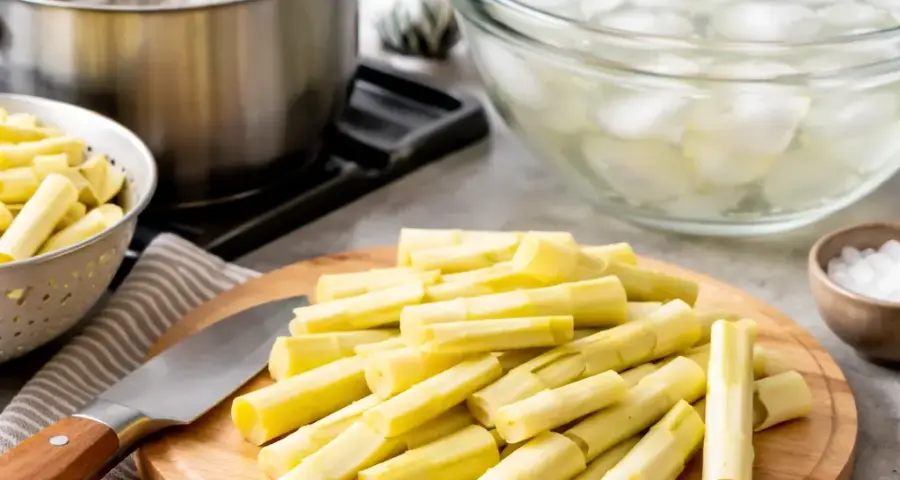
For best results, choose fresh rebung that feels firm, not rubbery. If you’re using vacuum-packed or canned shoots, they still benefit from a quick blanch to refresh the flavor and improve texture.
Step-by-Step: How to Blanch and Shock Rebung for Salads
Step 1: Prepare the Rebung
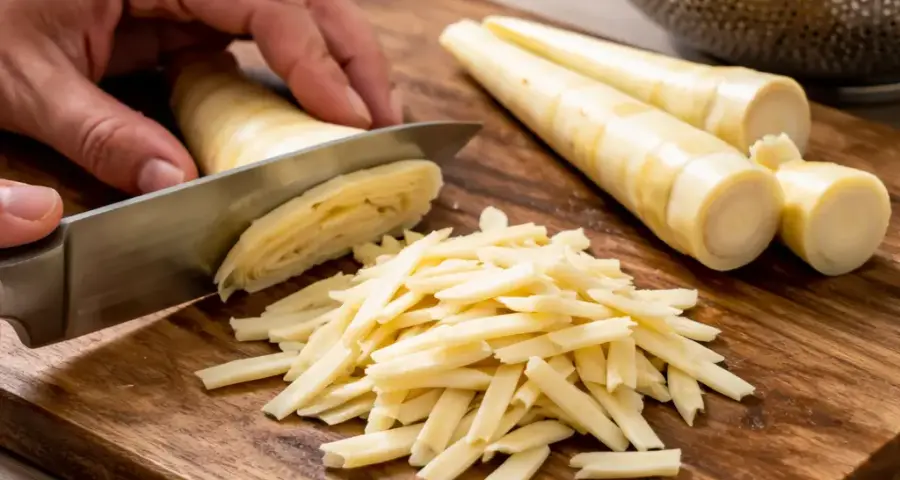
Trim off the tough outer leaves and the woody base. Slice the tender inner core into thin strips or bite-sized pieces — aim for uniform thickness so they cook evenly. Rinse thoroughly under cold water to remove any grit.
Step 2: Boil a Pot of Water
Fill a large pot with water — enough to fully submerge the rebung — and add a generous pinch of salt. Bring it to a rolling boil. Salting the water seasons the shoots from the inside out and helps preserve their color.
Step 3: Blanch the Rebung
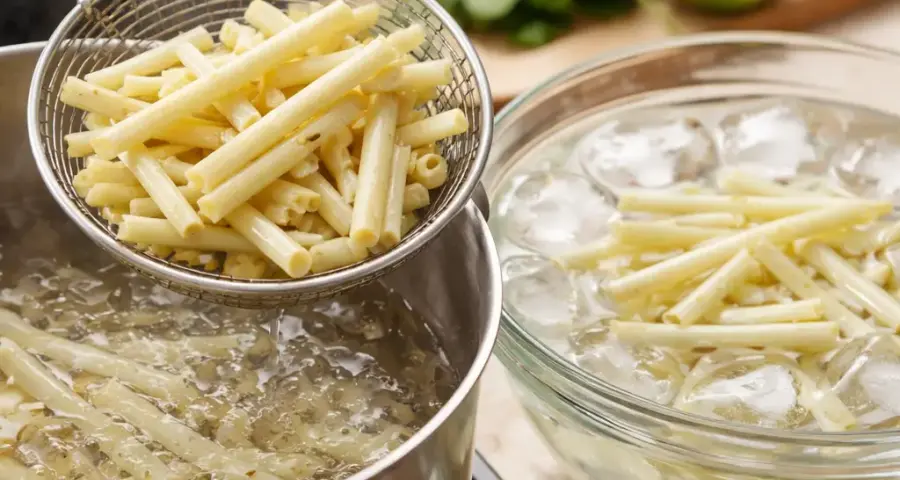
Drop the prepared rebung into the boiling water. Let it cook for exactly 2 to 3 minutes. You’ll see the color brighten slightly and the pieces become more pliable. Taste one — it should be tender but still offer resistance to the tooth.
Step 4: Prepare an Ice Bath
While the rebung boils, fill a large bowl with cold water and a generous amount of ice. This is your shock bath. The water must be ice-cold — warm water won’t stop the cooking process fast enough.
Step 5: Shock the Rebung
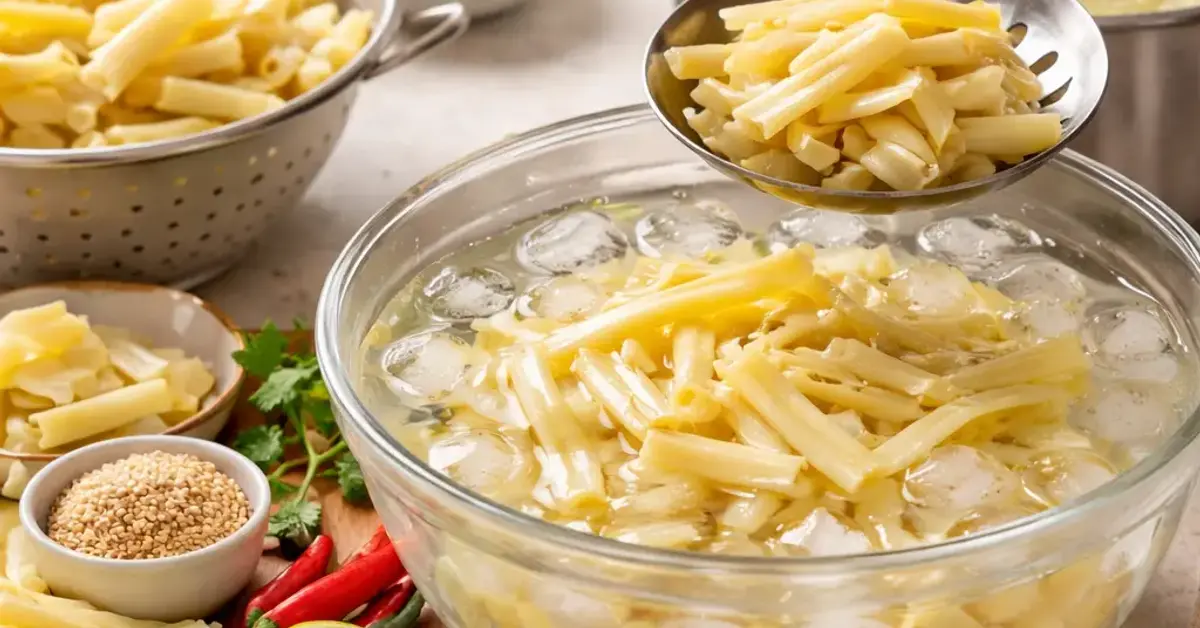
Use a slotted spoon or a strainer to transfer the hot rebung directly into the ice bath. Swirl gently so the cold water circulates around every piece. Leave it in the bath for at least 3 to 4 minutes, until the shoots are completely chilled to the core.
Step 6: Drain and Dry
Drain the shocked rebung in a colander, then spread it on a clean kitchen towel or paper towels. Pat dry thoroughly — any excess water will dilute your salad dressing and make the greens soggy.
Visual Cues for Perfect Texture
Knowing what to look for eliminates guesswork. When you blanch and shock rebung for salads, watch for these signs:
- During blanching: The pieces will turn a shade paler and release a faint, grassy aroma. If they start to curl or wrinkle at the edges, you’ve gone a minute too long.
- During shocking: The shoots should feel cold to the touch within 60 seconds. If the ice melts completely before the shoots are cold, the bath wasn’t cold enough.
- After drying: The rebung should look glossy, not wet. A light sheen is fine; standing water is not.
Common Mistakes That Lead to Soggy Rebung
Even experienced cooks can miss a step. Here are the pitfalls to avoid when you prepare rebung for salad:
Overcooking the Blanch
Leaving rebung in boiling water for 5+ minutes breaks down the cell structure completely, resulting in a limp, waterlogged texture. Stick to 2–3 minutes.
Skipping the Ice Bath
Rinsing under cold tap water isn’t enough — the residual heat inside the thickest pieces continues to cook them. An ice bath is non-negotiable for a proper shock.
Not Drying Thoroughly
Wet rebung + dressing = a watery mess. Use a salad spinner after towel-drying if you want extra insurance against sogginess.
Tips to Customize Your Rebung Salad
Once you’ve mastered the basic blanch and shock rebung for salads technique, feel free to play with flavors. Toss the chilled shoots with a sesame-ginger dressing, shredded carrot, and fresh cilantro for an Asian-inspired slaw. Or combine them with cherry tomatoes, cucumber, and a lemony vinaigrette for a light summer salad.
If you’re meal-prepping, blanched and shocked rebung keeps in the fridge for up to three days in an airtight container. Just give it a quick pat dry before adding to your salad.
Useful Resources
For more details on bamboo shoot handling and food safety, check out these resources:
Frequently Asked Questions About blanch and shock rebung for salads
Can I blanch rebung the day before making a salad?
Yes, blanched and shocked rebung stores well in the refrigerator for up to three days. Keep it in a sealed container with a paper towel to absorb excess moisture.
Do I need to peel rebung before blanching?
Only the tough outer layers need to be removed. The tender inner core can be sliced without peeling.
What is the best way to slice rebung for salads?
Thin matchsticks or diagonal slices about 1/8-inch thick work best — they cook evenly and blend well with other salad ingredients.
Can I use frozen rebung for this technique?
Frozen rebung is already blanched, so you only need to thaw and shock it in ice water to refresh the texture before using in a salad.
How long should I boil rebung for a salad?
2 to 3 minutes in boiling salted water is sufficient. Longer boiling makes the shoots too soft.
Why does my rebung taste bitter after blanching?
Bitterness can result from overblanching or using older, more fibrous shoots. Fresh young rebung has very little bitterness. For a related guide, see 7 Expert Hacks for Smoking Rebung for Ultimate Flavor.
Is it safe to eat raw rebung?
Some varieties are edible raw, but blanching is recommended to remove natural toxins and improve digestibility and texture.
Can I blanch rebung in a microwave?
Microwave blanching is possible but less controlled. If using a microwave, cook on high for 2 minutes, then immediately transfer to an ice bath.
What does shocked rebung taste like?
Properly shocked rebung has a mild, slightly nutty flavor with a clean, juicy crunch — very neutral and adaptable to dressings.
Should I add vinegar to the blanching water?
A splash of vinegar can help preserve the white color of the shoots, but it’s optional and not necessary for texture.
How do I know if the ice bath is cold enough?
The water should feel near freezing. Use at least 2 parts ice to 1 part water. If the ice melts before the shoots cool, add more ice.
Can I shock rebung in cold tap water instead of ice?
Cold tap water alone won’t stop cooking quickly enough. Ice is essential to achieve the sudden temperature drop that preserves crunch.
What dressings pair best with blanch and shock rebung ?
Light vinaigrettes, citrus-based dressings, and sesame-ginger dressings complement the mild flavor of rebung without overwhelming it.
Can I use canned rebung for this salad preparation?
Yes, but rinse the canned shoots first to remove the brine, then blanch for 1 minute and shock as usual to improve texture.
How long does the whole process take?
From start to finish, including prep and cooling, you’ll need about 20 minutes. Most of that time is hands-off.
What is the best way to dry rebung after shocking?
Spread the shoots on a clean kitchen towel and pat dry, then spin in a salad spinner for maximum moisture removal.
Can I add rebung to a warm salad after blanching?
Absolutely. If you prefer a warm salad, skip the shock step and toss the warm blanched shoots directly with dressing and other ingredients.
Does blanching remove all the nutrients from rebung?
Blanching causes minimal nutrient loss — some water-soluble vitamins may leach out, but the shoots still retain most of their fiber and minerals.
Can I reuse the blanching water for cooking?
Yes, the water is mildly flavored and can be used as a light vegetable stock base for soups or sauces.
What are the best substitutes for rebung in salads?
If rebung isn’t available, you can use jicama, water chestnuts, or young celery hearts for a similar crisp texture.