

Bamboo Shoot Measuring Guide Key Takeaways
For recipes that require exact ratios — like bamboo shoot pickles, dumpling fillings, or fermented dishes — weight is non-negotiable.
- Weight is more accurate for consistent results, especially in baking and canning.
- Volume works well for stir-fries and soups where exact amounts aren’t critical.
- Converting between weight and volume depends on whether shoots are fresh, canned, or dried.
Why Accurate Bamboo Shoot Measuring Matters
Bamboo shoots are a unique ingredient. They’re crunchy, absorb flavors well, and come in several forms — fresh, canned, boiled, dried, or fermented. If you grab a handful of sliced shoots and toss them into a pan, you might end up with a dish that’s either too watery or too chewy. For a related guide, see Rebung Storage Guide: Smart Tips for Fresh, Canned, Frozen, or Dried.
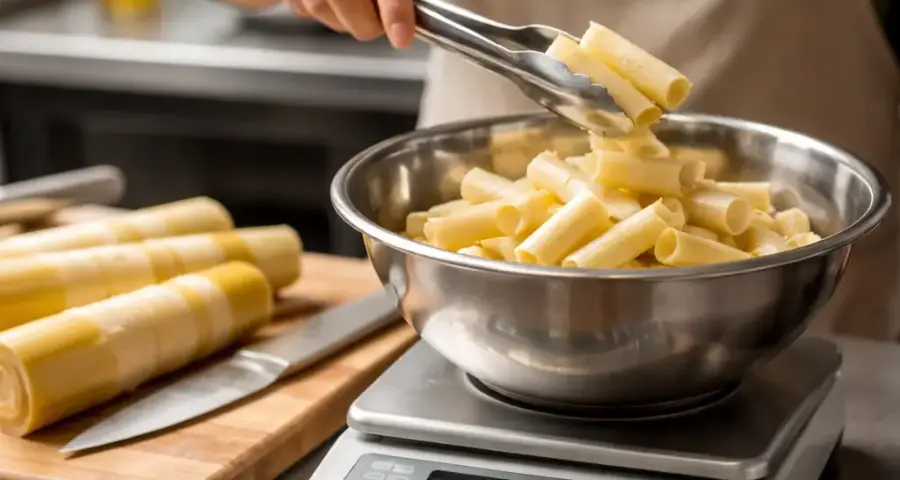
Getting the measurement right affects texture, seasoning, and even the cooking time. A slight variation in the amount of bamboo shoots can change the balance of a curry or the bite of a spring roll. That’s why this bamboo shoot measuring guide focuses on real-world kitchen situations.
Fresh vs. Canned: The Measurement Challenge
Fresh bamboo shoots contain more water and have a firmer texture. Canned shoots are already parboiled and packed in liquid. Dried shoots are lightweight and concentrated. You can’t simply swap one for another using the same volume measurement and expect the same outcome.
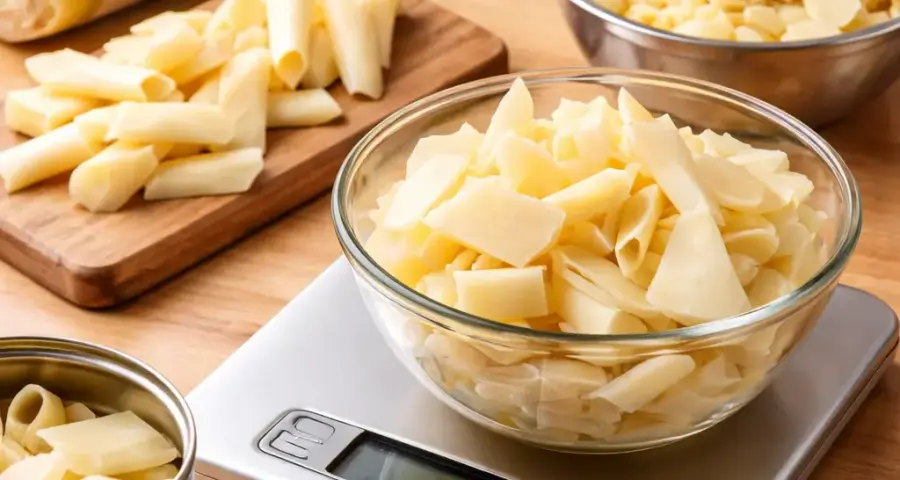
Understanding these differences helps you choose the right method from the start.
Weight Method: The Precision Approach
Using a kitchen scale to measure bamboo shoots by weight is the most dependable method. It eliminates guesswork and gives you consistent results every time you cook.
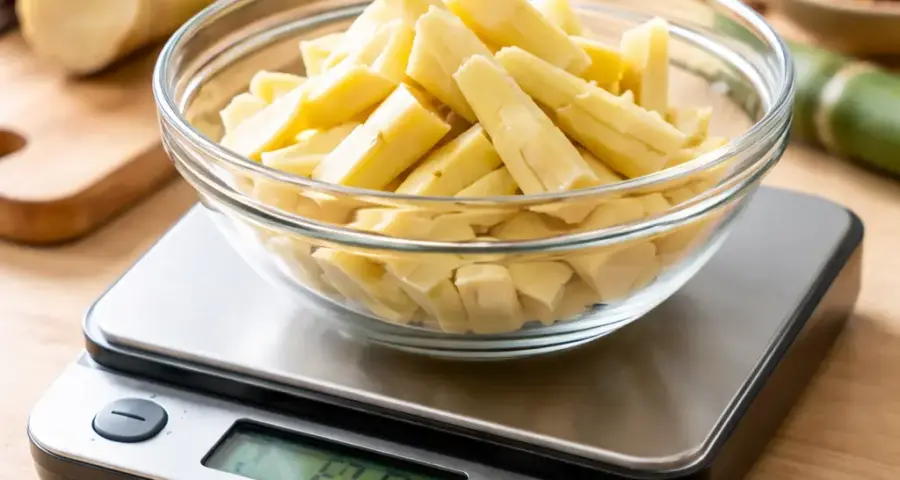
For recipes that require exact ratios — like bamboo shoot pickles, dumpling fillings, or fermented dishes — weight is non-negotiable. A scale also helps you avoid adding too much water weight from canned shoots if you haven’t drained them properly. For a related guide, see Rebung Prepping Made Easy: A Beginner’s Guide to Peeling and Cooking.
How to Weigh Bamboo Shoots Correctly
Place a bowl on your scale, tare it to zero, then add the shoots until you reach the desired weight. If the recipe calls for 200 grams of sliced bamboo shoots, you can measure exactly that amount without any volume conversion errors.
Tips for Using a Kitchen Scale
- Always drain canned shoots in a colander for 3–5 minutes before weighing.
- For fresh shoots, peel and trim the tough outer layers, then weigh the edible core.
- If a recipe lists weight, use that as your primary guide rather than trying to convert on the fly.
- Keep your scale calibrated — even a small drift can throw off a recipe that calls for a large quantity.
Volume Method: Quick and Convenient
When you’re in a hurry or cooking a dish where proportions aren’t critical, volume measuring works fine. Most home cooks reach for measuring cups to measure bamboo shoots when a recipe says “1 cup of sliced shoots.”
Volume is especially handy for stir-fries, noodle dishes, and soups. The dish’s flavor profile usually comes from the sauce and aromatics, so a few extra pieces of bamboo shoot won’t ruin it.
How to Measure Bamboo Shoots by Volume
Pack the shoots loosely into a dry measuring cup. Don’t press them down — that compresses the pieces and you’ll end up with more than the recipe intended. Level off with a knife if you want to be extra precise.
Tips for Consistent Volume Measurements
- Use a graduated liquid measuring cup for shoots that are sitting in liquid (like canned or boiled).
- If the shoots are whole or in large chunks, slice them into uniform pieces before measuring.
- For dried bamboo shoots, soak them first, then measure by volume after rehydrating.
- Remember that 1 cup of loosely packed sliced bamboo shoots weighs about 85–95 grams, depending on thickness.
When to Use Each Method
Now that you know both approaches, here’s how to decide which one fits your cooking style and the dish you’re preparing.
| Scenario | Recommended Method | Why It Works |
|---|---|---|
| Baking or canning recipes | Weight | Ingredient ratios matter for safety and texture. |
| Stir-fry or soup | Volume | Small variations won’t affect the final dish much. |
| Fermenting or pickling | Weight | Salt and liquid ratios need precision. |
| Casual meal prep | Volume | Faster, fewer dishes to wash. |
| Recipe development | Weight | Reproducibility is essential for scaling. |
If you’re just starting to cook with bamboo shoots, try using weight for the first attempt, then note the approximate volume for future quick meals. Over time, you’ll develop an intuition for how much a “handful” actually weighs.
Useful Resources
For deeper dives into bamboo shoot preparation and cooking, check out these trusted sources:
Now you’re ready to measure bamboo shoots with confidence. Try both methods this week and see which one fits your cooking style best. Your taste buds will thank you.
Frequently Asked Questions About Bamboo Shoot Measuring Guide
How many grams is 1 cup of bamboo shoots?
One cup of loosely packed sliced bamboo shoots typically weighs between 85 and 95 grams. The exact weight depends on the thickness of the slices and how tightly they’re packed.
Should I measure bamboo shoots before or after cooking?
Always measure bamboo shoots before cooking. They lose some water and shrink slightly during cooking, so the pre-cooked amount is the one the recipe is based on.
Can I use the same measurement for fresh and canned bamboo shoots?
Not directly. Fresh shoots are denser and contain less water than canned shoots. For the same weight, fresh shoots will have a firmer texture and more concentrated flavor.
What’s the best tool to weigh bamboo shoots?
A digital kitchen scale with a tare function is ideal. It lets you zero out the bowl’s weight and measure only the shoots.
How do I measure bamboo shoots if I don’t have a scale?
Use a dry measuring cup and pack the shoots loosely. Level off with a straight edge for a consistent volume. This method works well for stir-fries and soups.
Does the cut size affect the measurement?
Yes. Julienned bamboo shoots weigh more per cup than larger chunks because more pieces fit into the same space. For best accuracy, check the recipe’s recommended cut size.
How do I convert ounces of bamboo shoots to grams?
Multiply the number of ounces by 28.35. For example, 4 ounces of bamboo shoots equals about 113 grams.
Is it okay to eyeball the amount of bamboo shoots?
For casual dishes like stir-fries or curries, eyeballing is fine. For pickling, baking, or dishes with precise salt ratios, use a scale or measuring cup.
Are dried bamboo shoots measured differently?
Yes. Dried shoots should be rehydrated first, then measured by volume or weight as the recipe specifies. The weight after soaking can double or triple compared to dry.
Can I freeze bamboo shoots after measuring them?
Yes. Blanch fresh shoots first, then portion them by weight into freezer bags. Label with the weight and date for easy meal planning.
Why does my stir-fry turn out watery when I use canned bamboo shoots?
You’re likely not draining them enough. Let canned shoots sit in a colander for at least 3 minutes, then pat dry with a towel before adding to the pan.
How much does a whole fresh bamboo shoot weigh?
A whole fresh bamboo shoot can weigh anywhere from 200 to 600 grams depending on the variety. The edible part after peeling is about 50–70% of the total weight.
What’s the weight of a standard can of bamboo shoots?
A typical 15-ounce can contains about 8 to 10 ounces (225–280 grams) of drained bamboo shoots. Always check the label for drained weight.
Do I need to rinse canned bamboo shoots before measuring?
Rinsing helps remove any briny taste, but it’s optional. If you rinse, pat them dry to remove excess moisture before measuring by volume.
How do I measure bamboo shoot paste for recipes?
Bamboo shoot paste or puree should be measured by weight for accuracy, especially in sauces or marinades. One cup of paste weighs about 240 grams.
Is bamboo shoot measuring different for Asian vs. Western recipes?
Asian recipes often list ingredients by volume (cups) or by count (pieces). Western recipes tend to use weight. Always follow the recipe’s stated method.
How do I avoid over-measuring bamboo shoots for a stuffing?
Use a scale to portion the exact amount. If you’re following a volume measure, pack the shoots lightly and level off for consistent results.
Can I substitute weight with volume in an emergency?
Yes, as long as you understand the dish won’t be identical. For savory recipes, a 10–15% variation in bamboo shoots rarely ruins the meal.
How do I measure bamboo shoots for a salad?
For salads, volume is fine. Use a measuring cup to scoop the shoots loosely, then toss them with dressing. No need to weigh unless the recipe is precise.
What’s the best way to measure bamboo shoots for canning?
Use weight for canning to maintain the correct headspace and brine ratio. Measure the shoots after blanching and before packing into jars.