
cut rebung into chunks Key Takeaways
Cutting rebung (young bamboo shoots) into the right size and shape is essential for long-simmered curries, ensuring the shoots turn tender without becoming mushy, and bitterness is properly removed.
- To cut rebung into chunks , first peel and parboil the shoots to remove bitterness and soften the flesh.
- Uniform chunks, about 1 to 1.5 inches, ensure even cooking in curries that simmer for 30 minutes or longer.
- Proper storage of prepared rebung extends its freshness and deepens flavor for subsequent curry batches.
Why Properly Cutting Rebung Matters for Long-Simmered Curries
When you cut rebung into chunks for a long-simmered curry, you are not just dividing a vegetable; you are controlling texture, flavor release, and cooking speed. Young bamboo shoots contain natural toxins and a bitter compound that must be neutralized before simmering. If you simply chop and toss them into the pot, the curry may turn out harsh and unpalatable. Preparing the shoots correctly—through peeling, parboiling, and cutting—makes the difference between a silky, aromatic curry and a disappointing one. For a related guide, see Rebung Prepping Made Easy: A Beginner’s Guide to Peeling and Cooking.
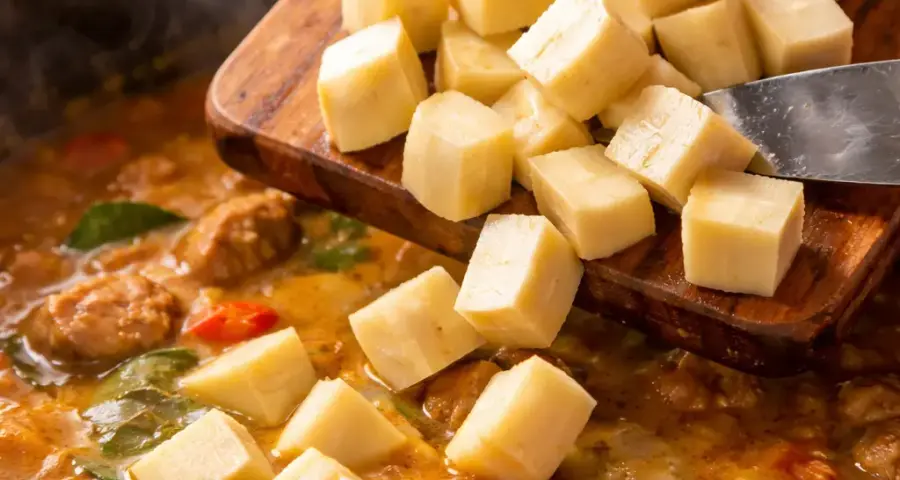
The size of the chunks directly affects how much flavor the rebung absorbs from the coconut milk, spices, and aromatics. Larger chunks stay slightly crunchy after a 30-minute simmer, while smaller pieces break down into the sauce, thickening it. For most Malay, Thai, and Indonesian curries, a medium chunk that softens but holds its shape is ideal. This article covers every step so you can master the technique and consistently produce restaurant-quality results at home.
Benefits of Uniform Chunk Sizes
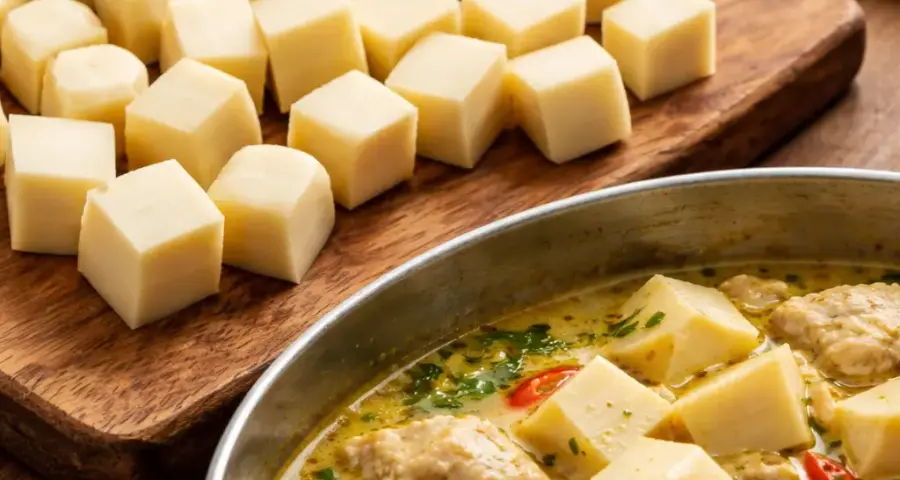
Cutting the bamboo shoots into pieces of roughly equal dimensions helps them cook at the same rate. You avoid the frustration of some pieces being undercooked and others turning to mush. Uniformity also improves presentation, as the curry sauce coats each chunk evenly, making the dish look as good as it tastes.
Step 1: Selecting and Preparing Fresh Rebung
Before you can cut rebung into chunks, you must choose the right shoots. Look for young bamboo shoots that are firm, heavy for their size, and free from soft spots or blemishes. The outer husks should be tightly wrapped, often with a faint sheen. Fresh rebung typically has a mild, grassy smell—avoid any with an overly sour or ammonia-like odor.
Peeling and Trimming
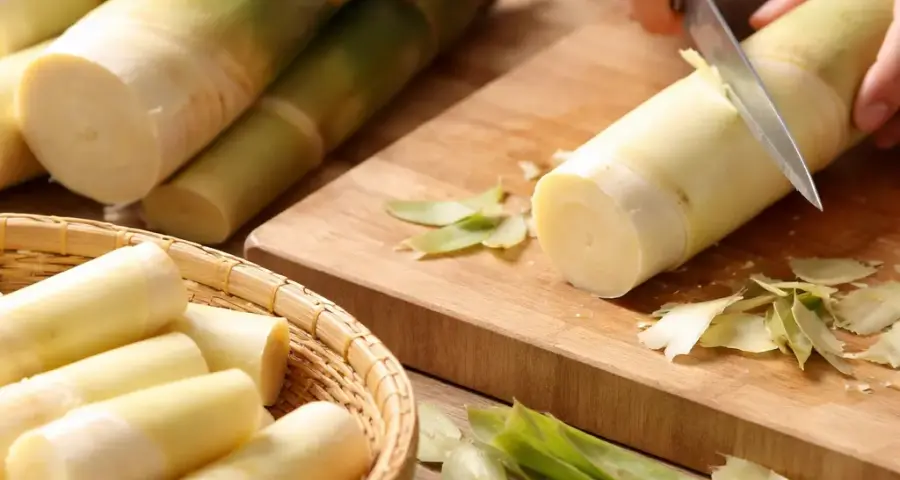
Hold each shoot firmly and remove the tough outer layers by pulling them downward, much like peeling a leek. Continue until you reach the pale, tender inner core. Trim the base where the shoot was cut from the bamboo root, as this part can be woody. Rinse the peeled shoots under cold water to remove any residual grit or fibers.
Step 2: Parboiling to Remove Bitterness
Parboiling is a critical step that cannot be skipped when you cut rebung into chunks for long-simmered curries. Even young shoots carry cyanogenic glycosides and bitter tannins that dissolve in hot water. Place the peeled shoots in a pot, cover with cold water, and bring to a boil. Let them boil vigorously for 10–15 minutes, then drain and rinse with cold water.
For especially large or wild bamboo shoots, repeat the boiling process with fresh water once more. Some cooks add a pinch of salt or a few drops of vinegar to the water to help draw out bitterness. After parboiling, the shoots will be pliable and ready to cut without cracking.
Step 3: How to Cut Rebung into Chunks for Even Cooking
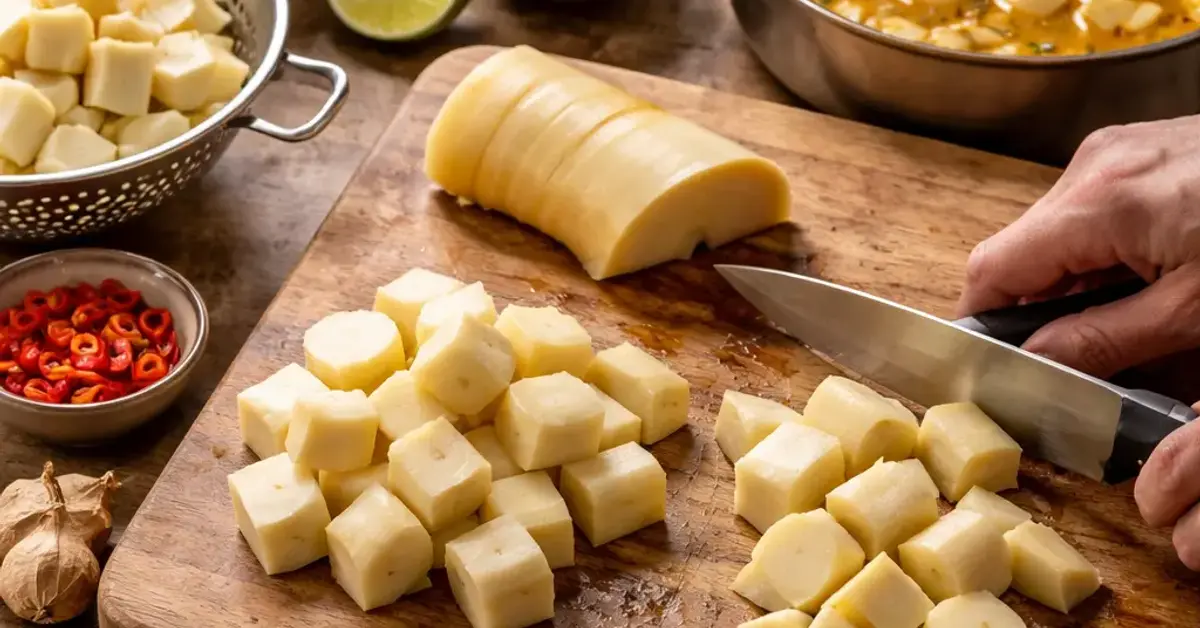
Once the parboiled shoots have cooled enough to handle, place them on a cutting board. Use a sharp chef’s knife to slice the shoots lengthwise into halves or quarters, depending on their thickness. Then, cut crosswise into pieces that are roughly 1 to 1.5 inches (2.5–4 cm) long. For curries that simmer for an hour or more, you can go slightly larger—around 2 inches—since the slow braising will soften them completely.
Visual Cue for Perfect Chunks
Imagine a dice of carrot or potato used in a stew. Your rebung chunks should look similar: chunky enough to be recognizable in the final dish but small enough to cook through in the curry’s simmer time. If you see the shoots splitting or fraying at the edges, your knife may need sharpening, as bamboo fibers can be tough even after boiling. For a related guide, see 10 Rebung Mistakes to Avoid (And How to Fix Each One).
Step 4: Rinsing and Draining the Cut Chunks
After cutting, rinse the rebung chunks under cold running water to wash away any lingering bitter residue from the cut surfaces. Shake them well in a colander, then pat dry with a clean kitchen towel. Excess moisture can dilute your curry base, so it is worth taking the time to remove surface water. At this stage, the chunks are ready to be added to the curry pot.
Step 5: Storing Leftover Prepared Rebung
You often prepare more rebung than you need for a single curry, especially when using whole shoots. Store leftover chunks in an airtight container covered with fresh water. Change the water daily, and the shoots will stay fresh in the refrigerator for up to a week. For longer storage, blanch the chunks again, cool completely, and freeze them in a sealed bag for up to three months.
Before using stored rebung in another curry, drain and rinse it well. The texture will remain pleasantly tender, though the flavor may be slightly milder. This makes those leftover chunks perfect for quick stir-fries or soups where you do not need an intense bamboo taste.
Troubleshooting Common Issues When Cutting Rebung
Even experienced cooks run into snags when preparing rebung. Here are solutions to the most frequent challenges.
Bitter Taste Persists After Parboiling
If you still detect bitterness after parboiling, try soaking the cut chunks in cold salted water for 30 minutes before cooking. The salt helps draw out residual compounds. Alternatively, add a teaspoon of sugar to your curry base; sweetness balances bitterness without masking the bamboo’s natural flavor.
Chunks Falling Apart in the Curry
This usually happens when the shoots were over-boiled before cutting, or the chunks are too small. Next time, reduce the parboiling time to 8 minutes and aim for larger pieces—2 inches rather than 1. Also, avoid stirring the curry too vigorously after adding the rebung.
Bamboo Shoots Are Too Hard to Cut
If the parboiled shoots still feel firm, they may need longer boiling or an additional parboil cycle. Some varieties, especially wild bamboo, require up to 20 minutes per boil. Use a paring knife to test the thickest part; it should pierce easily with slight resistance.
Optimization Tips for the Best Long-Simmered Rebung Curry
Once you have mastered the basic cut, you can fine-tune your technique for even better results.
- Match chunk size to cooking time: For a curry that simmers 45 minutes or less, keep chunks at 1 inch. For a slow-cooked version of 90 minutes, 2-inch chunks hold texture better.
- Season the parboiling water: Add a pinch of salt, a star anise, or a piece of ginger to the boiling water for subtle flavor infusion before the shoots even hit the curry.
- Marinate the chunks: Toss the cut rebung with a little coconut milk and turmeric for 15 minutes before adding to the pot. This softens the fibers and ensures a more even coating.
- Use leftover water: If you parboiled the shoots with aromatics, strain and save the liquid. It can be used as a light broth for soups or diluted as a base for a quick stir-fry sauce.
Useful Resources
For more detailed information on handling and cooking bamboo shoots, visit these authoritative sources:
- Serious Eats: How to Prepare Fresh Bamboo Shoots – A comprehensive guide covering multiple varieties and cooking methods.
- Specialty Produce: Bamboo Shoots – Description and Uses – Reliable background on different shoot types and their culinary applications.
Frequently Asked Questions About cut rebung into chunks
Do I need to peel rebung before cutting?
Yes, you must remove the tough outer husks to reach the tender inner core, which is what you will cut into chunks for the curry.
Can I cut rebung without parboiling?
It is strongly discouraged, especially for curries. Parboiling eliminates bitter compounds and softens the shoots so they cook evenly and safely.
What size should I cut rebung for a long-simmered curry?
Cut the parboiled shoots into chunks of 1 to 1.5 inches for most recipes. For longer simmer times, you may go up to 2 inches.
How do I know if parboiling is complete?
The shoots should be pliable and easily pierced with a fork. If they resist, continue boiling for another 5 minutes and test again.
Can I use canned bamboo shoots instead?
Yes, but canned shoots are already parboiled. Rinse them well, then cut into chunks as directed. The texture will be slightly softer than fresh.
Will larger chunks taste bitter after simmering?
If you parboil properly, bitterness is removed regardless of chunk size. Larger chunks simply take longer to absorb the curry flavor.
How long should I parboil fresh rebung?
Ten to fifteen minutes of vigorous boiling is usually sufficient. For older or wild shoots, repeat the boil once more with fresh water.
Can I freeze cut rebung chunks?
Yes. Blanch the chunks again, cool completely, and store in an airtight freezer bag for up to three months.
Do I need to soak the cut chunks after parboiling?
Rinsing under cold water is enough to stop the cooking and remove surface bitterness. Soaking is optional if you want extra assurance.
What knife is best for cutting rebung?
A sharp chef’s knife or a cleaver works best. A dull blade will crush the fibers and produce ragged chunks.
Should I remove the central core?
No, the inner core is tender and edible. Only remove the outermost fibrous layers during peeling.
Can I add rebung raw to a curry if I simmer it for hours?
Even with long simmering, raw shoots can still release bitter compounds that spoil the broth. Always parboil first.
How many pounds of rebung do I need for a curry for four people?
About 1 pound of whole shoots, which yields roughly 8 to 10 ounces of prepared chunks, is sufficient for a standard curry dish.
Can I slice rebung instead of chunking it?
You can slice it, but chunks hold up better to long simmering and give more substantial bites in the curry. Slices will break down faster.
Does parboiling remove the beneficial nutrients?
Some water-soluble vitamins may be reduced, but parboiling is essential for food safety. The shoots still retain fiber and minerals.
Can I reuse the parboiling water?
Only if you added aromatics like ginger or star anise. Otherwise, discard it as it contains bitter compounds. You can use aromatic‑infused water as a soup base.
How do I store leftover cut rebung overnight?
Place the chunks in an airtight container, cover with fresh water, and refrigerate. Change the water daily for best texture.
Can I cut rebung in advance for meal prep?
Absolutely. Prepare and parboil the shoots up to three days ahead. Store them submerged in water in the fridge.
Why are my chunks turning pink after cutting?
A slight pinkish hue on cut surfaces is natural for some bamboo varieties and not a sign of spoilage. It fades during cooking.
Should I add rebung at the beginning or end of simmering the curry?
Add the prepared chunks about 20 minutes before the curry finishes. This allows them to absorb flavors without turning too soft.