
diagonal cut for rebung stir-fries Key Takeaways
Mastering the diagonal cut for rebung stir-fries transforms tender bamboo shoots into perfectly cooked, visually appealing strips that absorb sauce and retain a satisfying crunch.
- The diagonal cut for rebung stir-fries increases surface area, helping marinades and seasonings cling evenly.
- A consistent 45° angle ensures uniform thickness, so each piece cooks at the same rate.
- Avoiding crushing, uneven sizing, and overly thin slices prevents soggy or burnt shoots.
Why the diagonal cut for rebung stir-fries Makes a Difference
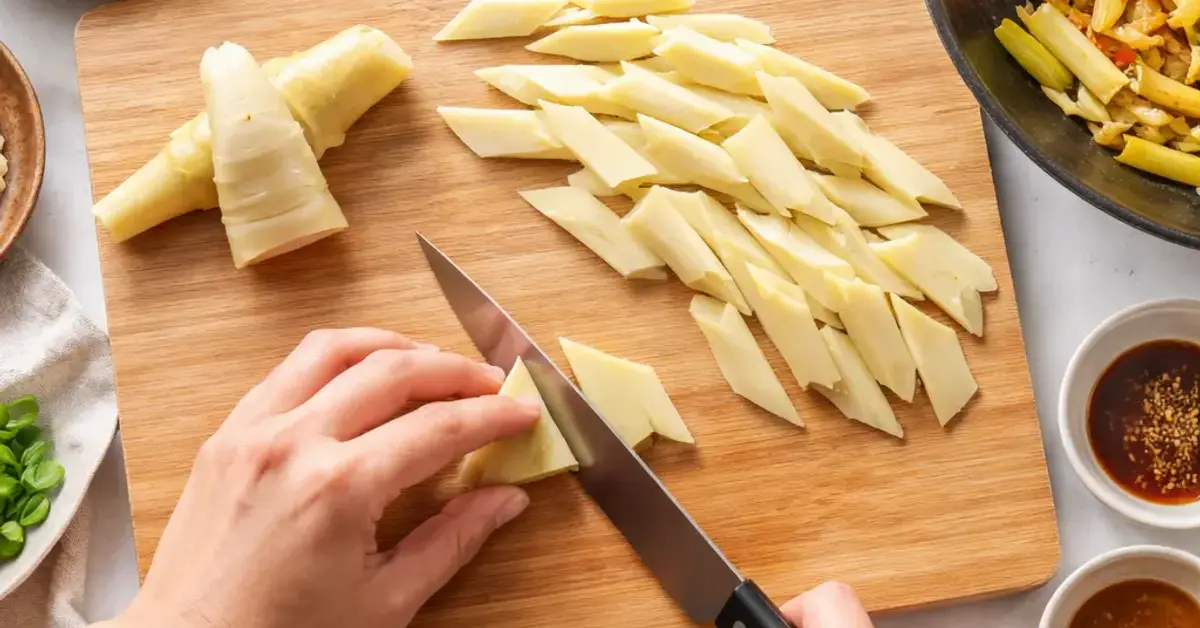
Rebung, or young bamboo shoots, have a naturally firm, fibrous texture that demands careful preparation. A straight cross-cut produces small, round coins that roll unpredictably in the wok and cook unevenly. The diagonal cut for rebung stir-fries creates elongated, oval pieces with more flat surface area. This shape lies flat against the wok surface, promoting faster, more even cooking and better caramelization. For a related guide, see 5 Common Slicing Mistakes for Rebung in Gulai, Tumis, or Lodeh.
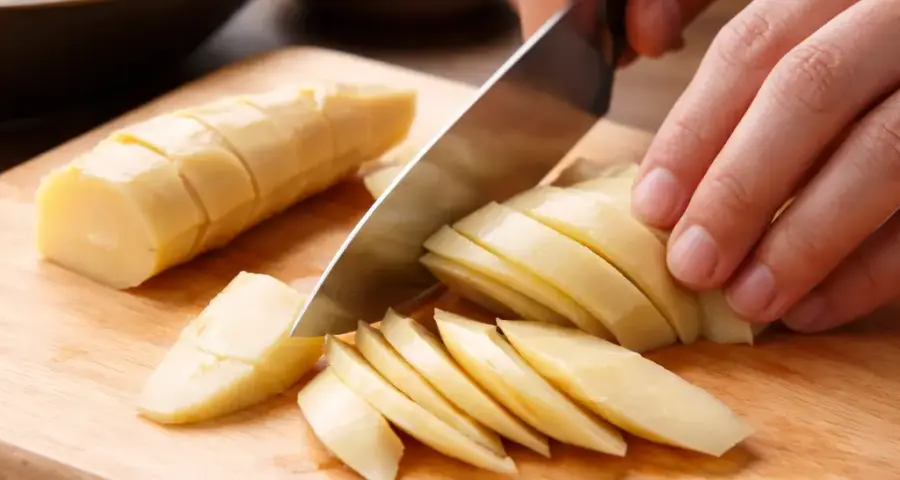
Professional chefs value the diagonal cut technique because it exposes more of the shoot’s interior to heat and seasoning. The result is a tender-crisp bite that absorbs soy sauce, garlic, and chili without becoming mushy. For home cooks, this small adjustment instantly upgrades a simple rebung stir-fry guide from good to exceptional.
Essential Tools and Bamboo Shoot Preparation Steps
Before you begin, gather the right equipment and prepare your rebung correctly. This sets the foundation for a successful diagonal cut for rebung stir-fries.
Tools You Need
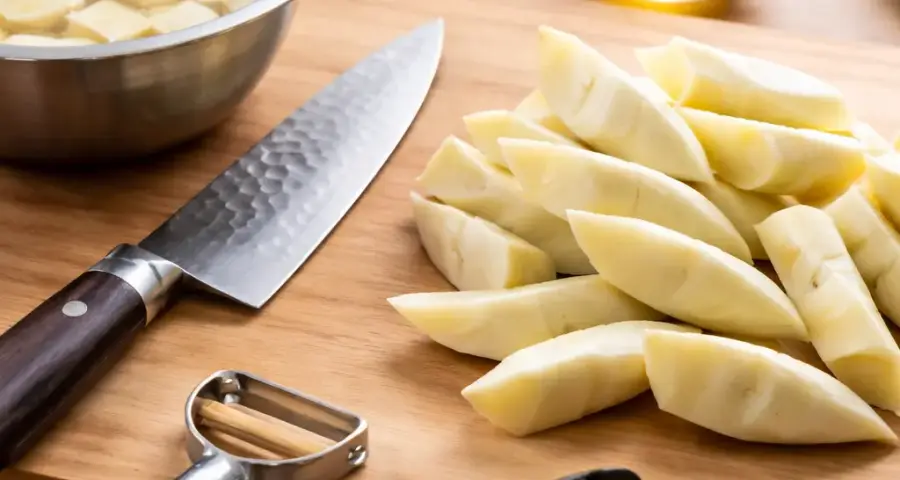
- A sharp chef’s knife or santoku with a 7–8 inch blade
- A stable cutting board with a non-slip base
- A clean kitchen towel for gripping slippery shoots
- A vegetable peeler to remove tough outer layers
Preparing Rebung for Cutting
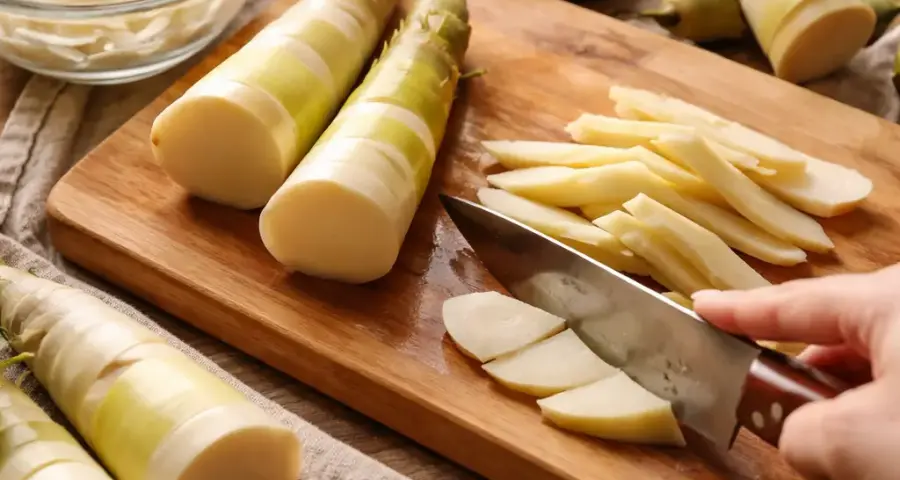
Fresh rebung must be boiled before cutting vegetables for stir-fry to remove bitterness and soften the fibers. Simmer whole shoots in salted water for 15–20 minutes, then drain and cool under running water. Trim off the base and any discolored tips. Peel away the outer layers until you reach the pale, tender core. Slice the core lengthwise in half before applying the diagonal cut for rebung stir-fries. For a related guide, see How to Julienne Bamboo Shoots: 5 Easy Chef-Proven Techniques.
How to Execute the Perfect Diagonal Cut Technique
Follow these five steps to achieve clean, uniform diagonal slices every time. Practice on a carrot or zucchini first if you are new to the diagonal cut technique.
Step 1: Position the Knife at 45 Degrees
Hold the knife at a 45° angle relative to the cutting board. The blade should point away from your body, with the tip resting on the board and the heel raised. This angle is the sweet spot for the diagonal cut for rebung stir-fries.
Step 2: Use a Rocking Motion
Place the knife tip on the board near the top of the rebung piece. Push the blade forward and slightly down in a smooth rocking motion. Keep the knife tip stationary while the heel cuts through the shoot. This technique prevents crushing and ensures a clean edge.
Step 3: Aim for 5–7 mm Thickness
Each slice should be about the thickness of a US dime. Thinner than 3 mm and the shoots will overcook and turn limp. Thicker than 10 mm and the centers will remain raw while the edges burn. Consistent thickness is the hallmark of good cutting vegetables for stir-fry.
Step 4: Rotate the Piece After Each Cut
After slicing off one diagonal piece, rotate the rebung half a quarter turn before the next cut. This creates pieces with two angled faces, maximizing surface area for seasoning. It is a key diagonal cut technique trick used in Thai and Chinese kitchens.
Step 5: Repeat for All Pieces
Continue cutting through the entire batch. Discard any irregular ends that are too small to hold. Rinse the sliced rebung briefly in cold water and pat dry before stir-frying. This removes excess starch and prevents clumping.
3 Common Mistakes When Cutting Vegetables for Stir-Fry
Avoid these frequent errors to protect your rebung stir-fry guide results.
Mistake 1: Using a Dull Knife
A dull blade compresses and splits bamboo shoots instead of slicing them cleanly. This ruins the texture and creates ragged edges that cook unevenly. Always sharpen your knife before cutting vegetables for stir-fry.
Mistake 2: Slicing Too Thinly
Paper-thin rebung slices dissolve into mush during stir-frying. They release too much water and steam rather than sear. Stick to the 5–7 mm guideline for the ideal diagonal cut for rebung stir-fries.
Mistake 3: Skipping the Boil Step
Raw rebung contains cyanogenic glycosides that cause bitter taste and potential digestive discomfort. Boiling neutralizes these compounds and softens the fibers so the diagonal cut technique works smoothly. Never skip bamboo shoot preparation.
How to Troubleshoot Bamboo Shoot Preparation Issues
If your diagonal cut for rebung stir-fries does not turn out as expected, here is how to fix common problems.
| Problem | Likely Cause | Solution |
|---|---|---|
| Slices are uneven thickness | Inconsistent knife angle | Mark a 45° line on a piece of tape and stick it to the cutting board as a guide |
| Rebung falls apart in the wok | Slices too thin or overboiled | Boil only 15 minutes and cut to 5 mm minimum thickness |
| Bitter aftertaste remains | Insufficient boiling time | Boil an extra 10 minutes, then rinse in cold water |
| Shoots roll around while cutting | Piece too round | Cut the shoot lengthwise in half to create a flat side |
Optimizing Your Diagonal Cut for Rebung Stir-Fries Results
For the best stir-fry outcome, pair your sliced rebung with complementary vegetables like red capsicum, carrot ribbons, or broccoli florets. Use a screaming-hot wok and cook in small batches to avoid steaming. Add a splash of oyster sauce or light soy sauce at the end to coat the diagonal slices evenly.
If you are new to bamboo shoot preparation, start with canned or vacuum-packed rebung (already boiled) to practice the diagonal cut technique. Once confident, graduate to fresh shoots for superior flavor and crunch.
Useful Resources
For more guidance on mastering the diagonal cut for rebung stir-fries, explore these trusted sources:
- The Spruce Eats: How to Cut Vegetables for Stir-Fry – A visual guide to basic cutting techniques including diagonal slices.
- Saveur: How to Prepare Fresh Bamboo Shoots – Detailed instructions on peeling, boiling, and storing bamboo shoots.
Frequently Asked Questions About diagonal cut for rebung stir-fries
What is the diagonal cut for rebung stir-fries?
The diagonal cut for rebung stir-fries is a cutting technique where bamboo shoots are sliced at a 45° angle to create elongated, oval pieces that cook evenly and absorb seasoning well.
Why is a 45° angle recommended for cutting rebung?
A 45° angle maximizes the surface area of each slice, allowing the shoots to lie flat in the wok and cook uniformly without rolling around.
Can I use a mandoline for the diagonal cut?
Yes, but a mandoline often produces paper-thin slices. Adjust the thickness setting to at least 5 mm and angle the shoot manually against the blade for a true diagonal cut technique.
Do I need to boil rebung before cutting?
Yes. Boiling is an essential bamboo shoot preparation step that removes toxins, softens fibers, and eliminates bitterness. Do not skip it.
How thick should diagonal-cut rebung be?
For stir-fries, aim for 5–7 mm (about the thickness of a US dime). This ensures tender centers with a slight crunch.
What knife is best for cutting rebung diagonally?
A sharp chef’s knife with a 7–8 inch blade works best. A santoku or nakiri is also excellent for the diagonal cut technique.
Should I cut rebung before or after boiling?
Boil the shoots whole, then cool and peel. Cut them after boiling because they become firmer and easier to handle for cutting vegetables for stir-fry.
How do I prevent rebung slices from sticking together?
After slicing, rinse the pieces in a colander with cold water and pat them dry with a clean towel. This removes starch that causes sticking.
Can I use frozen rebung for this technique?
Yes, but thaw them completely and pat dry before cutting. Frozen rebung is already parboiled, so you can proceed directly with the diagonal cut for rebung stir-fries.
What other vegetables benefit from a diagonal cut?
Carrots, celery, zucchini, and asparagus all benefit. The same 45° angle principle applies across many cutting vegetables for stir-fry recipes.
How do I know if my rebung is overcooked?
Overcooked rebung becomes limp, watery, and loses its natural crunch. The edges may darken quickly. Stir-fry only 2–3 minutes after adding to the wok.
Is it safe to eat raw rebung after cutting?
No. Raw rebung contains compounds that can cause digestive upset. Always boil before any bamboo shoot preparation and consumption.
What is the best oil for stir-frying rebung?
Use a high smoke-point oil like peanut, avocado, or grapeseed oil. These tolerate the high heat needed for the diagonal cut for rebung stir-fries.
Can I prepare rebung a day in advance?
Yes. Boil and slice the shoots, then store them in an airtight container in the fridge for up to 24 hours. Pat dry again before stir-frying.
Why does my rebung taste bitter despite boiling?
Bitter taste may indicate insufficient boiling time or that the outermost layers were not fully removed. Peel deeper and boil for a full 20 minutes.
What is the difference between rebung and regular bamboo shoots?
Rebung refers specifically to young, tender bamboo shoots harvested early. They require less cooking and have a sweeter, more delicate flavor than mature shoots.
How do I store leftover sliced rebung?
Place in a container with cold water, change the water daily, and refrigerate. Use within 3 days for best quality in your next rebung stir-fry guide recipe.
Can I freeze sliced rebung after boiling?
Yes. Spread the slices on a tray, freeze until solid, then transfer to a freezer bag. Frozen rebung lasts up to 3 months.
What sauces pair best with diagonal-cut rebung?
Oyster sauce, light soy sauce, garlic, and chili paste complement the mild, slightly sweet flavor of diagonal cut for rebung stir-fries.
Is the diagonal cut necessary for canned rebung?
It is not essential but highly recommended. Even canned shoots benefit from the increased surface area and uniform shape that the diagonal cut technique provides.