
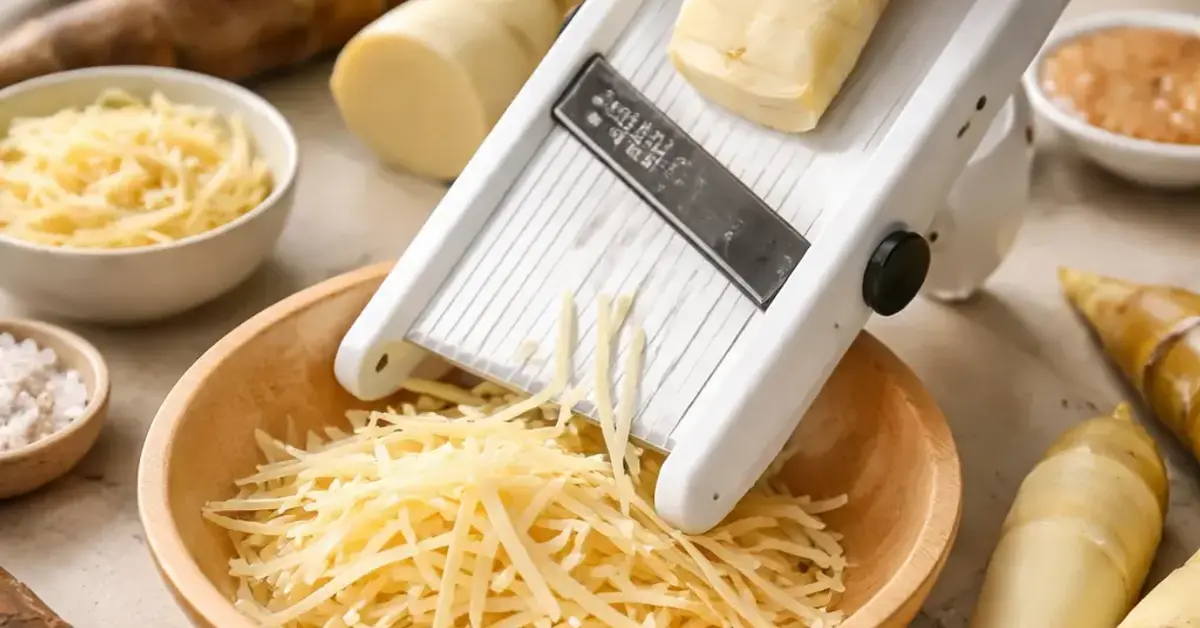
mandoline rebung slices Key Takeaways
A mandoline rebung slices technique turns tough bamboo shoots into delicate, quick-cooking strips perfect for salads, stir-fries, and pickles.
- Always use a cut-resistant glove and the mandoline’s hand guard to avoid serious cuts.
- Soak or blanch rebung before slicing for cleaner, less brittle cuts.
- Adjust the blade thickness to 1–2 mm for ultra-thin results without shattering the shoot.
Why Precision with Mandoline Rebung Slices Matters
Young bamboo shoots, known as rebung in many Southeast Asian kitchens, have a dense, fibrous texture that can be tricky to slice evenly. A mandoline slicer transforms this challenge into a consistent, paper-thin cut that cooks in seconds and absorbs marinades beautifully. Using a mandoline rebung slices approach not only saves time but also reduces food waste — no more uneven chunks that burn or stay raw. For a related guide, see 10 Rebung Mistakes to Avoid (And How to Fix Each One).
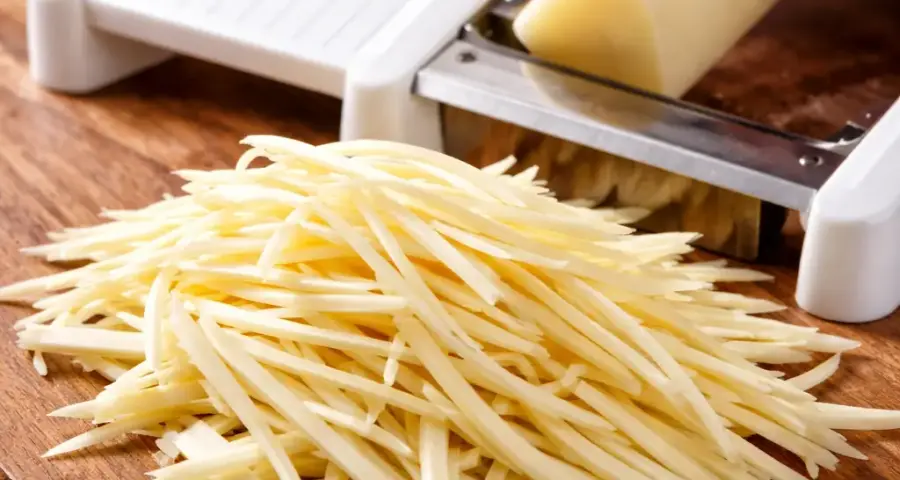
What You Need Before You Start
Gather a sharp mandoline slicer (Japanese or French style works best), a cut-resistant glove, a kitchen towel, and fresh rebung that has been trimmed and peeled. A julienne blade attachment is optional but helpful if you want matchstick cuts. For a related guide, see 7 Easy Ways to Store Fresh Rebung Without a Fridge.
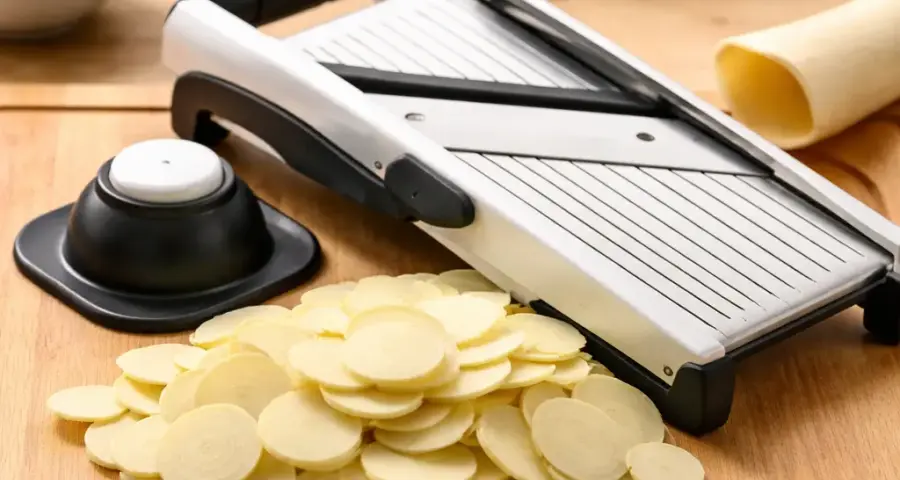
Step 1: Prepare the Rebung for Ultra-Thin Vegetable Slicing
Remove outer leaves and the tough base. Slice the shoot in half lengthwise to check for hollow sections; if present, slit the shoot open so it lies flat on the mandoline’s carriage. Blanch in boiling water for 2 minutes, then plunge into ice water. This partial cooking relaxes the fibers, making thin rebung slices less likely to crack or splinter.
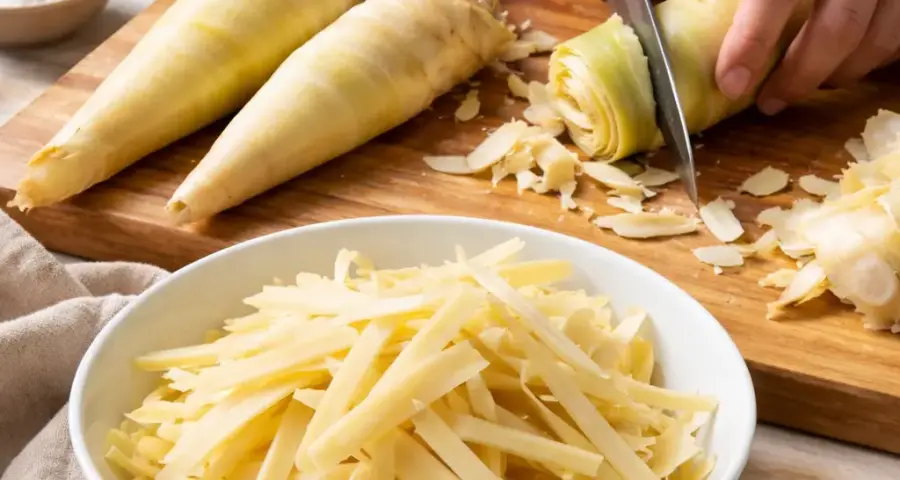
Step 1a: Dry Thoroughly
Pat the blanched rebung completely dry with a clean towel. Excess moisture causes the shoot to slip on the mandoline’s bed, increasing the risk of uneven cuts.
Step 2: Set Your Mandoline Slicer to the Right Thickness
Dial the thickness adjustment knob to 1–1.5 mm for sashimi-like translucency. For stir-fries, 2 mm works well. Test on a single piece of rebung — the slice should curl slightly and feel pliable, not rigid.
Step 2a: Choose the Blade Type
A straight blade gives flat ribbons, while a waffle or crinkle blade adds texture. Both yield excellent thin rebung slices; the choice depends on your final dish (curries suit crinkle cuts, salads favor flat ribbons).
Step 3: Apply Proper Mandoline Safety Tips at All Times
Always wear a cut-resistant glove on the hand that holds the food. Use the included hand guard for the last few slices — never slice with bare fingers near the blade. Place a damp towel under the mandoline to prevent it from sliding on the counter.
Step 3a: Lock the Legs or Suction Feet
Many mandolines have retractable legs or suction cups. Lock them before each use. A stable base is the first rule of safe mandoline rebung slices.
Step 4: Use a Smooth, Consistent Stroke
Hold the rebung piece flat against the carriage and glide it down the bed in one steady motion. Do not rush or pause mid-slice. Uneven pressure leads to wedges rather than ultra-thin vegetable slicing.
Step 4a: Angle the Rebung for Longer Cuts
If you want long strips, position the rebung diagonally across the carriage. This maximizes usable length and reduces waste.
Step 5: Stack and Julienne Without Re-Slicing
For how to slice bamboo shoots into thin matchsticks, first cut the rebung into 5 cm lengths. Slice these lengthwise on the mandoline to produce planks, then stack 3–4 planks and run them through the julienne attachment. Quick and uniform.
Step 5a: Keep Stacks Aligned
If you do not have a julienne blade, stack the flat slices and cut them by hand with a chef’s knife. This method doubles as a hand-safety refresher after using the mandoline.
Step 6: Store or Use Immediately
Thin rebung slices dry out fast. Submerge them in cold water with a squeeze of lime juice to keep them crisp and white. Drain and pat dry just before cooking. If storing for more than a day, vacuum-seal and refrigerate; use within 3 days.
Step 7: Clean Your Mandoline Slicer Immediately
Bamboo fibers can stick and harden in the blade gap. Rinse the mandoline with warm water right after use, then scrub with a brush. Dry fully before storing to prevent rust or dulling.
Step 7a: Sharpen the Blade Monthly
Even the best mandoline rebung slices technique suffers with a dull blade. Use a ceramic rod or the manufacturer’s sharpener to maintain a razor edge. A sharp blade also reduces the force needed, improving safety.
Common Mistakes When Making Thin Rebung Slices
Even experienced cooks can slip up. Here are frequent errors and how to avoid them.
Mistake 1: Skipping the Blanch
Raw rebung tends to shatter on a mandoline. Blanching softens the fibers without making them mushy. Always pre-cook for best results.
Mistake 2: Using Too Much Force
Let the blade do the work. Pressing down hard can cause the rebung to crack or the mandoline to tip. Glide gently.
Mistake 3: Ignoring the Angle
Bamboo shoots are often curved. Before slicing, trim a flat base so the piece sits firmly on the carriage. This prevents rocking and uneven cuts.
Useful Resources
For more on bamboo shoot preparation, visit Serious Eats’ guide to fresh bamboo shoots. For mandoline maintenance and blade care, refer to Cook’s Illustrated mandoline maintenance tips.
Frequently Asked Questions About mandoline rebung slices
Can I use a mandoline for very small bamboo shoots?
Yes, but you should first halve or quarter the shoot to create a flat surface. Small shoots can roll on the carriage without a stable base.
Do I need a special mandoline for ultra-thin vegetable slicing ?
Any mandoline with an adjustable thickness knob (down to 1 mm or less) works well. Japanese-style mandolines tend to offer finer, cleaner cuts for bamboo shoots.
What is the best blade thickness for thin rebung slices ?
1–2 mm is ideal. Thinner slices become translucent and perfect for salads; thicker slices retain a slight crunch for stir-fries.
How do I prevent the rebung from slipping on the mandoline?
Dry the blanched shoots thoroughly. You can also line the carriage with a piece of parchment paper to add friction without damaging the blade.
Should I peel bamboo shoots before slicing on a mandoline?
Yes. Remove the tough outer husk and any fibrous skin. Only the tender inner core is suitable for mandoline rebung slices.
Can I use a mandoline slicer for frozen bamboo shoots?
It is not recommended. Frozen shoots become mushy and release water, leading to ragged cuts. Thaw, drain, and blanch fresh shoots instead.
Do I need to oil the mandoline before slicing bamboo shoots?
A light coat of vegetable oil on the blade can reduce friction, but it is not essential. If you do oil, wipe away excess to avoid slippery food.
What is the easiest way to julienne bamboo shoots without a julienne blade?
Slice flat planks on the mandoline, then stack three planks and cut them into thin strips with a sharp knife. This method is safe and quick.
How long do thin rebung slices stay fresh in water?
Up to 24 hours in the refrigerator if submerged in cold water with a splash of lemon juice. Change the water once after 12 hours to keep them crisp.
Can I slice bamboo shoots without blanching them first?
Technically yes, but raw shoots are brittle and more likely to crack or shatter on the mandoline. Blanching makes the process safer and yields cleaner slices.
What kind of cut-resistant glove is best for mandoline safety tips ?
Level 5 cut-resistant gloves made of Dyneema or stainless steel mesh offer the best protection. They are washable and fit snugly without reducing dexterity.
Is it safe to use a mandoline without a hand guard?
No. The hand guard keeps your fingers away from the blade. Without it, you risk serious lacerations, especially on the last few slices.
Why do my bamboo shoot slices look ragged?
Ragged edges usually indicate a dull blade or improper angle. Sharpen the mandoline blade and ensure the rebung is cut to a flat, stable shape before slicing.
Can I make ultra-thin vegetable slicing with a cheap mandoline?
Yes, as long as the blade is sharp and the thickness dial works accurately. A budget model may flex, so apply gentler, even pressure.
What is the best way to clean a mandoline after slicing bamboo shoots?
Rinse under warm water immediately, then use a brush to dislodge fibers from the blade slot. Dry completely to prevent rust. Most mandolines are dishwasher-safe, but hand washing keeps the blade sharper longer.
Can I slice bamboo shoots on a mandoline for pickling?
Absolutely. Thin slices absorb brine quickly. For pickling, aim for 1.5 mm thickness and blanch the slices briefly before adding to the vinegar solution.
How do I know when the bamboo shoot is too old for thin rebung slices ?
Old shoots feel heavy, have thick woody skin, and a strong yellow core. They are difficult to slice thinly and taste bitter. Choose slender, pale green shoots for best results.
Can I use the same technique for other vegetables?
Yes, the same mandoline rebung slices method works for carrots, daikon, jicama, and firm zucchini. Adjust blanching times accordingly — denser vegetables need slightly longer pre-cooking.
What is the secret to restaurant-quality thin rebung slices ?
Consistency in thickness, a sharp blade, and gentle blanch before slicing. Professional chefs also chill the blanched shoots completely before mandoline work for extra firmness.
Should I store leftover mandoline rebung slices in oil?
If you plan to use them within 2–3 days, store in water with lemon. For longer storage, blanch the slices, pat dry, and freeze in a single layer on a baking sheet before bagging.