
how to julienne bamboo shoots Key Takeaways
Mastering how to julienne bamboo shoots transforms your stir-fries, salads, and spring rolls from good to exceptional.
- Julienne bamboo shoots start with choosing the freshest shoots and parboiling to remove bitterness.
- A sharp chef’s knife and a consistent cutting board are non-negotiable for safety and precision.
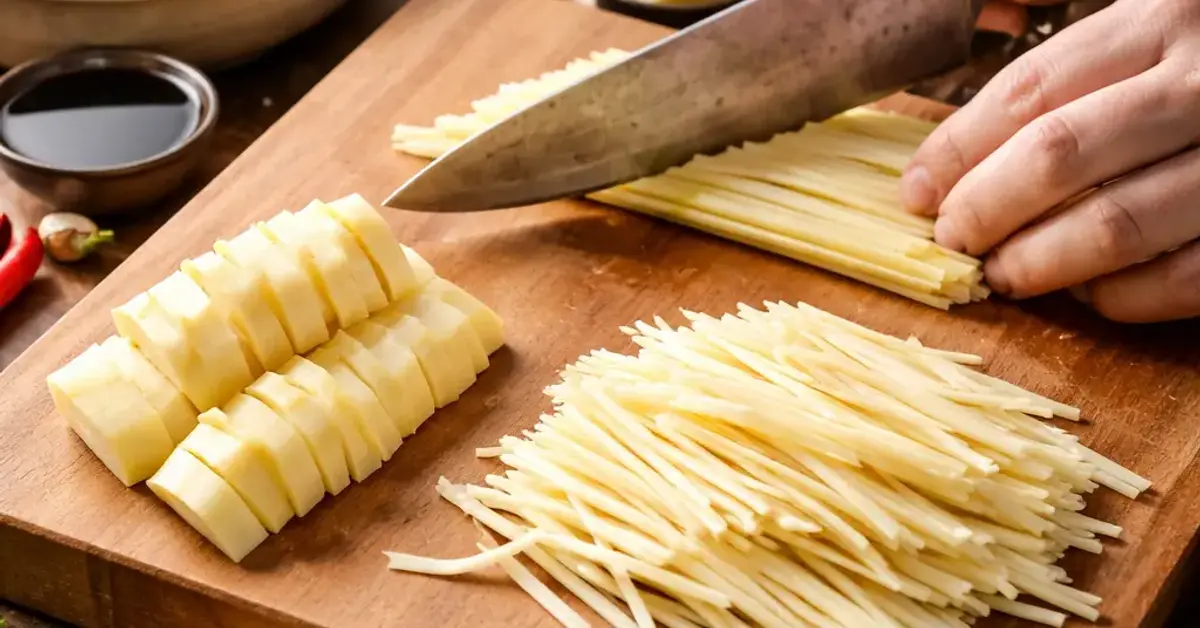
- The key technique involves squaring off the shoot, slicing into even planks, then stacking and cutting into thin strips.
Why Mastering How to Julienne Bamboo Shoots Elevates Your Cooking
Bamboo shoots bring a tender crunch and mild, earthy flavor to Asian dishes. When you julienne bamboo shoots, you increase surface area, which helps them soak up sauces and cook quickly. Professional chefs know that uniform cuts make food look elegant and cook evenly. Whether you’re preparing pad thai, a crunchy salad, or a hot-and-sour soup, this skill is essential. For a related guide, see Bamboo Shoots 101: Essential Tips for Cooking Them Perfectly.
The Tools You Need for a Perfect Julienne
Before you start, gather the right equipment. A sharp 8- or 10-inch chef’s knife gives you control. A sturdy cutting board that won’t slip is equally important. Some chefs also use a mandoline with a julienne attachment for extra speed, but a knife gives you more control over thickness.
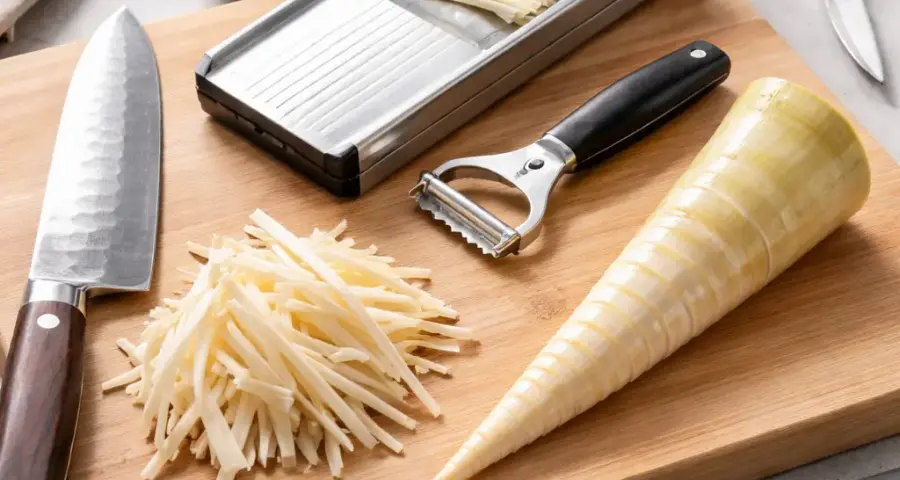
- Chef’s knife — sharpened and honed
- Cutting board — wood or plastic, non-slip base
- Vegetable peeler — for removing tough outer layers
- Bowl of cold water — to hold cut strips and keep them crisp
Step 1: Selecting and Prepping Fresh Bamboo Shoots
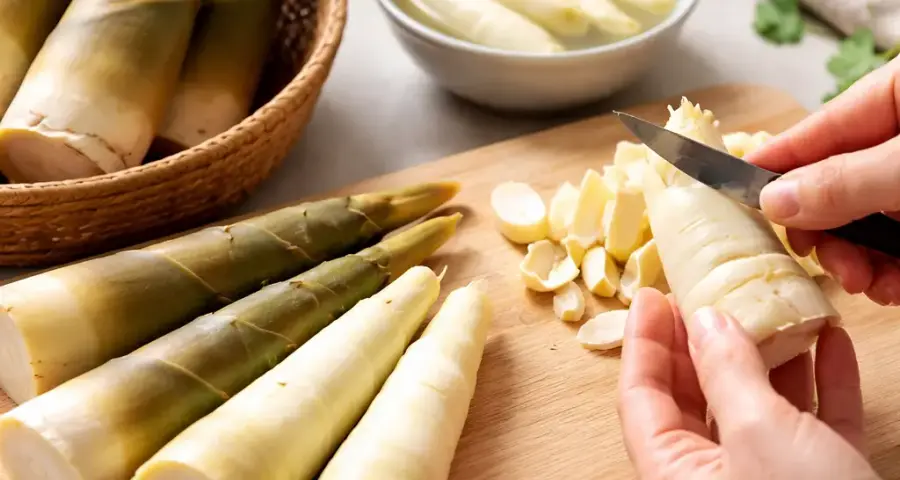
Start with fresh bamboo shoots when possible. Look for firm, heavy shoots with tight, unblemished husks. Canned shoots work in a pinch, but fresh shoots have superior texture and flavor.
Parboiling Removes Bitterness
Fresh bamboo shoots contain a natural compound that tastes bitter. To fix this, peel away the tough outer leaves, then slice the shoot in half lengthwise. Boil the halves in salted water for 10–15 minutes. Drain and let them cool. This step is the secret to a clean, mild taste. For a related guide, see Rebung Prepping Made Easy: A Beginner’s Guide to Peeling and Cooking.
Step 2: Trimming and Squaring the Shoot
Once the shoots are cool, place one half flat on the cutting board. Use your knife to trim off the rounded edges, creating a rectangular block. This squared shape makes it much easier to produce even slices. Discard the trimmings or save them for stock.
Professional chefs call this “fabrication” — it’s the same approach used for carrots, potatoes, and daikon. Squaring off creates a stable base and ensures every julienne strip is uniform.
Step 3: Slicing into Even Planks
Hold the squared bamboo shoot firmly. Using a smooth, gliding motion, slice the block into thin planks about 1/8-inch thick. Keep your fingers curled under like a claw for safety. The knife should touch your knuckles as a guide. Work slowly — precision matters more than speed.
Consistency Is Key
If your planks vary in thickness, your final julienne will be uneven. Take your time and adjust your slices as you go. After every few slices, check the thickness against a light or ruler.
Step 4: Stacking and Cutting into Julienne Strips
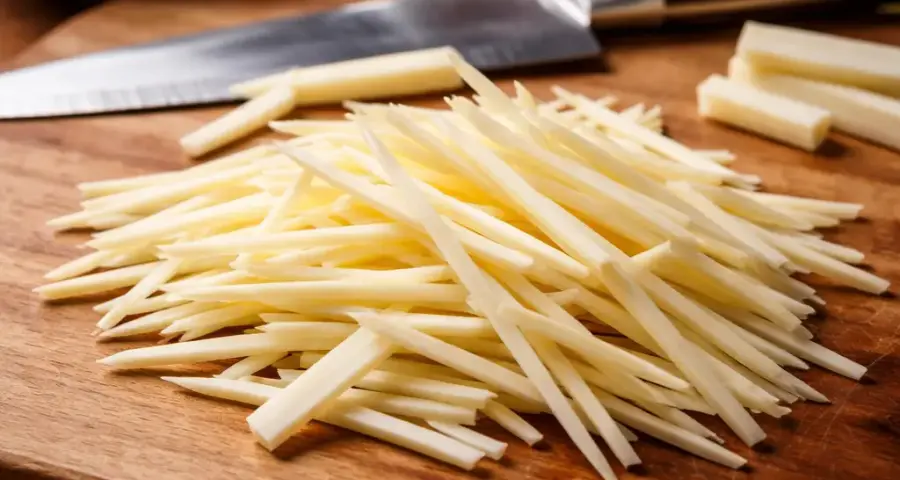
Take three or four planks at a time and stack them neatly. Press down gently with your non-knife hand to hold them together. Now, make slices perpendicular to the plank length, again about 1/8-inch wide. This produces the classic matchstick shape. Repeat until you’ve cut all the planks.
If the strips seem too long for your recipe, you can cut them in half crosswise. Place the cut strips in cold water to keep them crisp until you’re ready to cook.
Common Mistakes to Avoid When You Julienne Bamboo Shoots
Even experienced cooks make errors. Here are the most frequent pitfalls and how to avoid them.
- Dull knife — A dull blade crushes the shoot rather than slicing, leading to ragged edges and uneven strips. Sharpen your knife before every session.
- Skipping the parboil — Raw bamboo shoots taste bitter and can be tough. Always parboil fresh shoots first.
- Uneward thickness — If you don’t square the shoot, your julienne strips will vary in size and cook at different rates.
- Rushing the cut — Speeding through the process causes accidents and poor results. Chant “steady, steady” to yourself as you slice.
Finishing Tips for a Professional Look
Once you’ve mastered how to julienne bamboo shoots, use these finishing tips to elevate your dish:
- Blanch briefly — Drop the strips into boiling water for 30 seconds, then shock in ice water. This brightens their color and softens the texture slightly.
- Season immediately — Toss with a little sesame oil, soy sauce, or rice vinegar while still warm so the seasoning absorbs evenly.
- Store correctly — Keep unused julienned shoots in a sealed container covered with cold water. Change the water daily and use within three days.
Useful Resources
These external resources offer deeper guidance on knife skills and Asian vegetable preparation:
Frequently Asked Questions About how to julienne bamboo shoots
What does julienne mean for bamboo shoots?
Julienne is a knife cut that produces long, thin strips about 1/8-inch thick. For bamboo shoots, it creates matchstick-shape pieces ideal for stir-fries and salads.
Do I need a special knife to julienne bamboo shoots ?
No. A standard sharp chef’s knife works perfectly. A nakiri or santoku knife also works well because of their thin, flat blades.
Can I use canned bamboo shoots for julienne?
Yes. Canned shoots are already cooked and tender. Drain and rinse them, then pat dry before cutting. They may be slightly softer, so slice gently.
How do I keep my julienne strips from breaking?
Use a sharp knife and avoid sawing back and forth. A clean slice reduces cell damage. Also, don’t cut too thin — 1/8-inch is the sweet spot.
Should I peel bamboo shoots before julienning?
Yes. Remove the tough, fibrous outer leaves and the base. Trim any discolored parts. The inner, pale-yellow flesh is tender and perfect for julienne.
How long should I boil bamboo shoots before cutting?
Fresh bamboo shoots should be boiled for 10–15 minutes in salted water. This removes bitterness and softens them just enough for easy slicing. For a related guide, see 5 Common Slicing Mistakes for Rebung in Gulai, Tumis, or Lodeh.
Can I julienne bamboo shoots with a mandoline?
Absolutely. A mandoline with a julienne attachment saves time and produces uniform strips. Use the hand guard for safety — bamboo shoots can be slippery.
What dishes benefit most from julienned bamboo shoots?
Stir-fries like pad thai, pho, spring rolls, salads, hot-and-sour soup, and bamboo shoot rice all benefit from the uniform texture.
How thin should my julienne strips be?
Aim for about 1/8-inch thick and 2–3 inches long. That’s the standard matchstick size used in professional kitchens.
Do I need to soak bamboo shoots after cutting?
Soaking in cold water helps retain crispness and removes any remaining bitterness. Change the water once if you soak for more than 30 minutes.
Can I freeze julienned bamboo shoots?
Yes. Blanch the strips for 30 seconds, shock in ice water, drain, and freeze in a sealed bag. They keep for up to three months.
Why are my julienne strips mushy after cooking?
Overcooking is the main cause. Julienned bamboo shoots need only 1–2 minutes in a hot wok or pan. Add them toward the end of the cooking process.
What is the difference between julienne and batonnet cut?
Batonnet is larger — about 1/4-inch thick — while julienne is typically 1/8-inch. Julienne is thinner and cooks faster.
Can I julienne bamboo shoots without squaring them first?
It’s possible, but the strips will be irregular. Squaring gives you control and ensures even cooking. It’s the professional method.
How do I prevent my cutting board from slipping?
Place a damp paper towel or a non-slip mat under your board. This keeps the board stable and reduces the risk of knife slips.
Are bamboo shoots healthy to eat?
Yes. They are low in calories, high in fiber, and contain potassium and vitamin B6. Proper preparation removes the natural toxins found in raw shoots.
What’s the best way to store fresh bamboo shoots?
Wrap unpeeled shoots in a damp paper towel and place them in a plastic bag in the refrigerator. Use within one week for best quality.
How do I fix a dull knife quickly?
Use a honing steel to realign the edge. For a proper sharpening, use a whetstone (1000/6000 grit) or take the knife to a professional.
Can I use a food processor to julienne bamboo shoots ?
A food processor with a julienne disc works, but the texture is more ragged than knife-cut. Best for large batches where appearance isn’t critical.
What is the most common mistake when learning how to julienne bamboo shoots ?
Using a dull knife. It’s the number one reason for uneven, ragged cuts. Always start with a sharp blade for clean, professional results.