
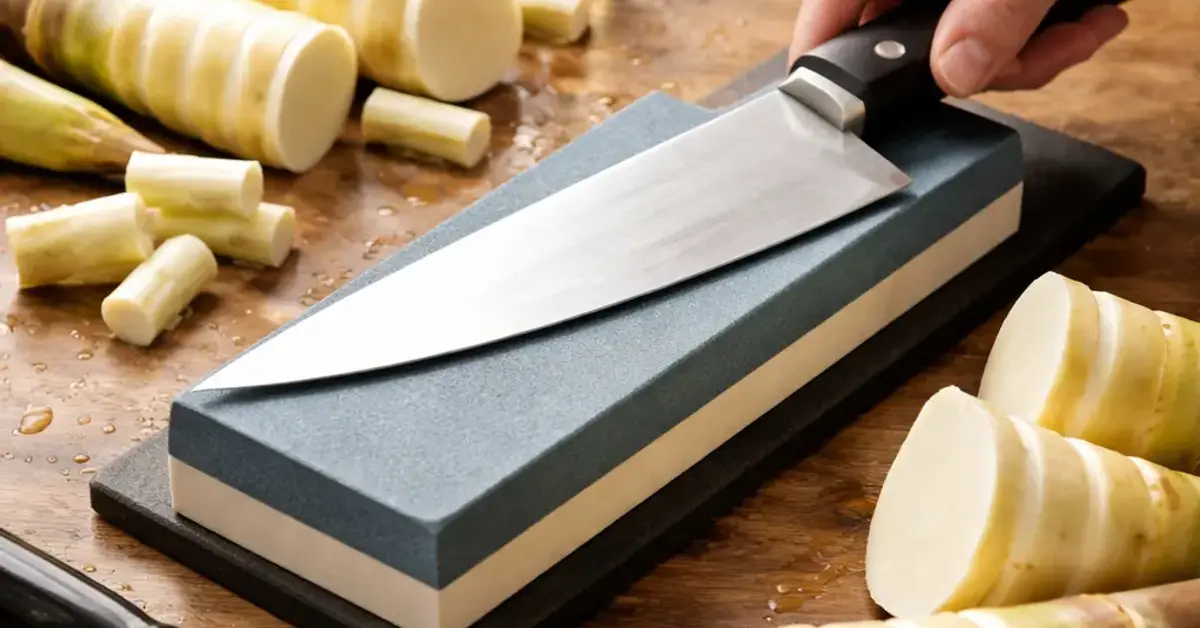
Knife Sharpening Guide for Cutting Tough Bamboo Shoots Key Takeaways
Bamboo shoots have a dense, fibrous structure that blunts knives faster than most vegetables.
- Understand why sharpness matters for fibrous vegetables like bamboo shoots.
- Select a knife profile and steel type that holds an edge through tough cuts.
- Master a consistent sharpening angle and stone progression for a durable edge.
Why a Sharp Knife Is Critical for Tough Bamboo Shoots
Bamboo shoots have a dense, fibrous structure that blunts knives faster than most vegetables. A sharp edge slices cleanly through the fibers, preserving the shoot’s texture and reducing physical effort. Conversely, a dull blade crushes the cells, causes uneven cuts, and forces you to apply excessive pressure. That extra force makes the knife more likely to slip, which is dangerous when working with a hard, round surface. For a related guide, see 5 Common Slicing Mistakes for Rebung in Gulai, Tumis, or Lodeh.
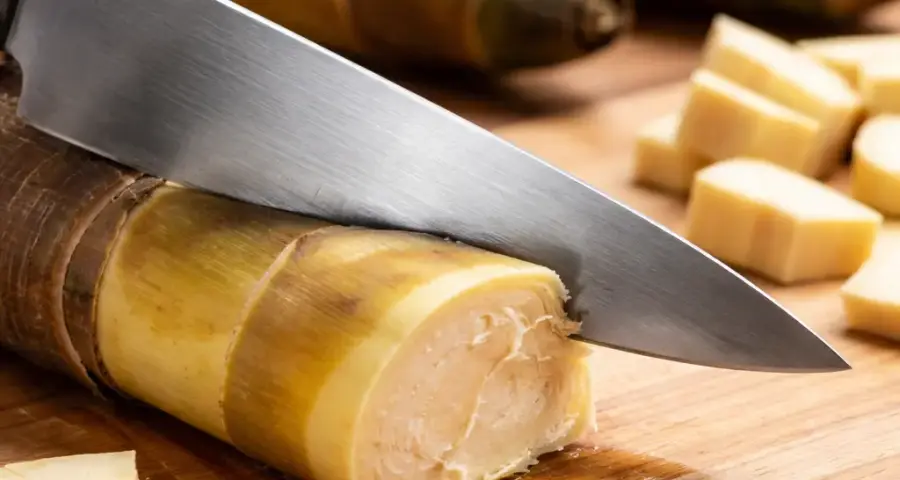
This knife sharpening guide for cutting tough bamboo shoots emphasizes that a properly maintained knife also extends the life of your blade. Frequent sharpening on quality stones removes minimal steel while keeping the edge geometry optimal.
What Makes Bamboo Shoots So Tough on Knives
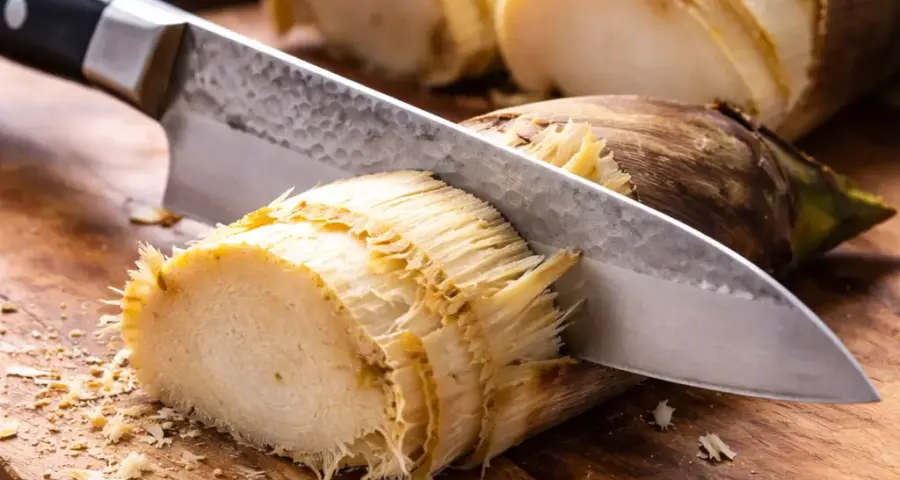
Bamboo shoots contain high levels of silica and tough cellulose fibers. During cutting, these hard particles act like abrasive grit, micro-chipping and dulling the edge rapidly. Even high-carbon steel knives benefit from a higher sharpening angle (around 20 degrees per side) to resist chipping. Stainless alloys with vanadium or molybdenum additives offer better edge retention under these abrasive conditions.
Choosing the Right Knife for Bamboo Shoots
Before you pick up a stone, consider the knife itself. The best options for sharpening for bamboo shoots start with a blade that matches the task.
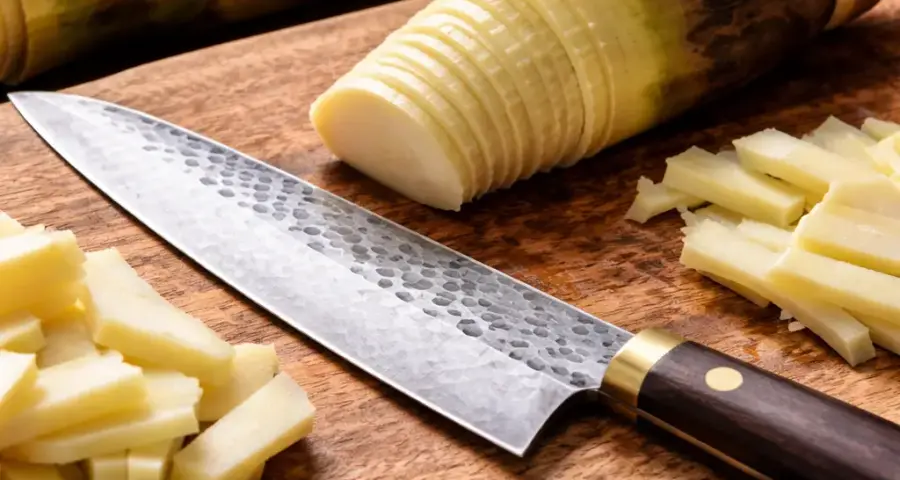
- Profile: A nakiri (vegetable knife) or Chinese cleaver with a flat edge provides even contact with the cutting board. A santoku or chef’s knife with a slight curve also works well.
- Steel type: Harder steels (HRC 60–62) hold an edge longer but require more care during sharpening. Carbon steel offers excellent sharpness but rusts easily; stainless clad with a carbon core balances durability and corrosion resistance.
- Blade thickness: A medium-thick spine (2–3 mm) behind the edge adds stability without making the knife feel heavy.
If you already own a quality chef’s knife, you can adapt it for bamboo shoots by adjusting your sharpening angle and stone grit sequence.
Knife Sharpening Guide for Cutting Tough Bamboo Shoots: Step by Step
Follow these five steps to achieve a sharp, durable edge that handles bamboo shoots with ease.
Step 1: Prepare Your Sharpening Station
Soak water stones in clean water for 10–15 minutes until bubbles stop rising. Place a non-slip base or damp towel under the stone. Keep a spray bottle of water nearby to maintain slurry and rinse debris. Gather a flattening stone (nagura or diamond plate) to true the stone surface after heavy use.
Step 2: Set the Correct Angle
For bamboo shoots, aim for a 20-degree angle per side on Western knives or 15 degrees per side on Japanese single-bevel knives. Use a sharpening angle guide or the coin-stack method: stack two US quarters under the spine to approximate 20 degrees. Maintain this angle consistently throughout each stroke.
Tough bamboo cutting tips: a slightly steeper angle (20–22 degrees) increases edge strength and reduces chipping on fibrous materials.
Step 3: Progress Through Grit Levels
Start with a coarse stone (300–600 grit) to set a new edge or repair damage. Move to a medium stone (1000–2000 grit) to refine the edge and remove burrs. Finish with a fine stone (3000–6000 grit) for a polished, sharp edge. For bamboo shoots, stopping at 3000–4000 grit provides enough sharpness without over-polishing the edge, which can become brittle. For a related guide, see How to Julienne Bamboo Shoots: 5 Easy Chef-Proven Techniques.
| Grit Range | Purpose | Best For |
|---|---|---|
| 300–600 | Coarse sharpening, edge setting | Repair nicks, reshape bevel, very dull blades |
| 1000–2000 | Medium refinement, burr removal | Everyday sharpness, fresh edges |
| 3000–6000 | Fine finishing, polishing | Razor edges for precise vegetable cuts |
Step 4: Remove the Burr and Strop
After sharpening, a wire edge (burr) remains on the opposite side. Lightly run the knife edge (perpendicular to the stone) on a leather strop or a fine-grit stone with very light pressure. Alternate sides until the burr disappears. Stropping realigns the edge and removes microscopic irregularities, improving edge life.
Step 5: Clean and Test
Rinse the knife with water and dry it immediately. Test the edge on a piece of paper or a tomato skin. A properly sharpened knife should slice through paper cleanly without tearing. For bamboo shoots, you can also test on a raw carrot; the knife should cut with minimal resistance.
Honing Between Sharpenings
Honing with a ceramic rod or fine steel rod realigns the micro-edge without removing metal. Use a honing rod each time you prep bamboo shoots. Hold the rod vertically with the tip on a cutting board, and draw the blade down at the same angle you used for sharpening. Three to five strokes per side are usually enough.
Regular honing extends the time between full sharpening sessions, making this knife sharpening guide for cutting tough bamboo shoots a sustainable long-term practice.
Common Mistakes When Sharpening for Bamboo Shoots
Even experienced cooks make errors that reduce edge quality. Watch for these pitfalls:
- Using too low an angle: 10–12 degrees makes the edge razor-thin but fragile. Bamboo shoots will chip it quickly.
- Pressing too hard: Heavy pressure creates a large burr and uneven bevel. Let the stone grit do the work.
- Skipping grit progression: Jumping from coarse to fine leaves deep scratches and an unstable edge. Always go through at least two intermediate grits.
- Neglecting stone flattening: A dished stone sharpens unevenly. Flatten after every 10–15 sharpenings or when you feel a dip.
Useful Resources
For additional guidance on stone selection and technique, check these trusted sources:
- Knife Merchant’s Complete Sharpening Guide – detailed breakdown of stone types and angle settings.
- Serious Eats: How to Choose a Knife Sharpener – comprehensive advice for home cooks, including options for tough vegetable prep.
Frequently Asked Questions About Knife Sharpening Guide for Cutting Tough Bamboo Shoots
Can I use a pull-through sharpener for bamboo shoot prep?
Pull-through sharpeners are quick but remove more steel and often create a rough edge. For bamboo shoots, a water stone gives better control and a cleaner cut.
What is the best knife shape for cutting bamboo shoots?
A nakiri or Chinese cleaver with a flat profile provides even blade contact and makes straight cuts through dense fibers easier.
How often should I sharpen my knife for bamboo shoots?
If you prep bamboo shoots daily, expect to sharpen every 1–2 weeks. Frequent honing extends that interval.
Can I sharpen a serrated knife for bamboo shoots?
Serrated knives are not ideal for bamboo shoots because the sawing motion tears fibers. A straight edge is preferred.
What angle is best for a VG-10 steel knife?
VG-10 steel handles 20 degrees per side well. For bamboo shoots, stay at 20 degrees to balance sharpness and edge strength.
Do I need a 3000-grit stone for bamboo shoots?
3000–4000 grit provides a fine edge suitable for bamboo shoots without over-polishing. It is a good finishing grit.
How do I remove a burr correctly?
Use light alternating strokes on a fine stone or strop. Check the burr by running your thumb perpendicular to the edge (carefully).
Can I sharpen a knife with a ceramic rod only?
Ceramic rods maintain an edge but cannot set a new bevel or repair damage. For bamboo shoots, start with a stone.
What is the difference between honing and sharpening?
Honing realigns the edge without removing metal; sharpening grinds steel to create a new edge. Both are needed.
Should I use oil or water stones?
Water stones cut faster and are easier to maintain for kitchen use. Oil stones work well but require more cleanup.
How do I keep my knife from rusting during bamboo shoot prep?
Wipe the blade dry immediately after washing. Lightly coat with mineral oil if storing for more than a day.
Can I use a diamond stone for this?
Yes, diamond stones remove material quickly and stay flat. Use a 300–600 grit diamond plate for initial edge setting, then finish with a water stone.
Is it safe to sharpen a knife while it is wet?
Yes, water stones are used wet. Just be sure to dry the knife thoroughly after sharpening to prevent rust.
What should I do if my knife still feels dull after sharpening?
Re-check the angle consistency and burr removal. A full burr removal often makes the edge feel sharp again.
Can I use an electric sharpener for bamboo shoots?
Electric sharpeners are fast but can overheat the edge and remove too much steel. Manual stones give better results.
What is the best way to store a knife I use for bamboo shoots?
Use a magnetic strip or knife block. Avoid loose drawers where the edge can bounce against other utensils.
How do I choose between a 1000 and 1200 grit stone?
Both work as medium stones. 1000 grit cuts slightly faster; 1200 leaves a finer finish. Pick whichever is available.
Do I need a flattening stone?
Yes, water stones dish over time. A flattening stone (nagura or diamond plate) keeps the surface level for consistent sharpening.
Can I sharpen a Damascus steel knife?
Yes. The pattern is cosmetic. Use the same sharpening process as for any high-carbon stainless steel.
What is the biggest mistake when sharpening for tough bamboo shoots?
Using too low an angle (under 15 degrees) leads to edge chipping. Stick with 20 degrees per side for durability.